分类: Start with You

  • Exploring Attachment Styles in The Sims 4

    Welcome back to LovestbLog, where we believe every healthy relationship must Start To Build (STB) from a foundation of self-awareness. I’m Dr. Love, and today we’re diving into one of the most fundamental blueprints of human connection: Attachment Theory—and how it manifests in a space many of us spend our time: the virtual world of *The Sims 4*.

    If you’re a Sims player, you know the frustration: you spend hours getting your Sims married, only for their romance bar to mysteriously plummet while they’re on the same lot, forcing you into a frenzy of constant flirting and WooHoo just to keep them happy. This isn’t just a quirky game mechanic; it’s a brilliant, albeit accidental, simulation of one of the most common relationship struggles in real life.

    What if I told you that the base game’s relationship system is unintentionally designed to make almost every Sim—and every player—act like they have an Anxious Attachment Style?

    The “Anxious Sim” Paradox: Why Your Sims Are Always Clingy

    In the real world, attachment styles are defined by two core psychological dimensions: Attachment Anxiety (fear of abandonment/rejection) and Attachment Avoidance (discomfort with intimacy/vulnerability). Together, these dimensions create the four styles we often discuss (Secure, Anxious, Avoidant, and Disorganized).

    The core challenge in *The Sims 4* is the mechanism known as Relationship Decay. Your Sim’s Friendship and Romance bars drop rapidly over time, even if they are happily married and spending time together. As a player, you are forced to constantly micromanage their interactions—to keep seeking connection and assurance—simply to maintain the status quo.

    This constant, mandatory pursuit of validation, driven by the fear of the relationship bar turning empty, perfectly mirrors the psychological strategy of Hyperactivation—the ceaseless seeking of closeness and reassurance characteristic of high-anxiety individuals.

    In essence, the game’s default setting trains us in an anxious playstyle. A Secure Sim should be comfortable with interdependence and not need constant maintenance, but the game mechanics punish them (and you) if they try to relax their efforts.

    Simulating Insecurity: Mapping Traits to Attachment Styles

    While the game’s mechanics lean towards anxiety, we can still use specific traits and aspirations to craft Sims that embody the different attachment styles. This is where we turn from passively managing decay to intentionally building an Internal Working Model for our Sims, just as we must do for ourselves in real life.

    Attachment Style The Sims 4 Base Game Traits & Moodlets Core Behavior (The STB Lesson)
    Anxious/Preoccupied Jealous trait. Gains the “Feeling Insecure” (Tense) moodlet when the partner is not nearby. Gains the “All Mine” (Confident) moodlet when the partner is close. Constantly monitors the partner’s presence and seeks validation (Hyperactivation). Their security is wholly external.
    Avoidant/Dismissive Loner and Non-committal traits. Gets “Enjoying Solitude” (Happy) when alone. Resists long-term commitment and job stability. Prioritizes independence and self-sufficiency (Deactivation). They bypass the need for social connection by seeking internal comfort.
    Disorganized/Fearful Conflicting traits like Jealous + Erratic/Hot-Headed. Leads to unpredictable ‘push-pull’ behavior. Experiences extreme internal conflict, leading to chaotic interactions—seeking intimacy one moment, then pushing the partner away the next (e.g., random mean interactions).

    The Practice of Repair: Moving Your Sim Towards Security

    The goal of attachment work is not to eliminate anxiety or avoidance, but to learn to regulate it, moving towards a Secure Attachment where we can balance closeness and independence comfortably. In *The Sims 4*, the process of relationship repair is a fantastic analogy for real-world Attachment Repair.

    When relationships hit a snag—a fight, an argument, or even cheating—your Sim is afflicted with negative moodlets (Sad, Hurt, Angry) that inhibit further positive interaction. These negative emotions must pass first, like letting the intensity of an emotional injury subside.

    The key to building security lies in choosing friendly interactions, even after romantic betrayal. Here’s the “STB Repair Protocol” based on gameplay wisdom:

    1. Wait Out the Storm (Emotional Regulation): Allow the Sim to process the acute, negative moodlets (like “Hurt” or “Sadness over Breakup”) by focusing on self-care (e.g., taking a bath, calming down in a mirror). In therapy, we call this self-soothing and emotion regulation.
    2. Re-establish Safety with Friendship: Once the acute moodlets expire, shift all social interactions to the Friendly Category. Avoid romance until the romance bar is completely reset or at least halfway green in the friendship bar.
    3. Seek Verbal Reassurance: Use specific calming interactions. The ability to “Ask for Reassurance” or “Discuss Relationship Fears” is a mechanic that simulates the crucial step of openly communicating fears with a partner, which is foundational to building a secure bond.

    The Missing Piece: Internal Dialogue and Growth

    As a psychologist, the biggest limitation I see in the base game is the lack of internal psychological depth. Sims are great at externalizing feelings (the moodlets), but they lack Internal Dialogue—the complex rumination, rationalization, and self-soothing that insecure individuals experience.

    This is precisely why community creations, like the robust Attachment Styles mod, are so valuable. They introduce Self-Interactions for Anxious, Avoidant, and Disorganized Sims. These actions, performed without another Sim, simulate the crucial inner work:

    • The Anxious Sim might have a self-interaction for “Ruminating on the Relationship.”
    • The Avoidant Sim might “Rationalize Emotional Isolation.”

    These interactions are a powerful reminder: True relationship growth (moving toward a secure style) is not just about the interactions you have with your partner, but the work you do within yourself.

    Dr. Love’s Takeaway: Whether you are building a life in Willow Creek or navigating a relationship in the real world, the lesson is the same: If you constantly have to micromanage your Sim (or your partner) just to prevent decay, you are likely operating from an anxious baseline. The path to security lies not in chasing a full romance bar, but in developing the resilience and inner peace that allows you to feel safe, even when the person you love is in another room—or on another lot.

    Which attachment style Sim do you find the hardest to play, and what “self-interaction” would you add to help them regulate their emotions? Share your Sim stories in the comments below; let’s discuss this!
  • Discover Your Attachment Style: Take the Test Today

    Discover Your Attachment Style: Take the Test Today

    Hi, I'm Dr. Love, founder of lovezoom-xyz-998724.hostingersite.com/. Over my decade as a relationship psychologist, I've seen countless individuals and couples stuck in frustrating patterns. They ask me, "Why do I always attract the same type of person?" or "Why do we have the same fight over and over again?" The argument might be about the dishes, but the feeling underneath is a much deeper one: "Do you really see me? Am I safe with you? Will you leave me?"

    These recurring dynamics aren’t random. They’re often guided by a powerful, invisible force I call your relationship’s “operating system.” This system, known in psychology as your Attachment Style, was programmed in your earliest years and runs in the background of your adult relationships, dictating how you connect with, trust, and love others. Understanding this system is the first, most crucial step to breaking unhealthy cycles and building the fulfilling relationships you deserve. Today, we’re going to uncover yours.

    What’s Your Relationship “Operating System”?

    Imagine your brain is a computer. When you were an infant, your interactions with your primary caregivers installed a core piece of software: your Internal Working Model. This model is a set of unconscious beliefs and expectations about two fundamental things: yourself and others. It answers questions like:

    • Am I worthy of love and care? (Your Model of Self)
    • Are other people reliable and trustworthy when I need them? (Your Model of Others)

    This early programming, pioneered by the work of psychologist John Bowlby, doesn’t just stay in the past. It becomes the blueprint for your future relationships. It shapes who you’re attracted to, how you handle conflict, and what you fear most in intimacy. It’s why some people find it easy to trust and connect, while others feel a constant push-pull between wanting closeness and fearing it.

    The beauty of this is that, like any software, your operating system can be understood, updated, and even rewritten. The first step is to identify which version you’re currently running.

    Discover Your Style: The Relationship Questionnaire

    This simple, validated tool, developed by psychologists Bartholomew and Horowitz, is a powerful starting point for self-discovery. Read the four descriptions below. While you may see a bit of yourself in more than one, choose the one paragraph that feels most like you in your close relationships. Be honest with yourself—there are no right or wrong answers, only insights.

    Paragraph A:
    It is easy for me to become emotionally close to others. I am comfortable depending on them and having them depend on me. I don’t worry about being alone or having others not accept me.

    Paragraph B:
    I want to be completely emotionally intimate with others, but I often find that others are reluctant to get as close as I would like. I am uncomfortable being without close relationships, but I sometimes worry that others don’t value me as much as I value them.

    Paragraph C:
    I am comfortable without close emotional relationships. It is very important to me to feel independent and self-sufficient, and I prefer not to depend on others or have others depend on me.

    Paragraph D:
    I am uncomfortable getting close to others. I want emotionally close relationships, but I find it difficult to trust others completely, or to depend on them. I worry that I will be hurt if I allow myself to become too close to others.

    Got your letter? Let’s explore what it means.

    The Four Adult Attachment Styles: A Deeper Dive

    Your choice likely corresponds to one of the four main adult attachment styles. Think of these not as rigid boxes, but as primary patterns of behavior. Let’s break them down.

    Paragraph A: Secure Attachment
    If you chose A, you likely have a Secure Attachment style. You see both yourself and others in a positive light. You believe you are worthy of love, and you expect others to be generally reliable and caring. In relationships, you’re like a skilled dancer—you can move in close for intimacy and then comfortably step back to enjoy your independence. You communicate your needs effectively and don’t get overwhelmed by conflict.

    Paragraph B: Anxious-Preoccupied Attachment
    If B resonated with you, you may have an Anxious-Preoccupied Attachment style. You tend to have a negative view of yourself but a positive view of others. Your core fear is abandonment. You crave deep intimacy but worry that your partner doesn’t want the same level of closeness. This anxiety can lead to “protest behaviors”—like excessive texting or seeking constant reassurance—in an attempt to pull your partner closer and calm your fears.

    Paragraph C: Dismissive-Avoidant Attachment
    If you picked C, you might have a Dismissive-Avoidant Attachment style. You hold a positive view of yourself but a negative view of others. Your core fear is the loss of independence. You pride yourself on being self-sufficient and see emotional closeness as a threat to your autonomy. When a partner gets too close, you may feel suffocated and use “deactivating strategies” to create distance, such as focusing on their flaws, emotionally shutting down, or burying yourself in work.

    Paragraph D: Fearful-Avoidant Attachment
    If D felt most true, you may have a Fearful-Avoidant Attachment style (also known as Disorganized). This is the most conflicted style, characterized by a negative view of both self and others. You simultaneously desire and fear intimacy. You want to connect, but you’re terrified of being hurt, leading to a confusing “push-pull” dynamic. You might draw someone in, only to push them away as soon as vulnerability feels too threatening.

    Attachment Style View of Self View of Others Core Fear
    Secure Positive (“I am worthy”) Positive (“You are trustworthy”) Comfortable with connection
    Anxious-Preoccupied Negative (“I am unworthy”) Positive (“You can save me”) Abandonment
    Dismissive-Avoidant Positive (“I am self-sufficient”) Negative (“You are unreliable”) Loss of Independence
    Fearful-Avoidant Negative (“I am unworthy”) Negative (“You will hurt me”) Intimacy itself

    The Anxious-Avoidant Trap: Why Opposites Attract and Then Clash

    One of the most common pairings I see in my practice is the Anxious-Avoidant dynamic. It’s a magnetic, yet often painful, dance. The anxious partner, fearing abandonment, acts as the “pursuer,” trying to close any emotional distance. The avoidant partner, fearing engulfment, acts as the “distancer,” pulling away to protect their space. This creates a vicious cycle:

    1. The anxious partner senses distance and pursues more intensely to feel secure.
    2. The avoidant partner feels suffocated by the pursuit and withdraws further to feel safe.
    3. The withdrawal triggers the anxious partner’s deepest fear of abandonment, causing them to pursue even harder.
    4. The increased pursuit confirms the avoidant partner’s belief that relationships are suffocating, causing them to distance themselves even more.

    This isn’t a sign of a lack of love. It’s a clash of survival strategies. Each person is unconsciously drawn to a dynamic that, while painful, confirms their deepest beliefs about relationships. The anxious person confirms “I always have to work hard for love,” and the avoidant person confirms “Relationships always demand too much of me.”

    Your Style Isn’t Your Destiny: The Path to “Earned Security”

    Here is the most important message I can share with you: your attachment style is not a life sentence. Through conscious effort and new experiences, you can develop what we call an “Earned Secure” attachment. Your brain has the incredible ability to form new neural pathways. You can heal old wounds and learn a new way of relating to yourself and others. The journey involves a combination of inner work and relational healing.

    Here is a toolkit to get you started:

    1. Become a Student of Yourself: Awareness is the first step. Start journaling. Notice your triggers. When do you feel the urge to pull away or cling? What thoughts are running through your mind? Simply observing your patterns without judgment is a radical act of self-care.
    2. Learn to Self-Soothe: If you have an anxious style, your task is to learn to calm your own nervous system instead of immediately reaching for your partner. Practices like deep breathing, mindfulness, or even just a 10-minute walk can help. If you have an avoidant style, your work is to gently reconnect with the emotions you’ve learned to suppress.
    3. Practice Secure Communication: Move away from protest behaviors or silent withdrawal. Learn to state your needs and feelings clearly and calmly using “I” statements. For example, instead of “You never text me back,” try “I feel anxious and disconnected when I don’t hear from you for a while.”
    4. Lean into Secure Relationships: Healing happens in relationships. A relationship with a secure partner, a trusted friend, or a good therapist can provide a “corrective emotional experience.” They can act as a secure base, showing you a new, healthier way to connect that helps rewire your brain.

    A crucial note: The motivation for this work must be for your own peace and well-being, not to change your partner. True security is an inside job. When you focus on healing yourself, you naturally change the dynamic of all your relationships for the better.

    Your Journey Starts Now

    Understanding your attachment style is like being handed the user manual for your heart. It doesn’t fix everything overnight, but it illuminates the path forward. It gives you a framework to understand your deepest fears and desires, and it provides a roadmap for building healthier, more resilient, and more loving connections—first with yourself, and then with others.

    This is the core of what we do here at LovestbLog: Start To Build. It begins with you.

    Now I’d love to hear from you. After taking the test, what style resonated most, and what’s one insight you’ve gained? Share your thoughts in the comments below—let’s learn together.

  • Understanding Attachment Styles in Relationships

    Why Do We Repeat the Same Relationship Patterns?

    Have you ever wondered why you’re drawn to the same type of person, time and again, only to find yourself stuck in the same frustrating dynamic? Or perhaps you’ve watched friends navigate their relationships with an ease that feels completely foreign to you. As a relationship psychologist for over a decade, I’ve sat with countless individuals and couples who arrive at my office with this very puzzle. They feel trapped in a cycle, believing their relationship struggles are a matter of bad luck or personal failing. But what I’ve come to understand is that our relationship patterns are rarely random. More often than not, they are guided by an invisible script written long ago: our attachment style.

    Think of your attachment style as your relational “operating system.” It runs quietly in the background, shaping how you perceive intimacy, process conflict, and seek connection. This concept isn’t just pop psychology; it’s rooted in the groundbreaking work of psychiatrist John Bowlby and psychologist Mary Ainsworth, who discovered that our earliest bonds with caregivers create a blueprint for how we connect with others throughout our lives. Understanding this blueprint is the first, most powerful step toward breaking old cycles and consciously building the loving, secure relationship you deserve.

    The Four Faces of Adult Attachment

    In my practice, I’ve found that the most effective way to understand these blueprints is to see them not as rigid labels, but as different strategies we learned to get our fundamental need for connection met. These strategies are generally categorized into four styles, which exist on a spectrum of anxiety (worry about the relationship) and avoidance (discomfort with closeness). Let’s break them down.

    Attachment Style Core Belief Behavior in Relationships
    Secure “I am worthy of love, and others are generally trustworthy and responsive.” Comfortable with both intimacy and independence. They communicate needs directly, manage conflict constructively, and create a stable, trusting partnership.
    Anxious-Preoccupied “I doubt my worthiness of love, and I need my partner to validate me to feel secure.” Craves deep intimacy and can become preoccupied with the relationship. Fears abandonment and is highly sensitive to a partner’s moods and actions. Their attachment system is easily hyperactivated.
    Dismissive-Avoidant “I am worthy and self-sufficient; others are unreliable and overly demanding.” Values independence and self-sufficiency above all. Uncomfortable with emotional closeness and may distance themselves when a partner seeks intimacy. Their attachment system is often deactivated.
    Fearful-Avoidant “I want intimacy, but I’m afraid of getting hurt. I don’t trust myself or others.” Experiences a push-pull between desiring and fearing closeness. Their behavior can seem confusing or unpredictable as they navigate this internal conflict. Often a result of past trauma.

    The Anxious-Avoidant Trap: Why Opposites Attract and Then Clash

    One of the most common dynamics I see is the “anxious-avoidant trap.” It’s a powerful, magnetic pull between someone who craves closeness (Anxious) and someone who needs space (Avoidant). Initially, it feels like a perfect match. The anxious partner is drawn to the avoidant’s perceived strength and independence, while the avoidant partner is attracted to the anxious partner’s warmth and emotional vibrancy. But soon, their core fears collide, creating a painful push-pull dance.

    The cycle looks like this:

    1. The anxious partner, fearing disconnection, pursues their partner for reassurance and closeness.
    2. The avoidant partner, feeling smothered and fearing the loss of their independence (engulfment), withdraws to create space.
    3. The withdrawal triggers the anxious partner’s deepest fear of abandonment, causing them to pursue even more intensely.
    4. This intensified pursuit confirms the avoidant partner’s belief that relationships are demanding and suffocating, causing them to pull away further.

    This is the heart of the trap: one partner’s solution (seeking closeness) becomes the other partner’s trigger (feeling overwhelmed). Both end up feeling profoundly misunderstood and alone, stuck in a cycle that reinforces their deepest insecurities.

    From Blueprint to Building: The Path to “Earned Secure” Attachment

    Here is the most important message I can share with you: your attachment style is not a life sentence. It’s your starting point, not your destiny. Through conscious effort, new experiences, and healthier relationships, you can develop what we call an “Earned Secure Attachment.” This means learning to build the safety and trust within yourself and your relationships that you may not have received early on. It’s a journey of turning your old blueprint into a new, consciously designed structure.

    Here are the foundational steps to begin this journey:

    1. Identify Your Operating System: The first step is awareness. Use the descriptions above to reflect on your patterns. Ask yourself: When I feel insecure in a relationship, do I tend to lean in and seek reassurance, or do I pull back and create distance? Recognizing your default strategy is the key to changing it.
    2. Develop Your Self-Soothing Toolkit: If you lean anxious, the work is to learn to manage your anxiety without immediately needing your partner to fix it. This could be through mindfulness, journaling, or physical activity. If you lean avoidant, the work is to learn to sit with uncomfortable emotions instead of shutting down. The goal is to become your own secure base first.
    3. Communicate Your Needs, Not Your Protests: Insecure attachment often leads to indirect communication. An anxious person might criticize (“You never call me!”) when what they really mean is, “I feel disconnected and scared when I don’t hear from you.” An avoidant person might say “I’m fine” when they mean, “I’m overwhelmed and need some space to process.” Practice identifying the vulnerable feeling underneath and communicating that instead.
    4. Embrace the Dependency Paradox: A common myth, especially for avoidant individuals, is that true strength is total independence. However, as researcher Amir Levine notes, the opposite is true. The “Dependency Paradox” states that having a secure, reliable partner to depend on actually makes you more independent and courageous. When you know you have a safe harbor to return to, you’re more willing to go out and explore the world. The goal isn’t to eliminate dependency, but to build a healthy, functional interdependence.

    A Final Word from Dr. Love

    Understanding attachment theory is like being handed the user manual for your heart. It illuminates the hidden logic behind your relational instincts, your triggers, and your deepest desires. It shows you that your need for connection is not a weakness but a biological imperative, and your patterns are not character flaws but learned survival strategies.

    By identifying your style, recognizing the dynamics it creates, and consciously practicing new ways of relating, you can move from being a passenger in your love life to being the architect. You can build a relationship that feels less like a battlefield and more like a safe harbor—a place where you can be your fullest self, together.

    What’s one pattern you’ve noticed in your own relationships that this article helps you understand? Share your insights in the comments below—let’s learn from each other.

  • Understanding Attachment Styles: A Therapist’s Guide

    Understanding Attachment Styles: A Therapist’s Guide

    Hi, I’m Dr. Love, founder of LovestbLog. Over my decade-plus career as a relationship therapist, I’ve seen countless couples arrive in my office describing the same painful dance. One partner pushes for connection, asking, “Why are you so distant?” while the other pulls away, thinking, “Why are you so needy?” They feel trapped in a cycle of frustration, convinced they’re fundamentally incompatible. But what if I told you this dynamic isn’t about a lack of love, but a clash of programming? What if the blueprint for how you connect was drawn long before you ever met your partner?

    This is the core idea behind Attachment Theory, one of the most powerful frameworks for understanding ourselves and our relationships. It’s not just academic jargon; it’s a practical map that can guide you from confusion to clarity. Today, we’re going to walk through that map together.

    Your Relational Blueprint: What is Attachment Theory?

    Pioneered by psychologist John Bowlby, attachment theory proposes that we are all born with an innate biological drive to form deep emotional bonds with our primary caregivers. This isn’t just a sentimental idea—it’s a survival mechanism. As infants, our very lives depend on staying close to a protective adult. The quality of that first bond creates what I call a “relational blueprint” or an Internal Working Model. This blueprint, formed in the quiet, non-verbal moments of our infancy, shapes our expectations for all future relationships.

    Think of it like an emotional thermostat. Based on our early experiences, we develop a set point for what feels safe in a relationship. This blueprint dictates how we answer two fundamental questions: “Am I worthy of love?” and “Are others reliable and trustworthy when I need them?”

    A responsive and attuned caregiver helps us build a blueprint that serves two critical functions:

    • A Secure Base: When we feel our caregiver is a reliable anchor, we have the confidence to explore the world, take risks, and become our own person. We know we have a safe place to return to.
    • A Safe Haven: When we’re scared, hurt, or overwhelmed, we trust that our caregiver will be a source of comfort and protection, helping us regulate our emotions and feel safe again.

    When these functions are met consistently, we develop a secure attachment style. When they’re not, we adapt, creating one of three insecure styles. Let’s decode what these look like in adulthood.

    The Four Blueprints: Decoding Adult Attachment Styles

    Attachment isn’t a rigid box but a spectrum. Most of us have a primary style, which becomes most visible when our attachment system is activated—during conflict, stress, or moments of intense intimacy.

    1. Secure Attachment: The Flexible Collaborator

    Childhood Origins: Secure individuals typically had caregivers who were consistently available, sensitive, and responsive to their needs. When they cried, they were soothed. When they were scared, they were comforted. They learned that connection is safe and reliable.

    In Adulthood: Securely attached adults see themselves and others positively. They are the MVPs of relationships. They find it relatively easy to get close to others, but they don’t panic when they or their partners need space. They can communicate their needs openly, manage conflict constructively, and create relationships built on trust, intimacy, and mutual respect. They achieve a healthy balance between connection and autonomy.

    2. Anxious-Preoccupied Attachment: The Passionate Pursuer

    Childhood Origins: This style often develops from inconsistent parenting. Sometimes the caregiver was attuned and loving, but other times they were distracted, overwhelmed, or unavailable. The child learns that connection is unpredictable and that they must work hard—often by amplifying their needs—to get attention and care.

    In Adulthood: Anxious individuals often have a negative view of themselves but a positive view of others. They crave deep intimacy but live with a persistent fear of abandonment. In relationships, they are hyper-vigilant to any sign of distance from their partner, which can trigger a flood of anxiety. To manage this fear, they may engage in “protest behaviors” like excessive calling or texting, seeking constant reassurance, or becoming jealous. Their core fear is: “Will you leave me?”

    3. Dismissive-Avoidant Attachment: The Self-Sufficient Individualist

    Childhood Origins: This style often stems from caregivers who were emotionally distant, rejecting, or dismissive of the child’s needs. The child learns that expressing emotion or seeking comfort is pointless or even punished. To cope, they learn to suppress their needs and rely only on themselves.

    In Adulthood: Dismissive-avoidant individuals tend to have a positive view of themselves but a negative view of others. They equate intimacy with a loss of independence and are deeply uncomfortable with emotional vulnerability. They pride themselves on being self-sufficient and may see partners as “needy” or “demanding.” To keep intimacy at bay, they use “deactivating strategies,” such as focusing on a partner’s flaws, shutting down during conflict, or pouring their energy into work or hobbies. Their core fear is: “Will you control or engulf me?”

    4. Fearful-Avoidant (Disorganized) Attachment: The Conflicted Skeptic

    Childhood Origins: This is the most complex style, often rooted in a childhood environment that was frightening or chaotic. The caregiver—the person who is supposed to be a source of safety—is also a source of fear. This could be due to abuse, neglect, or a caregiver’s unresolved trauma. The child is trapped in a biological paradox: their instinct is to flee *to* the very person they need to flee *from*.

    In Adulthood: Fearful-avoidant individuals have a negative view of both themselves and others. They simultaneously desire and fear intimacy. They want connection but are terrified of getting hurt. Their relationships are often tumultuous, swinging between the anxious desire for closeness and the avoidant push for distance. Their behavior can seem erratic or unpredictable because they are caught between two competing survival strategies.

    A Quick Note: These styles are not life sentences. They are adaptations. Your attachment style is the strategy you developed to survive your early environment. The beautiful thing is that what was learned can be unlearned and rewritten.

    Attachment Style View of Self / Others Core Fear Behavior in Relationships
    Secure Positive / Positive Minimal; healthy concern for relationship Comfortable with intimacy and independence; communicates openly; trusts easily.
    Anxious-Preoccupied Negative / Positive Abandonment & Rejection Craves closeness; seeks constant reassurance; can be “clingy”; highly sensitive to partner’s moods.
    Dismissive-Avoidant Positive / Negative Engulfment & Loss of Independence Emotionally distant; highly independent; uncomfortable with vulnerability; withdraws under stress.
    Fearful-Avoidant Negative / Negative Intimacy itself (both fears and desires it) Conflicted and unpredictable; may sabotage relationships; struggles with trust and emotional regulation.

    The Anxious-Avoidant Dance: Why Opposites Attract and Clash

    One of the most common pairings I see is the anxious-avoidant relationship. There’s a magnetic, almost fateful, attraction here. The anxious partner is drawn to the avoidant’s perceived strength and self-sufficiency, while the avoidant is drawn to the anxious partner’s warmth and emotional vibrancy. Unconsciously, each is drawn to a dynamic that feels familiar from their childhood.

    But this initial attraction quickly devolves into a painful cycle:

    1. The Trigger: The avoidant partner, feeling overwhelmed by intimacy, pulls away to create space.
    2. The Pursuit: The anxious partner senses this distance, their fear of abandonment is triggered, and they pursue connection more intensely.
    3. The Withdrawal: The anxious partner’s pursuit feels like an intrusion to the avoidant, triggering their fear of engulfment, causing them to withdraw even further.

    This is the “pursue-withdraw” cycle. The tragic irony is that each partner’s attempt to feel safe directly triggers the other’s deepest fear. The anxious partner’s pursuit pushes the avoidant away, confirming their fear of being abandoned. The avoidant’s withdrawal intensifies the anxious partner’s pursuit, confirming their fear of being smothered. They get stuck, blaming each other instead of recognizing the real enemy: the cycle itself.

    Rewriting Your Blueprint: The Path to “Earned Secure” Attachment

    The most hopeful discovery in attachment research is the concept of Earned Secure Attachment. It means that even if you had a difficult start, you can consciously build a secure attachment style in adulthood. It’s not about changing your past; it’s about developing a coherent narrative of your past and creating new, healing experiences in the present. This is the heart of the work we do at LovestbLog: Start To Build.

    Healing happens in relationships—with a secure partner, a trusted friend, or a therapist. Here are some starting points for your journey:

    For the Anxious Partner: Cultivate Your Inner Anchor

    • Learn to Self-Soothe: Your partner cannot be your sole emotional regulator. Practice techniques to calm your own nervous system when anxiety spikes. A simple one is the 5-4-3-2-1 Grounding Method: name 5 things you can see, 4 things you can feel, 3 things you can hear, 2 things you can smell, and 1 thing you can taste. This brings you back to the present moment.
    • Challenge Your Thoughts: When you think, “They’re pulling away, they must not love me,” pause and challenge that. Ask yourself: “Is there another explanation?” Reframe it: “I can’t control their actions, but I can trust in my own resilience.”
    • Build Your Self-Worth: Anchor your self-esteem in your own values, accomplishments, and passions, not just in your partner’s approval.

    For the Avoidant Partner: Build Bridges to Connection

    • Communicate Your Need for Space: Instead of just disappearing, learn to voice your needs clearly and kindly. Say, “I’m feeling overwhelmed and need some time to myself. I’m not leaving you; I just need to recharge. Can we reconnect in an hour?”
    • Practice Tolerating Intimacy: Start small. Try to stay present during an emotional conversation for five minutes longer than you normally would. Share one small vulnerability. These are like reps at the gym; they build your “intimacy muscle” over time.
    • Develop Empathy: Actively work to understand how your withdrawal affects your partner. Recognizing their pain isn’t about taking blame; it’s about seeing the impact of the dynamic and fostering mutual care.

    For the Fearful-Avoidant Partner: Find Safety First

    • Prioritize Safety and Stability: Because your blueprint is rooted in fear, the first step is creating a sense of safety in your life and relationships. This often requires professional support from a trauma-informed therapist.
    • Master Healthy Boundaries: Learning to say “no” and define your limits is crucial. Boundaries are not walls to keep people out; they are fences that create a safe yard for healthy connection to happen within. A simple formula is: “When X happens, I will do Y, because my value is Z.”

    From Theory to Practice: Integrating Gottman’s Tools

    In my work, I find it incredibly powerful to pair the “why” of attachment theory with the “how” of practical methods, like those from Dr. John Gottman’s research. Gottman identified four communication patterns that are so toxic they predict the end of a relationship: he called them the Four Horsemen of the Apocalypse.

    Interestingly, these behaviors are often direct expressions of insecure attachment strategies:

    • Criticism: An anxious partner’s protest behavior often sounds like criticism (“You never think about me!”).
    • Defensiveness: Both styles can become defensive to protect their fragile sense of self.
    • Contempt: This corrosive horseman can arise when an avoidant partner devalues their partner’s needs to maintain distance.
    • Stonewalling: This is the classic move of an avoidant partner withdrawing from conflict to avoid being emotionally overwhelmed.

    Gottman’s antidote is to build what he calls a “Sound Relationship House.” The foundation of this house aligns perfectly with the core functions of secure attachment. Building “Love Maps” (knowing your partner’s inner world) and “Turning Towards” their bids for connection are the very actions that create a secure base and a safe haven. By consciously practicing these skills, you are actively rewiring your attachment blueprint.

    Your Journey Starts Now

    Understanding your attachment style is like being handed the operating manual for your heart. It doesn’t excuse behavior, but it explains it. It shows you the path from reactive patterns to conscious choices. It proves that the relationships you’ve always wanted are not just possible, but buildable.

    The journey to a secure attachment is one of the most profound acts of self-growth you can undertake. It’s about healing the past to create a future filled with the connection, trust, and love you deserve.

    Now, I’d love to hear from you. After reading this, what’s one pattern you recognize in yourself or your relationships? Share your insights in the comments below—let’s start this conversation together.

  • Understanding Different Attachment Styles in Relationships

    Hi everyone, Dr. Love here. Welcome back to LovestbLog, where we believe that building a great relationship always starts with building yourself.

    Have you ever found yourself in a relationship that feels like a confusing dance? One where you’re constantly leaning in, craving more closeness, while your partner seems to be perpetually taking a step back? Or perhaps you’re the one who feels suffocated, needing space just to breathe, while your partner interprets your need for independence as rejection. This frustrating push-pull dynamic is one of the most common pain points I see in my practice, and it often leaves both partners feeling misunderstood, exhausted, and alone.

    If this sounds familiar, I want you to know two things: you are not alone, and there is a powerful psychological framework that can turn this confusion into clarity. It’s called Attachment Theory, and today, we’re going to unpack it together. Understanding your attachment style isn’t about finding a label to blame; it’s about discovering the blueprint that guides your actions in love, so you can consciously start building a more secure and fulfilling connection.

    Your Relational GPS: What is an Attachment Style?

    Think of your attachment style as your internal “GPS for relationships.” It was programmed in your earliest years based on your interactions with your primary caregivers. Pioneered by psychologist John Bowlby and expanded by Mary Ainsworth, attachment theory suggests that this early bond shapes your internal working model—a set of deep-seated beliefs about yourself, others, and the world of relationships.

    This model answers fundamental questions: Am I worthy of love? Are others reliable and trustworthy? Is the world a safe place to be vulnerable? The answers you formed as a child continue to navigate your adult relationships, often on autopilot.

    At the heart of a healthy attachment are two key functions your caregiver provides:

    • A Secure Base: A reliable anchor that gives you the confidence to go out and explore the world, knowing you have someone to return to.
    • A Safe Haven: A source of comfort and protection you can retreat to when you feel scared, hurt, or overwhelmed.

    The consistency and quality of this secure base and safe haven in your childhood determined which of the four primary attachment styles you developed.

    The Four Adult Attachment Styles: A Snapshot

    While we all have a unique blend of traits, most of us lean toward one of four main attachment styles. These styles exist on a spectrum of anxiety (fear of abandonment) and avoidance (discomfort with intimacy). Let’s break them down.

    Attachment Style View of Self View of Others Core Behavior
    Secure Positive Positive Comfortable with intimacy and independence; communicates needs directly.
    Anxious-Preoccupied Negative Positive Craves extreme closeness; fears abandonment; seeks constant reassurance.
    Dismissive-Avoidant Positive Negative Fiercely independent; uncomfortable with emotional closeness; keeps partners at a distance.
    Fearful-Avoidant (Disorganized) Negative Negative Desires and fears intimacy simultaneously; behavior is often contradictory and confusing.

    It’s crucial to remember: Insecure attachment styles are not character flaws. They are brilliant, adaptive strategies you developed as a child to survive in your specific emotional environment. The goal isn’t to feel shame, but to cultivate awareness so these old strategies no longer run your adult life.

    The Anxious-Avoidant Trap: Why Opposites Attract and Then Clash

    In my work with couples, the most frequent and challenging pairing I encounter is the Anxious-Preoccupied partner with the Dismissive-Avoidant partner. It’s a magnetic combination that often leads to a painful cycle.

    Why does this happen? It’s a phenomenon called “confirmation bias.” We are subconsciously drawn to partners who confirm our deepest beliefs about relationships. The anxious person, who fears abandonment, is drawn to the avoidant partner whose distance feels familiar and validates their fear that they will eventually be left. The avoidant person, who believes intimacy is suffocating, is drawn to the anxious partner whose need for closeness confirms their belief that relationships demand too much.

    This creates the classic “pursuer-distancer” dynamic:

    1. The anxious partner feels a flicker of distance and their attachment system activates. They “pursue” to close the gap, seeking reassurance through texts, calls, or questions.
    2. The avoidant partner feels this pursuit as pressure and a threat to their independence. Their attachment system deactivates. They “distance” by shutting down emotionally, changing the subject, or physically leaving.
    3. The distancing behavior triggers the anxious partner’s core fear of abandonment, causing them to pursue even more intensely.
    4. This intensified pursuit makes the avoidant partner feel even more suffocated, causing them to withdraw further.

    And so, the painful dance continues, with both partners locked in a cycle that reinforces their deepest insecurities.

    How to Change the Dance: Steps Toward Security

    Breaking this cycle is absolutely possible, but it requires both partners to stop focusing on changing the other person and start understanding their own role in the dance. It requires a shared commitment to creating emotional safety.

    Strategies for the Anxious-Preoccupied Partner:

    • Learn to Self-Soothe: Your partner cannot be your only source of emotional regulation. When anxiety hits, instead of immediately reaching for your phone, turn inward. Practice deep breathing, journaling, or mindfulness. This builds your capacity to be your own safe haven.
    • Communicate Needs Directly and Calmly: Replace “protest behaviors” (like making your partner jealous or withdrawing in silence) with clear, non-blaming “I” statements. For example, instead of “You never text me back,” try “I feel anxious when I don’t hear from you for a while, and a quick text would really help me feel connected.”
    • Build Your World: Your self-worth cannot be solely dependent on your relationship. Invest in your own hobbies, friendships, and goals. The more you build your own secure base within yourself, the less you will desperately need your partner to be one.

    Strategies for the Dismissive-Avoidant Partner:

    • Communicate Your Need for Space Proactively: Instead of just disappearing, learn to voice your need for a break. A simple, “I’m feeling overwhelmed and need an hour to myself, but I’ll come back to this conversation” can prevent your anxious partner from spiraling.
    • Practice Leaning into Discomfort: Emotional intimacy will feel uncomfortable at first. Start small. Try to stay in an emotional conversation for five minutes longer than you normally would. Share one small feeling. These are the reps that build your intimacy muscles.
    • Reframe Your Partner’s Bids for Connection: Try to see your partner’s pursuit not as a demand, but as a (sometimes clumsy) attempt to feel safe and connected to you. A small gesture of reassurance—a touch, a kind word—can often de-escalate the entire cycle.

    The Path Forward: Cultivating “Earned Secure Attachment”

    Here is the most hopeful message I can share with you today: your attachment style is not a life sentence. Through conscious effort and new relational experiences, you can develop what psychologists call an Earned Secure Attachment. This means that even if you started with an insecure style, you can build the skills and mindset of a secure person.

    This journey involves:

    • Making Sense of Your Story: Reflect on your childhood experiences without judgment. Understanding why you developed certain patterns is the first step to changing them. Journaling or talking with a therapist can help you create a coherent narrative of your life.
    • Challenging Your Core Beliefs: Identify the automatic thoughts that drive your behavior (“I’m too much,” “I can only rely on myself”). Once you see them, you can begin to question and replace them with more balanced and compassionate truths.
    • Seeking Secure Connections: Healing happens in relationships. A relationship with a secure partner, a trusted friend, or a skilled therapist can provide a “corrective emotional experience.” It allows your nervous system to experience, perhaps for the first time, what it feels like to be in a truly safe and reliable connection.

    Your Turn to Build

    Understanding attachment theory is like being handed the missing instruction manual for your relationships. It illuminates the “why” behind your behaviors and gives you a clear path forward. It’s not about achieving perfection, but about making small, conscious choices every day to move toward security.

    The journey from insecure to secure is the ultimate act of “Starting To Build.” It’s about building self-awareness, building new skills, and ultimately, building the healthy, loving relationship you deserve.

    Now I’d love to hear from you. Which attachment pattern resonates most with you, and what’s one small step you can take this week toward building more security in your life? Share your thoughts in the comments below—let’s build this community together.

  • Understanding Attachment Styles: Free PDF Guide Included

    Hi everyone, Dr. Love here.

    Over my decade as a relationship psychologist, I’ve sat with hundreds of clients wrestling with the same painful questions: “Why do I keep falling for people who are emotionally unavailable?” “Why does my partner pull away just when we start getting close?” or “Why do I feel so anxious and needy in my relationships, even when things are going well?”

    It often feels like we’re stuck in a loop, repeating the same patterns with different people, hoping for a different outcome. We blame ourselves, we blame our partners, we blame “bad luck” in love. But what if I told you that these patterns aren’t random? What if they’re guided by a hidden “operating system” that was programmed in your earliest years?

    This system is what we in psychology call your attachment style. Understanding it is the single most powerful key I’ve found to unlock healthier, more fulfilling connections. It’s the foundation of our work here at LovestbLog—because to build a lasting relationship, you have to first understand your own blueprint.

    Your Relationship’s “Operating System”: What is Attachment Theory?

    Think of your attachment style as the internal software that runs in the background of all your close relationships. It was coded during your infancy based on how your primary caregivers responded to your needs. Were they a consistent source of comfort and safety? Or was their presence unpredictable, distant, or even frightening?

    Pioneering psychologist John Bowlby discovered that this isn’t about sentiment; it’s about survival. As infants, we are completely dependent. Our biology hardwired us with an attachment system—a powerful, instinctual drive to stay close to a caregiver for protection. When that caregiver was a reliable “secure base” and “safe haven,” our nervous system learned a profound lesson: “I am safe. I am worthy of care. Others can be trusted.”

    This early software creates our Internal Working Models—the unconscious beliefs about ourselves and others that we carry into adulthood. It shapes who we’re attracted to, how we handle conflict, and how we interpret our partner’s actions. It’s the reason why a simple unreturned text can feel like a minor annoyance to one person and a catastrophic rejection to another.

    The Four Blueprints of Connection: Unpacking the Attachment Styles

    While our attachment patterns are unique, they generally fall into four main categories. See which one resonates most with you. As a starting point, I’ve created this table to give you a clear overview—it’s a simplified version of what you’ll find in the free PDF guide at the end of this article.

    Attachment Style View of Self View of Others Core Fear
    Secure Positive (“I am worthy of love.”) Positive (“Others are trustworthy and reliable.”) Comfortable with realistic relationship concerns.
    Anxious-Preoccupied Negative (“I am not enough.”) Positive (“I need you to complete me.”) Abandonment and rejection.
    Dismissive-Avoidant Positive (“I am self-sufficient.”) Negative (“Others are unreliable and demanding.”) Loss of independence and being controlled.
    Fearful-Avoidant (Disorganized) Negative (“I am flawed and unworthy.”) Negative (“Others will hurt me.”) Intimacy itself; a push-pull of fearing both abandonment and closeness.

    Let’s break these down:

    • Secure Attachment: This is the blueprint for healthy relationships. If you’re secure, you’re comfortable with both intimacy and independence. You can trust others, communicate your needs effectively, and navigate conflict without panicking. You see relationships as a source of support, not a threat to your identity.
    • Anxious-Preoccupied Attachment: I often call this the “pursuer” style. You crave deep connection but live with a persistent fear that your partner will leave you. Your attachment system is on high alert, like a smoke detector that goes off at the slightest hint of distance. You might need constant reassurance, overanalyze your partner’s behavior, and feel your self-worth is tied to the relationship’s status.
    • Dismissive-Avoidant Attachment: This is the “distancer.” You pride yourself on your independence and self-sufficiency. Emotional closeness can feel suffocating, like a threat to your freedom. When a partner gets too close or makes emotional demands, your instinct is to pull away, shut down, or focus on work or hobbies. It’s not that you don’t have feelings; you’ve just built an emotional fortress to protect yourself from the disappointment of relying on others.
    • Fearful-Avoidant (Disorganized) Attachment: This is the most complex style, born from a childhood where the source of comfort was also a source of fear. You simultaneously crave and fear intimacy. It’s like driving a car with one foot on the gas and one on the brake. You might push a partner away when they get close, only to panic and pull them back when you fear they’ll leave. Your relationships can feel chaotic and unpredictable because you’re caught in an internal push-pull.

    The “Anxious-Avoidant Dance”: Why Opposites Attract and Then Clash

    One of the most common—and painful—dynamics I see in my practice is the pairing of an anxious and an avoidant partner. It’s a magnetic attraction that often leads to a frustrating cycle known as the “anxious-avoidant trap.”

    Here’s how the dance goes: The anxious partner, sensing distance, moves closer to seek reassurance. This pursuit triggers the avoidant partner’s fear of being smothered, causing them to pull back further. The withdrawal confirms the anxious partner’s deepest fear of abandonment, making them pursue even more desperately. The more one chases, the more the other retreats, locking them in a self-perpetuating loop of unmet needs and mutual misunderstanding.

    This pairing isn’t an accident. It’s often a subconscious attempt to heal old wounds. The anxious person is drawn to the avoidant’s perceived strength and independence, hoping to finally win the consistent love they never had. The avoidant is drawn to the anxious person’s warmth and attention, hoping to feel loved without being engulfed. The tragedy is that their core survival strategies are in direct conflict, repeatedly triggering each other’s deepest insecurities.

    From Blueprint to Build: Forging a Secure Attachment

    Here is the most important thing I want you to take away from this article: your attachment style is not a life sentence. Thanks to our brain’s incredible ability to change (neuroplasticity), you can develop what we call “Earned Secure Attachment.” This means that through conscious effort and new, positive relationship experiences, you can build a secure operating system, no matter your starting point.

    The journey starts with self-awareness and learning new skills. It’s about shifting from reacting on autopilot to responding with intention. Here are a few foundational strategies, which are explored in-depth in the free guide:

    1. Learn to Self-Soothe (Especially for Anxious Types): When your anxiety is triggered, your first instinct might be to seek reassurance from your partner. The key to security is learning to become your own safe haven first. Instead of immediately texting, try a grounding technique. A simple one is the 5-4-3-2-1 method: name five things you can see, four things you can feel, three things you can hear, two things you can smell, and one thing you can taste. This pulls you out of future-based fears and into the present moment.
    2. Practice Tolerating Closeness (Especially for Avoidant Types): Your instinct is to create distance when you feel overwhelmed. The goal is to slowly increase your window of tolerance for emotional connection. Start small. Try staying in an emotional conversation for just one minute longer than you normally would. Or, offer a small, proactive piece of reassurance to your partner, like a quick text saying, “Thinking of you. Having a busy day but will call tonight.” This gives your partner security while honoring your need for space.
    3. Communicate Your Needs, Not Your Protests: Both anxious and avoidant styles often struggle to communicate their underlying needs. Instead, they engage in “protest behavior” (like picking a fight to get attention) or “distancing behavior” (like shutting down). A powerful tool is to use the “I feel… because I need…” framework. For example, instead of saying “You never text me back!” (a protest), an anxious partner could say, “I feel anxious when I don’t hear from you for a while, because I need reassurance that we’re connected.”

    Your First Step: The Free PDF Guide Included

    Understanding your attachment style is the map, but you still need the tools to navigate the journey. That’s why I’ve created a comprehensive Free PDF Guide: “Building Secure Connections.”

    This guide is designed to be your first practical step. Inside, you’ll find:

    • A detailed Self-Assessment Quiz to help you identify your primary attachment style.
    • Targeted Journaling Prompts for each insecure style to help you uncover your core beliefs and triggers.
    • Communication Scripts and step-by-step guides for setting healthy boundaries without triggering your partner (or yourself!).
    • Self-Soothing Exercises and mindfulness techniques to manage emotional flooding in real-time.

    You can download it here:

    Start To Build: Your Relationship Is a Skill, Not a Lottery

    Building a secure, loving relationship isn’t about finding the “perfect” person. It’s about becoming a more secure person yourself. Your attachment patterns are powerful, but they are not your destiny. They are simply your starting point.

    By understanding your blueprint, recognizing your patterns, and intentionally practicing new skills, you can move from a place of fear and reactivity to one of confidence and connection. This is the core philosophy of STB (Start To Build)—it all begins with you.

    Now, I’d love to hear from you. Which attachment pattern resonates most with you, and what’s one small step you can take this week to move toward security? Share your thoughts in the comments below. Your story could be the inspiration someone else needs to start their own journey.

  • Understanding Emotional Regulation: Key Concepts Explained

    Understanding Emotional Regulation: Key Concepts Explained

    Understanding Emotional Regulation: Key Concepts Explained

    Ever found yourself in the same argument with your partner, a frustrating loop where voices get louder, words get sharper, and the original point is lost in a storm of hurt feelings? You both walk away feeling misunderstood and more disconnected than before. As a relationship psychologist for over a decade, I’ve seen this pattern countless times. Couples often come to me focused on the topic of their fights—money, chores, the in-laws—believing that’s the problem. But more often than not, the real issue isn’t what they’re fighting about, but how they’re managing the emotions that flare up during the fight. This core skill, the ability to navigate our inner emotional world, is called emotional regulation, and it is the single most important ingredient for building a resilient, connected, and deeply satisfying relationship.

    Your Brain’s Emotional Command Center: A Tale of Two Systems

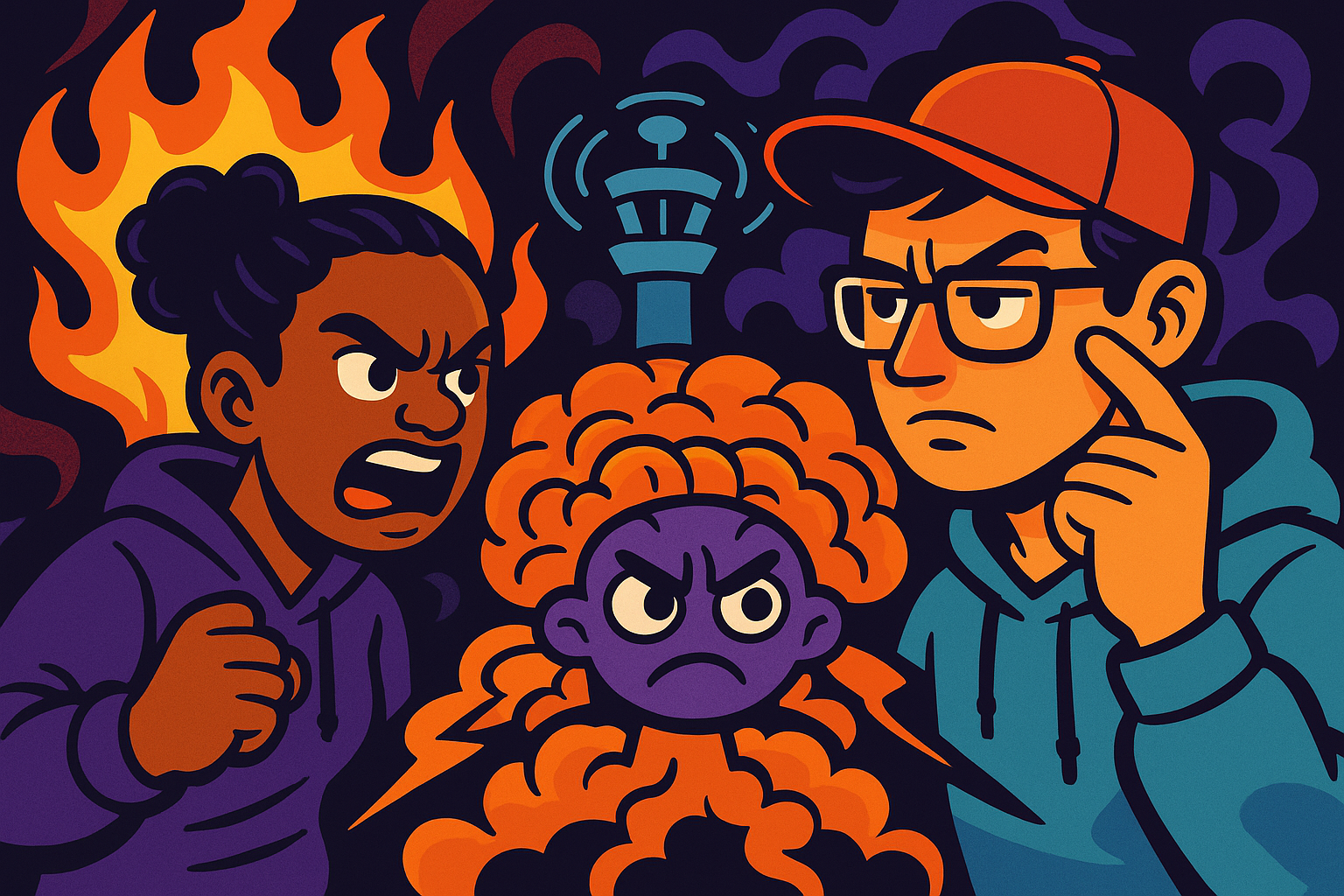
    Before we can manage our emotions, we need to understand where they come from. Think of your brain as having two key players in its emotional command center. First, you have the Amygdala, which I like to call the “Smoke Detector.” It’s a primitive, lightning-fast system deep in your brain that’s constantly scanning for threats. When it senses danger—whether it’s a real physical threat or the perceived threat of your partner’s critical tone—it sounds the alarm, triggering an immediate, instinctive “fight-or-flight” response. Your heart pounds, your muscles tense, and rational thought goes out the window.

    Then, you have the Prefrontal Cortex (PFC), located right behind your forehead. This is the “Air Traffic Controller.” It’s the more evolved, rational part of your brain responsible for planning, impulse control, and assessing situations with logic. The Air Traffic Controller receives the alarm from the Smoke Detector and has the power to evaluate it. It can say, “Okay, I see the alarm, but this isn’t a five-alarm fire. It’s just a disagreement. Let’s calm the system down and respond thoughtfully.”

    Emotional regulation is the conversation between your Smoke Detector and your Air Traffic Controller. It’s not about turning the Smoke Detector off—emotions are vital data!—but about strengthening the Air Traffic Controller’s ability to hear the alarm, assess the situation, and guide your response with wisdom instead of pure instinct.

    When Regulation Fails: The Four Horsemen of Relationship Apocalypse

    When our Air Traffic Controller is offline and the Smoke Detector is running the show, we fall into destructive communication patterns. My work is heavily influenced by the research of Dr. John Gottman, who identified four communication styles so toxic they can predict the end of a relationship. I see these “Four Horsemen” not as character flaws, but as clear, outward signs of internal emotional dysregulation.

    Understanding the Four Horsemen shifts the focus from blaming your partner (“You’re so critical!”) to recognizing a shared challenge (“We’re both getting overwhelmed and falling into this pattern. How can we help each other regulate?”).

    Let’s break them down as failures of emotional regulation:

    The Horseman The Underlying Regulation Failure The Antidote (The Regulated Response)
    1. Criticism
    Attacking your partner’s character (“You’re so lazy,” “You never listen”).
    Unregulated frustration or anger that gets expressed as blame. Gentle Start-Up. Use “I” statements to describe your feelings about a specific situation. “I feel frustrated when the dishes are left in the sink.”
    2. Defensiveness
    Responding to a complaint with a counter-attack or by playing the victim (“It’s not my fault, you’re the one who…”).
    Inability to regulate the impulse for self-protection; failing to soothe the feeling of being attacked. Take Responsibility. Find even a small part of the problem you can own. “You’re right, I could have helped with the dishes.”
    3. Contempt
    Treating your partner with disrespect (mocking, sarcasm, eye-rolling). This is the single greatest predictor of divorce.
    A severe failure where long-simmering negative feelings have gone unregulated and festered into disgust. Build a Culture of Appreciation. Actively scan for things your partner does right and express gratitude. Describe your own feelings and needs instead of attacking.
    4. Stonewalling
    Withdrawing from the conversation, shutting down, or giving the silent treatment.
    An extreme form of avoidance caused by physiological “flooding”—an overwhelming fight-or-flight response. Physiological Self-Soothing. Agree to take a 20-minute break to calm down before re-engaging.

    Building Your Emotional Regulation Toolkit

    The good news is that emotional regulation is a skill, not an inborn trait. Like strengthening a muscle, you can train your “Air Traffic Controller” to become more effective. Here are three foundational practices I guide my clients through.

    1. Become an Emotional Scientist: Start an Awareness Journal

    You cannot regulate an emotion you aren’t aware of. The first step is simply to notice. An emotion journal isn’t about judging your feelings, but about gathering data with curiosity. Each day, take five minutes to reflect on these prompts:

    • What was the strongest emotion I felt today?
    • What was the situation or trigger?
    • What story was I telling myself in that moment? (“He doesn’t respect me,” “I’m going to fail.”)
    • Where did I feel it in my body? (e.g., tightness in chest, heat in face)

    This practice builds the crucial link between your mind and body, helping you recognize the early warning signs from your “Smoke Detector” before it escalates into a full-blown alarm.

    2. Reframe Your Reality: The Power of Cognitive Reappraisal

    Cognitive Reappraisal is a powerful technique that involves changing the story you tell yourself about a situation to change its emotional impact. It’s about finding a more balanced, helpful, and realistic interpretation. When you catch a negative automatic thought, walk it through this simple, structured exercise based on Cognitive Behavioral Therapy (CBT):

    1. The Situation: Describe what happened objectively. (e.g., “My partner came home late from work and didn’t call.”)
    2. Initial Feeling & Thought: Name the emotion and the automatic thought. (e.g., “Feeling: Angry, hurt. Thought: ‘They don’t care about me.’”)
    3. Evidence Against the Thought: Challenge your story. Brainstorm other possibilities. (e.g., “They had a huge deadline,” “Their phone might have died,” “They are usually very considerate.”)
    4. Alternative, Balanced Thought: Create a new, more helpful thought. (e.g., “I’m feeling disconnected because they came home late without notice. I’ll assume something important came up and we can talk about it when things are calm.”)
    5. Re-evaluate Your Feeling: Notice how the new thought changes your emotional intensity. Often, the anger and hurt will soften, making space for a more constructive conversation.

    3. Calm the Body to Calm the Mind: Mindful Breathing

    When you’re emotionally flooded, your “Air Traffic Controller” (PFC) goes offline. The fastest way to bring it back is to calm your body’s physiological stress response. Mindful breathing is a simple but profound tool for this.

    A Simple Mindful Breathing Exercise:

    Find a comfortable position. Close your eyes or soften your gaze.

    1. Take a slow, deep breath in through your nose for a count of four, feeling your belly expand.

    2. Hold the breath for a count of four.

    3. Exhale slowly through your mouth for a count of six, letting go of tension.

    4. Repeat for 5-10 cycles.

    Your mind will wander. That’s normal. Each time it does, gently and without judgment, guide your attention back to the sensation of your breath.

    This practice activates your body’s relaxation response, slowing your heart rate and signaling to your “Smoke Detector” that the threat has passed. It creates the mental space needed for your rational brain to come back online.

    The Journey to Emotional Mastery

    Building healthy, lasting love begins with building ourselves. Emotional regulation isn’t about being a robot, devoid of feeling. It’s about becoming the calm, conscious captain of your own emotional ship, able to navigate the inevitable storms of a relationship with skill, grace, and compassion. It’s the work that allows you to stop fighting against each other and start turning towards each other, ready to solve problems as a team.

    The journey starts with one small step. This week, which tool will you try? Will you start an emotion journal, practice reframing one negative thought, or take three mindful breaths during a moment of stress? Share your experience or questions in the comments below—let’s build these skills together.

  • Understanding Emotional Regulation: A Comprehensive Guide

    Why Do We Keep Having the Same Fight? A Deeper Look at Emotional Regulation

    In my decade of work with couples and individuals, I’ve seen a recurring pattern. A couple sits in my office, exhausted and frustrated. They describe a fight they’ve had a hundred times. It might be about the dishes, being late, or a comment made at a party. The topic changes, but the painful, escalating dynamic is always the same. One partner feels attacked and shuts down; the other feels abandoned and protests louder. They’re stuck. They both ask, “Why does this keep happening? We love each other.”

    The answer, more often than not, lies in a skill we’re rarely taught but is fundamental to every healthy relationship, including the one we have with ourselves: Emotional Regulation. If you’ve ever felt hijacked by your feelings, said something you instantly regretted, or watched a minor disagreement spiral into a major conflict, then this guide is for you. This isn’t about blame; it’s about building a new kind of awareness and a toolkit that can transform your emotional life and your relationships.

    What Is Emotional Regulation, Really? Beyond “Just Control It”

    Let’s start by clearing up a common misconception. When people hear “emotional regulation,” they often think of suppression—stuffing feelings down, putting on a brave face, or maintaining rigid control. But this is not only inaccurate; it’s often counterproductive. True emotional regulation isn’t about having an iron grip on your feelings. It’s about skillfully influencing them.

    Think of your emotional system less like a wild horse to be broken and more like a sophisticated home thermostat. A thermostat doesn’t eliminate temperature; it modulates it. It senses when things are getting too hot or too cold and makes subtle adjustments to bring the environment back to a comfortable, desired state. Emotional Regulation is the process by which we influence which emotions we have, when we have them, and how we experience and express them.[1, 2] It’s the art of turning the dial, not flipping the off switch.

    The goal isn’t to stop feeling. It’s to feel without becoming overwhelmed, to respond thoughtfully instead of reacting impulsively, and to align our emotional expressions with our long-term goals and values.

    Your Emotional Blueprint: Why Regulation Can Feel So Hard

    If regulating emotions is a skill, why does it feel so automatic and difficult to change for so many of us? The answer lies in our brain’s wiring, much of which was laid down in our earliest years.

    Imagine your brain has two key players in this process. First, there’s the amygdala, your brain’s hypersensitive smoke detector.[2, 3] It’s constantly scanning for threats, and when it senses danger (real or perceived), it sounds the alarm, triggering a rapid, powerful emotional response—the classic “fight, flight, or freeze.” Then there’s the prefrontal cortex (PFC), which I like to call the brain’s wise CEO.[3, 4] The PFC is responsible for rational thinking, problem-solving, and impulse control. Its job is to hear the alarm from the amygdala, assess the situation, and decide on a measured, appropriate response. “Thanks, amygdala, I see the smoke, but it’s just burnt toast. We can stand down.”

    Healthy emotional regulation is a smooth dialogue between the smoke detector and the CEO. However, our early life experiences, particularly our attachment to our primary caregivers, write the code for how these two parts of the brain communicate.[5, 6]

    • If you had caregivers who were consistently responsive and helped soothe you when you were distressed, your brain learned that the world is generally safe and that big emotions can be managed. Your CEO developed a strong, calming connection to your smoke detector. This is the foundation of secure attachment.
    • If your caregivers were inconsistent, neglectful, or frightening, your smoke detector may have become hyper-vigilant, and your CEO may not have had enough practice calming it down.[4, 7] This can lead to insecure attachment patterns, where the smoke alarm goes off frequently and loudly, often hijacking the entire system before the CEO can even get a word in.

    This is why trying to “just think rationally” in the heat of the moment can feel impossible. It’s not a personal failing; it’s a neurological reality. Your brain is running on old software, a survival program that was adaptive in childhood but may be causing chaos in your adult relationships.

    A Practical Map for Your Feelings: The 5 Choices You Always Have

    The good news is that we can update this software. The first step is understanding the points at which we can intervene. Stanford psychologist Dr. James Gross developed a brilliant framework called the Process Model, which I think of as a practical “dashboard” for your emotions.[1, 8] It shows that every emotional experience unfolds in a sequence, and at each step, you have a choice. The earlier you intervene, the less effort it takes.

    Here are the five intervention points:

    1. Situation Selection: This is your first and most powerful choice—deciding which situations to enter or avoid. If you know that family gatherings with a certain critical relative always leave you feeling drained and angry, you might choose to attend for a shorter time or skip it altogether.
    2. Situation Modification: If you can’t avoid a situation, you can change it. This is about being a proactive architect of your environment. For example, if you and your partner need to have a difficult conversation, you can modify the situation by agreeing to put your phones away, talk at a time when you’re not tired, and commit to not interrupting each other.
    3. Attentional Deployment: Once you’re in a situation, you have the power to direct your focus. Are you going to fixate on your partner’s annoying chewing sound, or can you shift your attention to the interesting story they’re telling? This includes distraction (focusing on something neutral) and concentration (zooming in on a positive aspect).
    4. Cognitive Change: This is the superpower of reappraisal. It’s about changing the story you tell yourself about a situation, which in turn changes its emotional meaning.[2, 9] If your partner is quiet, your initial thought might be, “They’re mad at me.” A reappraisal could be, “They seem stressed from work; maybe they just need some quiet time.”
    5. Response Modulation: This is the last stop. The emotion is already fully active, and you’re trying to influence your response—your behavior, your physiology, your internal experience. This is where strategies like taking deep breaths to lower your heart rate, suppressing a facial expression, or going for a run to burn off anger come in. It works, but it takes the most energy because the emotional train has already left the station.
    Stage Description Relationship Example
    Situation Selection Choosing to approach or avoid a situation. Deciding not to discuss finances when you’re both tired and hungry.
    Situation Modification Actively changing a situation to alter its emotional impact. Agreeing to a 10-minute time limit for a tense topic.
    Attentional Deployment Directing your focus within a situation. During a disagreement, focusing on your partner’s underlying hurt instead of their angry words.
    Cognitive Change Changing how you interpret a situation to alter its emotional meaning. Reinterpreting your partner’s request for space from “rejection” to “a need for self-soothing.”
    Response Modulation Influencing your emotional response after it has been generated. Taking three deep breaths after feeling a surge of anger.

    When Your “Check Engine” Light Is On: Recognizing Emotional Dysregulation

    When we consistently struggle to use these strategies effectively, we can experience emotional dysregulation. This isn’t a diagnosis in itself but rather a core difficulty that underlies many mental health challenges.[10] It’s like the “check engine” light on your emotional dashboard—a signal that the system is overwhelmed and needs attention.

    Signs of emotional dysregulation include [11, 7, 12]:

    • Intense Emotional Reactions: Your feelings feel overwhelming, like a 0-to-100 reaction to a minor trigger.
    • Rapid Mood Swings: Your emotional state feels unstable and can shift dramatically in a short period.
    • Impulsive Behaviors: You act on strong emotions without thinking, leading to things like angry outbursts, reckless spending, or substance use.
    • Relationship Difficulties: Your emotional patterns create conflict, instability, and push-and-pull dynamics with loved ones.
    • Avoidance: You go to great lengths to avoid situations or feelings that might trigger you, leading to isolation.

    Seeing these signs is not a reason for shame. It’s a call for compassion and a new set of tools.

    Your Self-Regulation Toolkit: Strategies to Calm the Storm Within

    Building better emotional regulation is a practice. Here are a few evidence-based strategies from my clinical toolkit that you can start using today.

    1. Master Cognitive Reappraisal: This is your most powerful antecedent-focused tool. When you feel a strong negative emotion, get curious about the thought behind it.
      • Step 1: Identify the Story. What is the automatic interpretation you’re making? (“My boss didn’t praise my work, so she thinks I’m incompetent.”)
      • Step 2: Challenge the Story. Is this 100% true? What are other possible explanations? (“She could be busy. Maybe she hasn’t reviewed it yet. Maybe praise isn’t her style.”)
      • Step 3: Choose a More Balanced Story. Find a new interpretation that is more realistic and less emotionally activating. (“I’ll wait for her formal feedback. One project doesn’t define my entire performance.”)
    2. Practice Mindfulness: Mindfulness is the practice of paying attention to the present moment without judgment.[13] Instead of getting swept away by an emotion, you learn to observe it like a cloud passing in the sky. This creates a crucial pause between feeling an emotion and reacting to it. A simple way to start is to focus on your breath for just one minute, noticing the sensation of air entering and leaving your body.
    3. Deploy the Strategic Timeout: In relationships, this is a game-changer. A timeout is not the silent treatment or storming out.[14] It is a pre-agreed, respectful pause to prevent emotional flooding.[15, 16]
      • Agree on it beforehand: When you’re both calm, create a plan. What will be your signal word (e.g., “Pause”)?
      • Call it early: Don’t wait until you’re at a 10/10 anger level. Call it when you feel yourself escalating to a 4 or 5.
      • Set a return time: Say, “I need to take 20 minutes to calm down, and then we can come back to this.” This reassures your partner you’re not abandoning them.
      • Self-Soothe: During the break, do something to calm your nervous system—deep breathing, a short walk, listen to music. Do not ruminate on the argument.

    From “Me” to “We”: Building Emotionally Resilient Relationships

    While self-regulation is the foundation, the ultimate goal in a partnership is Co-Regulation. This is the beautiful, interactive process where partners help regulate each other’s nervous systems, creating a shared sense of safety and calm.[17, 15] When your partner is distressed, your calm presence can soothe them. When you’re anxious, their validating words can ground you. This is the essence of a secure, functioning attachment.

    The work of Dr. John Gottman brilliantly illustrates what happens when co-regulation breaks down. He identified four communication patterns, which he famously called the “Four Horsemen of the Apocalypse,” that are powerful predictors of relationship failure.[18, 19] Each horseman is a clear sign of emotional dysregulation playing out in real-time.

    But for every horseman, there is a powerful antidote—a skill that replaces a dysregulated reaction with a regulated, connecting response.

    The Horseman (Dysregulated Pattern) The Antidote (Regulated Skill)
    1. Criticism: Attacking your partner’s character (“You’re so lazy!”). Gentle Start-Up: Use “I” statements to talk about your feelings and needs (“I feel overwhelmed when the dishes pile up. Could we make a plan?”).
    2. Contempt: Attacking with disrespect, sarcasm, or mockery. The single greatest predictor of divorce. Build a Culture of Appreciation: Actively look for things to appreciate and express gratitude for. This builds a buffer of positive feeling.
    3. Defensiveness: Playing the victim or making excuses to deflect blame (“It’s not my fault!”). Take Responsibility: Find even a small part of the problem you can own. (“You’re right, I should have called. I’m sorry.”)
    4. Stonewalling: Withdrawing from the interaction to avoid conflict (the silent treatment). Physiological Self-Soothing: Recognize you’re feeling flooded and take a strategic timeout to calm down before re-engaging.

    Your Path Forward

    Understanding emotional regulation is like being handed the operating manual for your own heart and mind. It reveals that your most painful reactions are not character flaws but learned patterns—and anything that was learned can be unlearned and replaced with something more skillful.

    The journey begins with self-awareness (understanding your blueprint and your triggers), expands with a commitment to practice (using your self-regulation toolkit), and ultimately blossoms in your relationships as you learn to co-create safety and connection with those you love. This is the core work of building a relationship that doesn’t just survive, but thrives.

    So, I leave you with a question to reflect on: Which of these ideas resonates most with your experience, and what is one small, compassionate step you can take this week to practice a new way of relating to your emotions? Share your thoughts in the comments below—let’s learn from each other.

  • Heal Past Wounds: A Journey to Emotional Recovery

    Hi everyone, it’s Dr. Love. Over my years as a relationship psychologist, I’ve sat with hundreds of clients who all share a variation of the same, painful story. It goes something like this: “I don’t understand why this keeps happening. I meet someone wonderful, things feel right, but as soon as we get close, I either panic and run, or I find myself drawn back to partners who are emotionally distant, critical, or unavailable—just like…”

    That unfinished sentence is where the ghost of the past lives. Many of us are navigating our present relationships haunted by the invisible wounds of our past. We think we’re making conscious choices, but often, an older, wounded part of us is running the show, unconsciously replaying painful patterns in a desperate attempt to finally get it right. If this feels familiar, you’re not alone. Today, we’re going on a journey—not to erase the past, but to understand its power, heal its wounds, and finally write a new, healthier chapter for your love life.

    Why We Replay the Past: Understanding Trauma’s Echo in Our Relationships

    First, let’s demystify the word ‘trauma.’ It isn’t just reserved for catastrophic, life-threatening events. Psychological trauma is any experience that shatters your sense of security and leaves you feeling overwhelmed and helpless. This can include acute events like an accident or betrayal, but it can also be chronic and subtle, like growing up with parents who were emotionally unavailable (a phenomenon known as Childhood Emotional Neglect). The defining factor isn’t the event itself, but your subjective emotional experience of it.

    When these wounds are left unresolved, our psyche develops a strange and powerful coping mechanism that Sigmund Freud called the Repetition Compulsion. Think of it like a movie director living in your subconscious. This director is obsessed with a painful scene from your past—a moment of neglect, abandonment, or betrayal. Convinced they can achieve a different outcome, they keep recasting new people in the same old roles, hoping that this time, the ending will be different. This is why a person who grew up with a critical parent might repeatedly find themselves attracted to critical partners, unconsciously hoping to finally win the approval they never received. It’s a painful, frustrating cycle, but it’s not a personal failing; it’s a deeply human, unconscious attempt to heal.

    The Unseen Enemy Within: Navigating Shame and Self-Doubt

    Before we can break these external patterns, we have to face the internal barriers that keep them in place. The most formidable of these is shame. The brilliant researcher Dr. Brené Brown has taught us the critical difference between guilt and shame. Guilt is the feeling “I did something bad.” It’s adaptive; it helps us correct our behavior. Shame, however, is the intensely painful belief that “I am bad.” It’s the feeling that we are fundamentally flawed and unworthy of love and belonging.

    Trauma, especially interpersonal trauma, is a breeding ground for shame. It leaves us with toxic narratives like “I’m unlovable,” “I’m not good enough,” or “It was my fault.” As Dr. Brown’s research shows, shame grows exponentially in secrecy, silence, and judgment. We hide our stories, convinced we’re the only ones, which only deepens the wound. This is why the path to healing is paved with vulnerability—the courage to be seen in our imperfection and to share our story with someone who has earned the right to hear it. When we are met with empathy, shame cannot survive. This internal battle with shame is often the source of the persistent self-doubt that sabotages our recovery, whispering that we’re not strong enough to heal or deserving of a healthy relationship.

    Your Personal Healing Toolkit: Practical Steps to Reclaim Your Inner World

    Healing isn’t a passive process; it’s an active, courageous act of reclaiming yourself. While professional therapy is often a crucial part of this journey, there are powerful tools you can begin using today to build a foundation of inner safety and kindness.

    1. Practice Self-Compassion: Your Inner Ally. For years, I’ve guided clients using the groundbreaking work of Dr. Kristin Neff. Self-Compassion is not self-pity or self-indulgence; it’s treating yourself with the same kindness you would offer a dear friend who is suffering. It has three core components:
      • Self-Kindness: Actively comforting yourself and being gentle with your imperfections instead of engaging in harsh self-criticism.
      • Common Humanity: Recognizing that suffering and personal failure are part of the shared human experience. You are not alone in this.
      • Mindfulness: Observing your painful thoughts and feelings without suppressing them or getting lost in them.

      A simple way to start is with the “Self-Compassion Break.” In a moment of pain, pause and tell yourself: 1. “This is a moment of suffering.” (Mindfulness) 2. “Suffering is a part of life.” (Common Humanity) 3. Place a hand over your heart and say, “May I be kind to myself.” (Self-Kindness).

    2. Embrace Radical Acceptance: Stop the War Within. Psychologist and meditation teacher Tara Brach offers a transformative concept called Radical Acceptance. It means clearly recognizing what you are feeling in the present moment and meeting that experience with compassion, rather than judgment or resistance. It is not about condoning what happened to you; it’s about ending the internal war against your own painful feelings. A powerful tool for this is the RAIN practice:
      • Recognize what is happening.
      • Allow the experience to be there, just as it is.
      • Investigate with kindness and curiosity.
      • Nurture with self-compassion.

      This practice gently guides you to turn toward your pain instead of running from it, which paradoxically lessens its grip on you.

    3. Use Therapeutic Journaling: Author Your Own Story. Writing is a profound way to process emotions and create a coherent narrative out of chaotic memories. It provides a safe space to explore your inner world. Instead of letting your past define you, you can become the author of your healing journey. Try these prompts:
      • “Write a letter to your younger self, offering the words of love, protection, and wisdom you needed to hear back then.”
      • “If my [anger/sadness/fear] could speak, what would it say? What does it need from me right now?”
      • “What is one limiting belief my past has taught me? What is a new, more compassionate belief I choose to practice today?”

    Healing in Connection: How Your Partner Can Be Your Greatest Ally

    While individual work is foundational, many of us were wounded in relationships, and so we must ultimately heal in relationships. A safe, loving partnership can provide the “corrective emotional experience” that helps rewire our brains for security and trust. For this, I consistently turn to the research-backed principles of the Gottman Method, developed by Drs. John and Julie Gottman. Their “Sound Relationship House” theory provides a brilliant blueprint for building a partnership that can serve as a healing sanctuary.

    A core finding from the Gottman Institute is that successful couples require at least five positive interactions for every one negative interaction. For a trauma survivor, this positive emotional bank account is not just a nice-to-have; it’s essential for creating the psychological safety needed to heal.

    Here are a few “floors” of the Sound Relationship House that are especially vital for couples navigating the effects of trauma:

    • Build Love Maps: This is the foundation. It’s about creating a richly detailed map of your partner’s inner world—not just their favorite foods, but their hopes, fears, and importantly, their trauma triggers. For the partner of a survivor, this means getting curious: “What helps you feel safe when you’re overwhelmed?” “What are the subtle signs that you’re feeling triggered?” This act of deep, compassionate knowing makes a survivor feel truly seen.
    • Share Fondness and Admiration: This is the antidote to contempt and the shame that trauma instills. It involves regularly and specifically vocalizing what you appreciate about your partner. For someone whose self-worth has been shattered, hearing a sincere, “I admire how you handled that stressful situation,” can be profoundly healing.
    • Turn Towards Instead of Away: This is about responding to what the Gottmans call “bids for emotional connection.” A bid can be as small as, “Look at that sunset.” When a partner “turns towards” by engaging with the bid (“Wow, that’s beautiful”), they are sending a powerful message: “You matter. I’m here.” For someone who experienced emotional neglect, these small moments of connection are the building blocks of trust.

    By consciously working on these areas, a couple can transform their relationship from a potential minefield of triggers into a secure base from which both partners can grow and thrive.

    Writing Your New Chapter: From Survivor to Thriver

    Healing from past wounds is not about forgetting what happened. It’s about integrating those experiences into your life story in a way that no longer defines your present or dictates your future. It’s a journey that requires us to look inward with courage, to dismantle the shame that has held us captive, and to equip ourselves with tools of self-compassion and acceptance. And finally, it’s about learning to build and nurture relationships that are sources of safety and connection, not reenactments of past pain.

    This path is not always linear, and it requires immense patience. But by taking these steps, you move from being a passive victim of your history to the active, empowered author of your future. You learn that your wounds do not make you unworthy of love; they are a testament to your resilience.

    I’d love to hear from you. What is one small step of self-compassion you can take for yourself today? Share your thoughts in the comments below—your story might be the “me too” someone else needs to hear on their own healing journey.

  • Mastering Emotional Regulation: Understanding the Zones

    Have you ever been there? You and your partner start a conversation about something simple—the overflowing dishwasher, a forgotten errand—and within minutes, you’re in a full-blown battle. Voices rise, tears well up, and suddenly one of you shuts down completely while the other pushes harder. Later, amidst the emotional wreckage, you think, “How did we get here? I didn’t even mean what I said.”

    In my decade of work with couples, I’ve seen this pattern countless times. It’s not a sign of a doomed relationship; it’s a sign of a dysregulated one. We often believe that willpower or better communication scripts are the answer. But the truth is, you can’t talk your way out of a problem when your brain’s emotional circuits are overloaded. What you need isn’t just a new set of words, but a user-friendly map to your inner world. Today, I want to share one of the most transformative tools I use with my clients: a framework called The Zones of Regulation.

    Your Emotional Dashboard: A Quick Guide to the Four Zones

    Imagine your emotional state as a car’s dashboard or a traffic light system.[1] It gives you quick, color-coded information about your internal engine. The Zones framework, created by occupational therapist Leah Kuypers, simplifies our complex inner states into four easy-to-understand colors.[2, 3] This isn’t about judging your feelings; it’s about identifying them. A core principle here is that all Zones are okay.[4, 5] The goal isn’t to live in the Green Zone forever, but to build the awareness to navigate all of them.

    A crucial insight I share with all my clients is this: “Regulated” does not mean “calm”.[6] Regulation is the ability to manage your state according to the situation. Sometimes, excitement (Yellow Zone) at a concert or elation (Red Zone) at a wedding is perfectly regulated. The mastery is in the awareness and the choice, not the suppression of feeling.

    Here’s a simple breakdown of what each Zone feels like:

    Zone (Color) Energy & Alertness Common Feelings
    Blue Zone Low, slow, sluggish [7, 5] Sad, tired, sick, bored, lonely [4, 5]
    Green Zone Calm, alert, focused [7, 5] Happy, peaceful, content, ready to learn [4, 5]
    Yellow Zone Heightened, elevated, “on alert” [7, 5] Stress, frustration, anxiety, excitement, silliness, nervousness [4, 5]
    Red Zone Extremely high, overwhelming, “out of control” [7, 5] Rage, panic, terror, elation, devastation [4, 5]

    The Red Zone and the “Emotional Flood”: Why Your Brain Goes Offline in a Fight

    Now, let’s connect this to those explosive arguments. Renowned relationship researcher Dr. John Gottman identified a state he calls “emotional flooding”—a physiological response where you’re so overwhelmed that your fight-or-flight system takes over.[8] Your heart rate spikes, adrenaline courses through you, and the logical, problem-solving part of your brain (the prefrontal cortex) effectively goes offline.[9, 10]

    In the Zones framework, emotional flooding is the Red Zone.[9, 11] When you’re in the Red Zone, you are neurologically incapable of rational discussion, empathy, or creative problem-solving. This is why you say things you don’t mean, can’t seem to listen, or feel an overwhelming urge to either flee the room or escalate the fight.

    This makes the Yellow Zone the most critical territory in conflict management. It’s the warning light on your emotional dashboard.[7, 12] It’s when you feel your frustration building, your voice getting tight, or your stomach clenching. The Yellow Zone is where you still have some control.[5, 13] It’s the crucial moment where you can choose to hit the brakes before you spin out of control into the Red Zone.

    From “Me vs. You” to “Us vs. the Problem”: The Power of Co-Regulation

    So, what do you do when you notice you or your partner entering the Yellow Zone? This is where we shift from self-regulation (managing your own state) to the relationship superpower of co-regulation.[14] Co-regulation is the beautiful, interactive process where you use your connection to help each other feel safe and return to a state of balance.[15, 16] It’s moving from “I need to calm down” to “Let’s help us calm down”.[17]

    The Zones provide the simple, non-blaming language needed for this. Instead of saying, “You’re overreacting!” you can say, “I’m noticing I’m in the Yellow Zone, and I need to take a break.” This isn’t an accusation; it’s a report on your internal state. It invites collaboration, not defensiveness.

    Here are some practical co-regulation techniques you can practice together:

    • Create a Shared Signal: Agree on a word or phrase like “Yellow Zone” or “Time out” that either of you can use to pause a heated discussion without blame. This is your emergency brake.
    • Practice Shared Breathing: When things get tense, stop talking for one minute. Sit facing each other and try to sync your breathing. Inhale for four counts, hold for four, exhale for six. This simple act can powerfully align your nervous systems.[14]
    • Use Validating Touch: If it feels right for both of you, a simple act like holding hands or placing a hand on your partner’s arm can convey safety and support without words, releasing oxytocin (the “bonding hormone”) and calming the nervous system.[14, 16]
    • Schedule Daily Check-ins: Make it a habit to ask, “What Zone are you in right now?” This normalizes talking about your internal states and helps you stay attuned to each other’s emotional weather.[16]

    Building Your Proactive “Emotional First-Aid Kit”

    The final piece is moving from being reactive to being proactive. This means building your personal and shared “toolbox” of strategies to manage your Zones before a conflict even starts.[5] It also involves setting healthy emotional boundaries, which are the limits you set to protect your well-being and energy.[18] A boundary isn’t a wall; it’s a gate that you control.

    For example, a proactive boundary might be: “I know I get overwhelmed easily after a long day at work. I need 15 minutes to decompress by myself before we talk about household logistics.” This isn’t a rejection; it’s a wise strategy to keep yourself in the Green Zone and prevent an unnecessary slide into Yellow.

    Start a conversation with your partner about what tools work for each of you. Does one of you need movement to get out of the Blue Zone? Does the other need quiet to avoid the Yellow Zone? Knowing this about each other is an act of profound care.

    Your Relationship’s New Operating System

    Mastering emotional regulation isn’t about eliminating conflict. Conflict is a natural and even healthy part of growth. It’s about changing how you navigate that conflict. The Zones of Regulation framework gives you a map, a shared language, and a set of practical tools to stop fighting against each other and start working together.

    By understanding your own emotional dashboard and learning to co-regulate with your partner, you can transform your most challenging moments into opportunities for deeper connection and trust. You can finally stop asking “How did we get here?” and start confidently choosing where you want to go next, together.

    I’d love to hear from you in the comments. What are the first physical or emotional signals that tell you you’re moving into the Yellow Zone?