Welcome to LovestbLog. I’m Dr. Love, and after over a decade working with individuals ready to find lasting connection, I’ve noticed one consistent pitfall: the belief that the secret to a thriving relationship is simply finding “the right person.”
I call this the Relationship Shopping Trap. We spend all our energy scanning the dating apps, looking for someone who checks all the external boxes (income, location, appearance), while neglecting the most important part of the equation: our own emotional foundation.
The truth, backed by decades of psychological research, is that the healthiest partnerships are not built by perfect people, but by individuals who have done the internal work to understand themselves deeply and relate to others with intention and skill.[1]
This is the core of our STB philosophy: Start To Build. You must become the person capable of finding and maintaining a healthy relationship before you can expect one to flourish. Relationship readiness isn’t about how long you’ve been single or how much you earn; it’s about your emotional intelligence and maturity.[2]
The Four Pillars: Your Relationship Readiness Blueprint
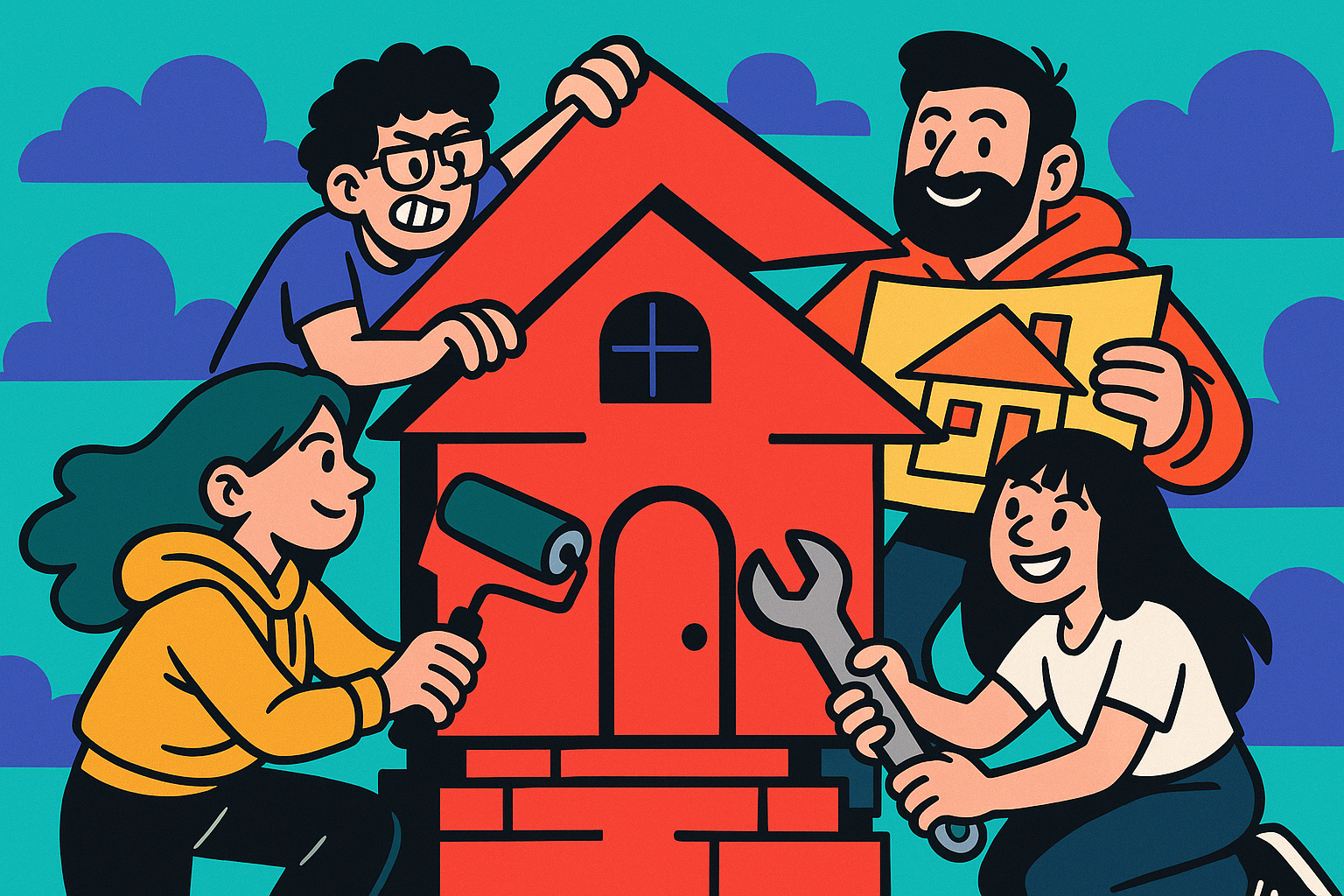
If a relationship is a sturdy house, your readiness is the foundation, the walls, the tools, and the architectural blueprint. I designed this quiz based on four key, measurable psychological dimensions that determine your capacity for true partnership. These are the skills that predict whether your relationship will merely survive, or truly thrive [1]:
Pillar 1: Internal Landscape (The Foundation)
This pillar measures your emotional maturity and where you source your self-worth. Self-awareness is the cornerstone here: the ability to recognize your emotional triggers and navigate them constructively.[2]
Dr. Love’s Insight: The crucial difference between ready and unready is where you anchor your value. If you base your self-worth on how other people treat you, criticism becomes terrifying and conflict turns into a crisis of identity.[3] When your self-worth is internal, failure is simply “part of life” [4], allowing you to approach challenges with patience and maturity.[2]
- Do you have healthy coping mechanisms (journaling, exercise) to manage stress, or do you resort to aggression or avoidance? [2]
- Do you genuinely enjoy your own company and success while single? (Independence) [5]
Pillar 2: Self-Definition and Healthy Boundaries (The Walls)
Boundary work is perhaps the most practical form of self-love. A boundary is not a rigid wall to keep people out; it’s a shared guideline that improves the relationship by establishing mutual understanding and respect for autonomy.[6]
A core component of readiness is knowing exactly “where I begin and end, and where others begin and end.” [3] If you don’t know where you end, you inevitably take responsibility for the other person’s thoughts, feelings, and behaviors.
A major red flag I see is the Implied Expectation Trap—expecting your partner to know what you need or want without having to explicitly say anything.[3] This always leads to resentment. Readiness means you have the courage to define and articulate your needs, rather than sacrificing them to gain approval (e.g., struggling to say “no”).[3]
Pillar 3: Interaction and Conflict Skills (The Safety System)
The ability to fight well is the hallmark of a healthy partnership. Dr. John Gottman’s research identified four communication patterns—the Four Horsemen—that are highly corrosive to relationships.[7] Your readiness is measured by how often you use these behaviors, and more importantly, how well you use their Antidotes.
For example, Contempt (sarcasm, eye-rolling, hostile humor) is the single most powerful predictor of relationship failure because it conveys disgust and superiority.[7] Its antidote is clearly describing your own feelings and needs without sarcasm.
When assessing this pillar, we look for two key skills:
- Gentle Start Up: Using “I” statements to state your need, not your complaint. (e.g., “I feel upset when the trash is overflowing. I would appreciate it if you could take it out after dinner”).[7]
- Physiological Self-Soothing: If you feel emotionally flooded (Stonewalling), do you communicate that you need a 20-minute time-out to calm down, or do you just shut down and withdraw? [2, 7]
A secure partner acts as an ally during stressful times, supporting their partner rather than trying to take over or “fix” the problem.[8]
Pillar 4: Intentionality and Standards (The Vision)
Relationship readiness requires Conscious Dating.[9] This means dating with a clear purpose and a written vision, rather than just passively seeing who comes along.[5] Without this clarity, you risk emotional exhaustion and burnout from meaningless engagements.[9]
We assess this through two lenses:
- Vision and Non-Negotiables: Do you have a clear, written list of at least ten value-based requirements for a partner (e.g., commitment to growth, honesty, emotional stability), or are your standards vague? [5]
- Realism vs. Rigidity: Do your standards protect you, or do they serve as an emotional shield? Standards are rigid if they lead you to discard potential partners solely based on superficial factors (e.g., a specific height, job title, or living situation).[10] Readiness includes the patience to hear someone out, recognizing you are seeking a human being, not a checklist.[10]
Your Quiz Results: Red Light, Yellow Light, Green Light
The quiz uses a straightforward scoring model to give you immediate, actionable feedback.[5] Remember, your readiness level is not a judgment; it’s a compass pointing toward your necessary next steps.
| Score Range | Readiness Level | Dr. Love’s Recommendation |
|---|---|---|
| 80 – 100 | Green Light | You are highly prepared. Focus on maintaining internal health and screening for compatibility with your clear, value-based standards.[5, 4] |
| 50 – 79 | Yellow Light | You are making progress. Slow down your dating pace and focus on targeted skill development in your weakest pillar (e.g., communication or boundaries).[5] |
| 0 – 49 | Red Light | Pause seeking a partner. Dedicate this time to core self-work: self-value, emotional regulation, and autonomy. This is crucial for healthy forward movement.[5, 11] |
The Commitment to Self-Work (Your Next Steps)
Relationship readiness is a dynamic process, not a final destination. If your score lands you in the Yellow or Red Light zones, the most empowering thing you can do is make a commitment to self-work. Here is an example of the kind of practical strategies you can apply based on your lowest-scoring pillar:
- If Pillar 1 (Internal Landscape) is Low: Commit to 20 minutes of daily journaling to track your emotional triggers. Practice self-compassion to counteract the habit of ruminating over past mistakes.[4, 11]
- If Pillar 2 (Self-Definition) is Low: Identify three specific areas where you feel taken advantage of (time, emotional bandwidth, money). Practice “No, but thank you” refusal techniques to establish clear limits without apologizing for your needs.[3, 6]
- If Pillar 3 (Interaction Skills) is Low: Master the Gentle Start Up. Promise yourself and any partner to use “I need…” instead of “You always…” in disagreements. Institute the 20-minute physiological time-out when conflict escalates.[7]
- If Pillar 4 (Intentionality) is Low: Write down 10 core values. Next, write down 10 corresponding non-negotiable relationship requirements. If your list includes mostly superficial traits, challenge yourself to dig deeper for character-based standards.[5]
The journey to a secure, thriving partnership begins not by chasing others, but by building a secure, thriving self. That’s the LovestbLog way. Take the quiz now and get your personal blueprint for growth.
Dr. Love’s Final Thought: Relationship readiness is the proactive choice to become whole, not just to find your “other half.” I’m curious—which of the Four Pillars do you intuitively feel is your strongest asset, and which one requires the most intentional building right now? Share your thoughts below!