Why a “Simple” Disagreement About the Dishes Can End in a Week of Silence
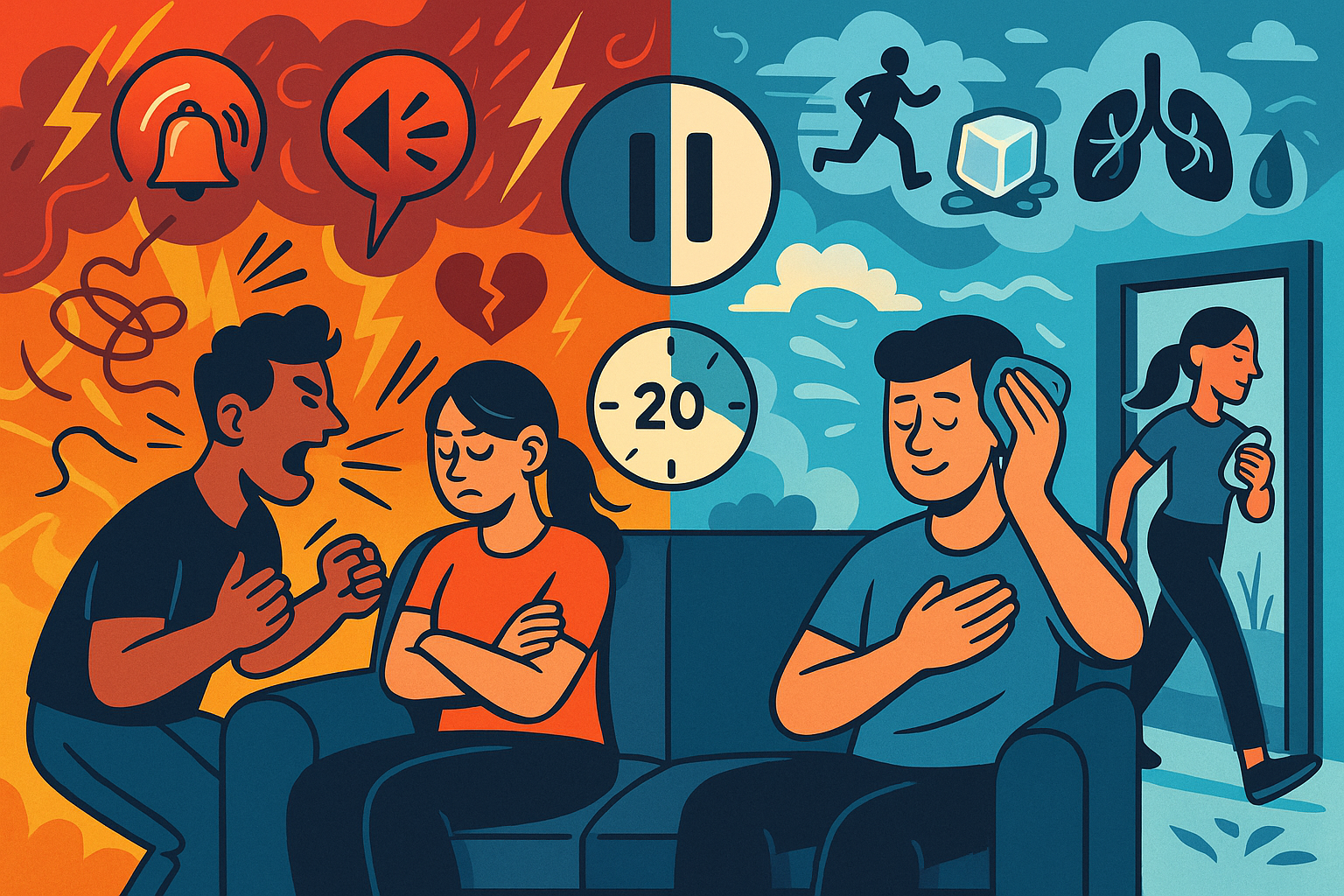
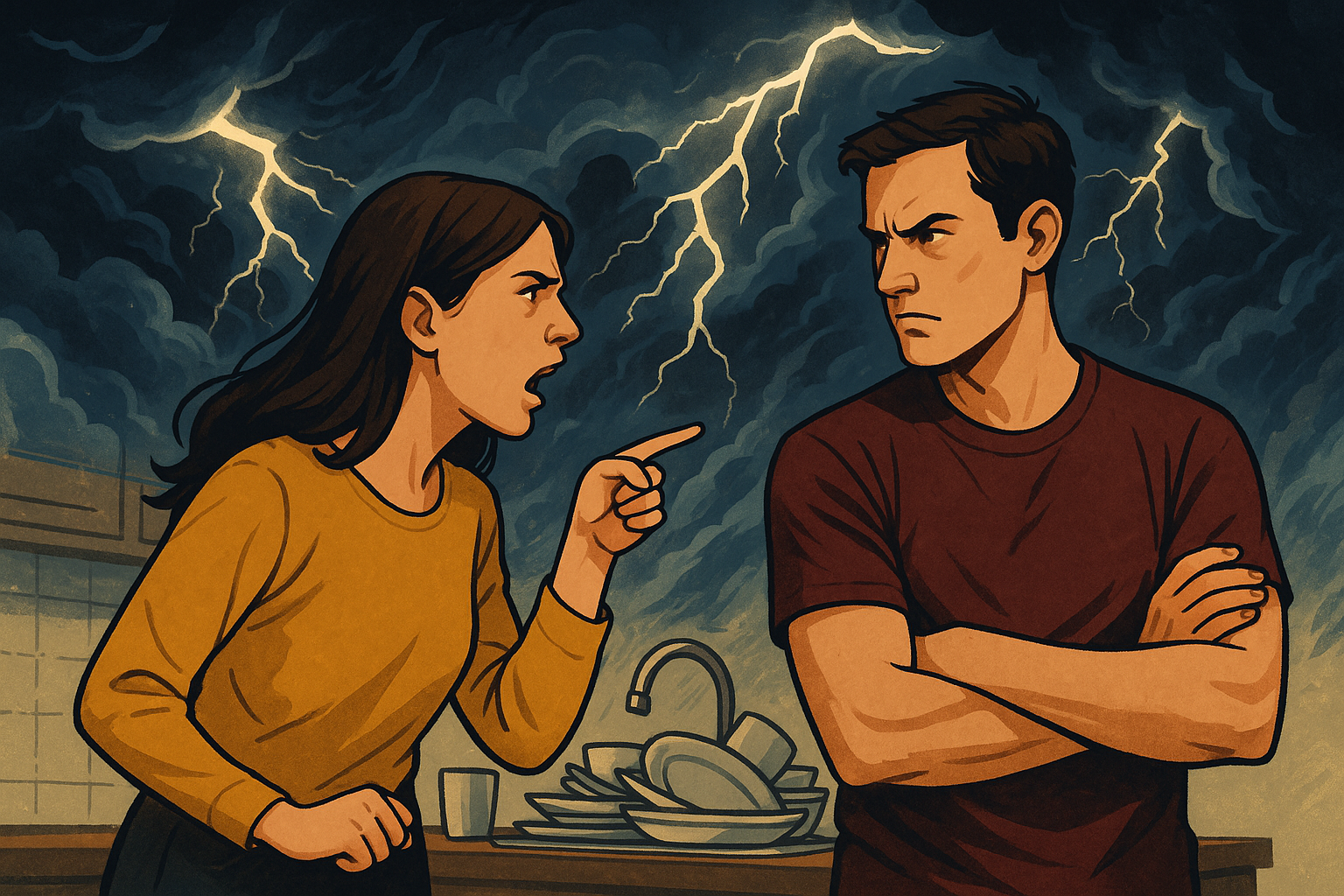
Hi everyone, Dr. Love here. Let’s talk about a scene I’ve witnessed countless times in my practice. It starts with something trivial—a sink full of dishes, a forgotten errand, a casual comment taken the wrong way. Within minutes, the emotional temperature in the room skyrockets. Voices are raised, accusations fly, and what began as a minor issue spirals into a major conflict, often ending in slammed doors and a painful, lingering silence. Does this sound familiar?
If you’ve ever found yourself wondering, “How did we get here?” you’ve come to the right place. The answer often lies not in the dishes or the errand, but in a crucial, learnable skill: Emotional Regulation. For years, I’ve guided individuals and couples through this territory, and I can tell you with certainty that mastering this skill is the single most powerful investment you can make in your personal well-being and the health of your relationships.
But here’s the catch: most people misunderstand what emotional regulation truly is. It’s not about becoming a robot, suppressing your feelings, or “controlling” your anger until it disappears. That’s a recipe for disaster. True emotional regulation is far more nuanced and empowering.
The Art of Emotional Navigation: What Regulation Really Means
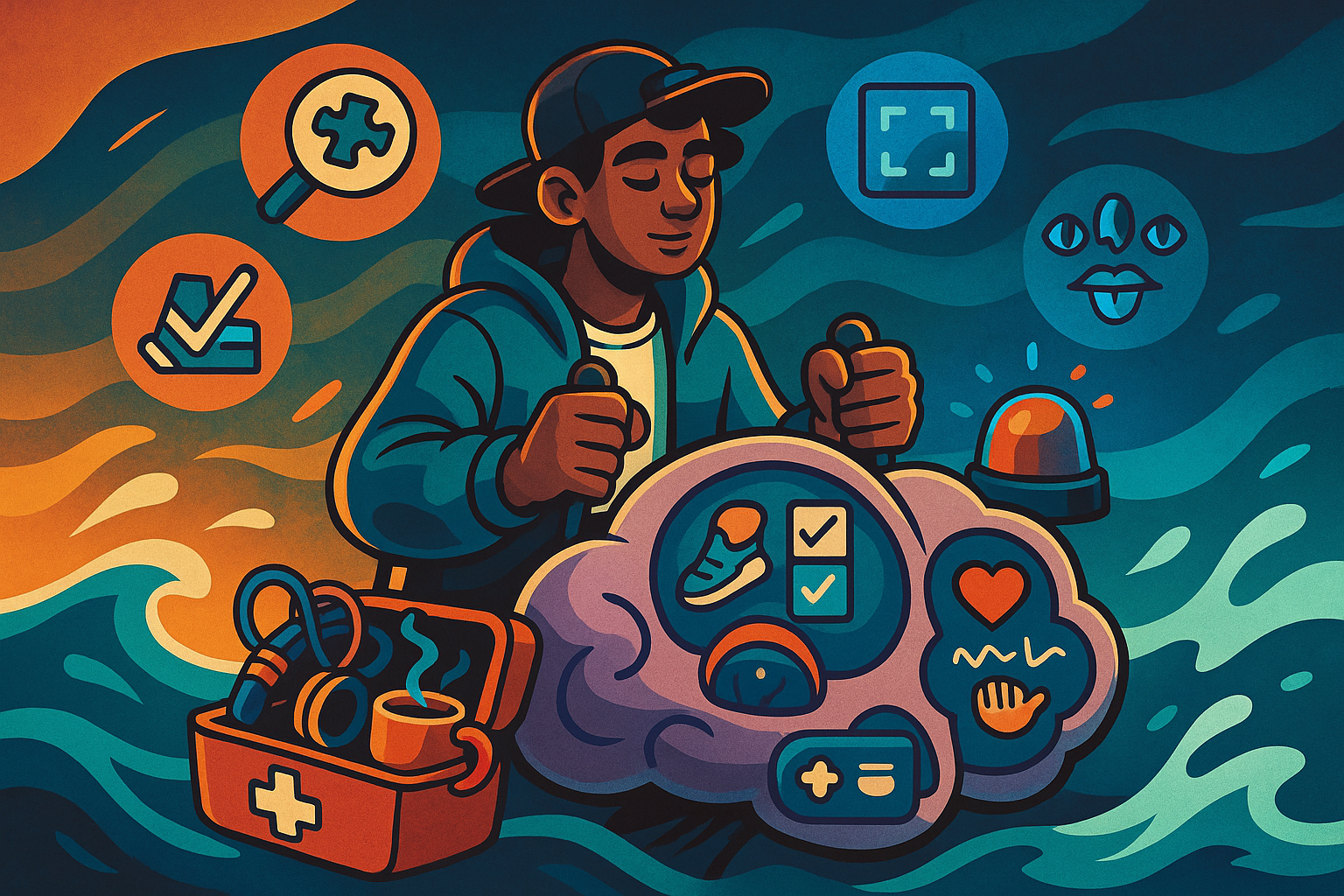
Think of your emotions as the weather on the ocean. Some days are calm and sunny, others are stormy and turbulent. A novice sailor gets tossed around by every wave, reacting with panic. A master sailor, however, doesn’t try to stop the storm. Instead, they use their skill to adjust the sails, steer the rudder, and navigate through the waves, using the wind’s power to move forward. Emotional Regulation is the art of becoming that master sailor of your inner world.
It’s the process of influencing which emotions you have, when you have them, and how you experience and express them to achieve your goals. Notice the key word is “influence,” not “suppress.” It’s about working *with* your emotions, not against them.
To build a solid foundation, it’s crucial to distinguish this skill from other terms that are often used interchangeably but mean very different things. This isn’t just academic nitpicking; getting the concepts right is the first step to applying them correctly.
| Term | Core Idea | How It’s Different from Emotional Regulation |
|---|---|---|
| Emotional Regulation | Influencing the entire emotional process to meet a goal. | This is the core, overarching skill we are focused on. |
| Coping Mechanism | Actions taken to manage external stressors. | Broader. It includes non-emotional actions like problem-solving (e.g., fixing the leaky faucet that’s causing you stress). |
| Distress Tolerance | The ability to sit with and endure negative feelings without acting impulsively. | A subset of regulation. It’s about *surviving* the storm, not necessarily *navigating* it. Essential, but not the whole picture. |
| Emotional Intelligence (EI) | The broad ability to perceive, understand, and manage emotions. | The entire “operating system.” Emotional regulation is the key “app” within that system for managing emotions. |
The Strategist’s Playbook: Working Upstream, Not Downstream
So, how do we learn to navigate? The most brilliant framework I’ve encountered in my work comes from Stanford psychologist James Gross. His model shows that an emotion isn’t a single event but a process that unfolds in a sequence. This is a game-changer because it gives us multiple points to intervene.
Imagine you get a text from your partner that says, “We need to talk tonight.”
- Situation: You receive the text.
- Attention: Your mind immediately focuses on the ominous “we need to talk” phrase, ignoring the rest of your day.
- Appraisal: You interpret this as, “Something is wrong. I’m in trouble.”
- Response: Your heart starts racing, your stomach churns with anxiety, and you spend the rest of the day imagining the worst.
Gross’s model shows us we can intervene at any stage, but he makes a crucial distinction between two types of strategies:
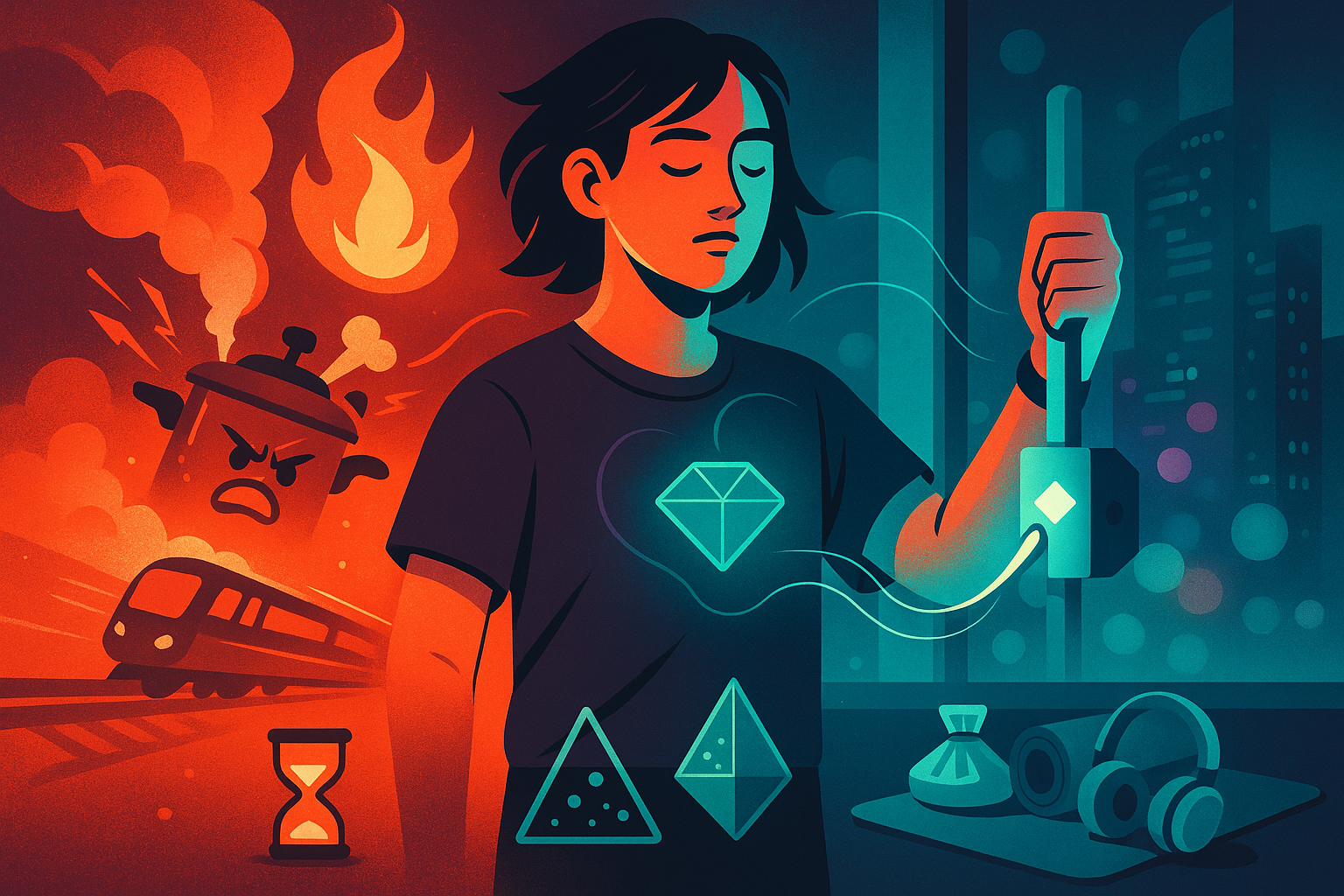
- Antecedent-Focused Strategies (Upstream): These are proactive moves you make *before* the emotion is in full swing (Steps 1-3). This is like building dams and redirecting water flow far upstream from a village.
- Response-Focused Strategies (Downstream): These are reactive moves you make *after* the emotion has already arrived (Step 4). This is like frantically stacking sandbags as the floodwaters are already rising around the village.
As you can guess, the most effective, least exhausting work happens upstream. While downstream “emergency” skills are necessary, a true master of emotional regulation spends most of their energy on proactive, upstream strategies.
Your Proactive Toolkit: Shaping Emotions Before They Take Over
Let’s look at the most powerful upstream techniques. These are the skills that, with practice, will fundamentally change your relationship with your emotions and, by extension, your partner.
1. Cognitive Reappraisal: Rewriting Your Story
This is perhaps the most powerful tool in the entire kit. It’s about changing your interpretation (appraisal) of a situation to alter its emotional impact. It’s not about lying to yourself; it’s about finding a different, equally true story.
In our “we need to talk” example, the automatic story is a negative one. A reappraisal might sound like:
- “Maybe they want to discuss something exciting, like a vacation.”
- “Perhaps they had a tough day and just need to connect with me.”
- “Even if it’s a difficult conversation, it’s an opportunity for us to grow closer by tackling a problem together.”
See the shift? The situation hasn’t changed, but by consciously choosing a different narrative, you can shift your emotional response from anxiety to curiosity or even calm resolve.
2. Acceptance: Dropping the Rope in a Tug-of-War
This one often feels counterintuitive. Acceptance means allowing your feelings to be there without judging them or trying to fight them. So much of our suffering comes not from the initial emotion (e.g., sadness) but from the secondary emotion we pile on top (e.g., shame for feeling sad: “I shouldn’t be so weak!”).
Fighting your feelings is like a tug-of-war with a monster. The harder you pull, the harder it pulls back, and you’re stuck. Acceptance is simply dropping the rope. The monster is still there, but you’re no longer locked in a draining battle with it. You’re free to put your energy elsewhere. When you feel a surge of jealousy, instead of berating yourself, you can simply acknowledge, “Ah, there’s jealousy. I’ll let it be here for a moment,” without letting it dictate your actions.
3. Mindfulness: Directing Your Mental Spotlight
Mindfulness is a form of attention deployment. It’s the practice of paying attention to the present moment on purpose, without judgment. When an emotion like anger arises, instead of being consumed by it, you can observe it with curiosity: “Wow, my chest feels tight. My thoughts are racing. This is what anger feels like in my body.” This act of observing creates a crucial space between the feeling and your reaction, giving you the power to choose your response instead of being driven by impulse.
The “Emergency Brakes”: Managing Emotions in the Heat of the Moment
Sometimes, despite our best upstream efforts, the floodwaters rise. That’s when we need our downstream, response-focused tools.
The High Cost of Suppression: The most common downstream tactic is Expressive Suppression—bottling it all up. While it might seem useful for avoiding a fight in the short term, my clinical experience and extensive research show this is a terrible long-term strategy. It actually increases your physiological stress, impairs your thinking, and creates emotional distance in your relationship. Your partner may not know what you’re feeling, but they will feel the wall you’ve put up.
A Better Way: Body-Based Brakes: Instead of suppressing, turn to your body. Your physiology and emotions are a two-way street. Calming your body can directly calm your mind.
- Deep Belly Breathing: When you’re stressed, your breathing becomes shallow. Taking slow, deep breaths from your diaphragm activates the body’s relaxation response (the parasympathetic nervous system). It’s like hitting a physiological reset button.
- Grounding (The 5-4-3-2-1 Method): When your mind is spinning out, pull it back to the present by engaging your senses. Name: 5 things you can see, 4 things you can feel, 3 things you can hear, 2 things you can smell, and 1 thing you can taste. This simple exercise breaks the feedback loop of anxious thoughts and anchors you in reality.
From Knowledge to Mastery: The Path to Emotional Flexibility
The ultimate goal isn’t to just use one of these techniques, but to develop Emotional Flexibility—the wisdom to choose the right tool for the right job. Sometimes you need reappraisal, sometimes acceptance, and sometimes you just need to take a deep breath.
Here’s a simple roadmap to get you started:
- Build Your Emotional Vocabulary: You can’t regulate what you can’t identify. Move beyond “good” and “bad.” Are you feeling disappointed, frustrated, lonely, or ashamed? Get specific.
- Identify Your Default Pattern: What’s your go-to move when you’re stressed? Do you lash out? Shut down? Numb out with Netflix? Acknowledging your automatic pilot is the first step to changing course.
- Practice in Low-Stakes Situations: Don’t wait for a huge fight to try these skills. Practice reappraising your annoyance when you’re stuck in traffic. Practice deep breathing when you get a stressful work email. Build the muscle when the weight is light.
- Insert a Pause: The space between feeling and reacting is where your power lies. Your only goal at first is to create a tiny pause before you act. In that pause, you can ask: “What’s my goal here? What response will serve me and my relationship best?”
Your Relationship is a Reflection of Your Inner World
Mastering emotional regulation is a journey, not a destination. It requires patience and self-compassion. But every step you take on this path not only enhances your own peace of mind but also profoundly transforms the quality of your connections. You stop being a passive reactor to life’s storms and become the calm, confident captain of your own ship, capable of navigating any weather with grace and intention.
This is the foundation of our work here at LovestbLog—because building a healthy, lasting relationship always begins with the work we do within ourselves.
Now, I’d love to hear from you. Which of these techniques resonates most with you? And what is your biggest challenge when it comes to managing emotions in your relationships? Share your thoughts in the comments below—let’s learn from each other.