标签: emotional regulation

  • Understanding Emotional Regulation: Key Concepts Explained

    Understanding Emotional Regulation: Key Concepts Explained

    Understanding Emotional Regulation: Key Concepts Explained

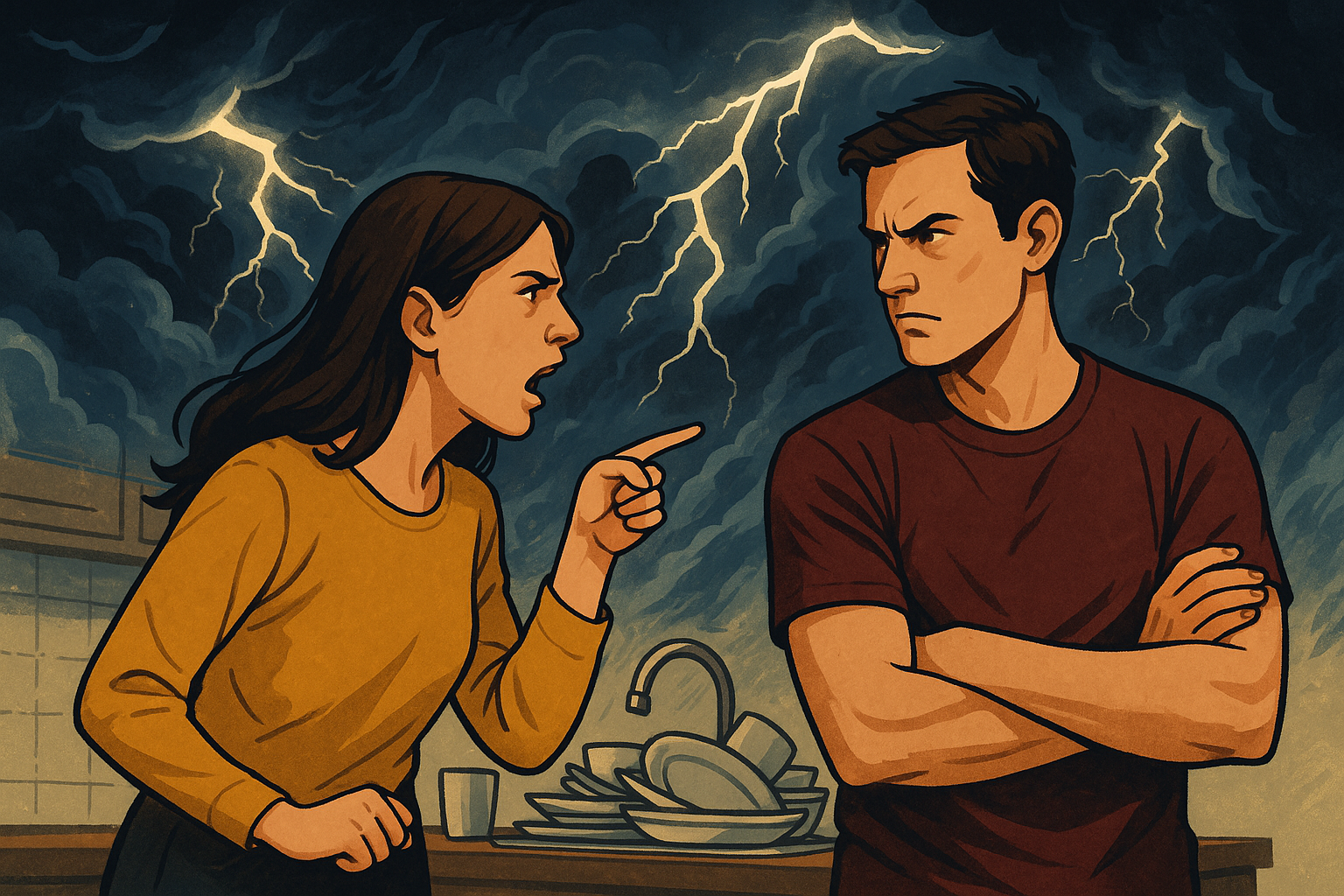
    Ever found yourself in the same argument with your partner, a frustrating loop where voices get louder, words get sharper, and the original point is lost in a storm of hurt feelings? You both walk away feeling misunderstood and more disconnected than before. As a relationship psychologist for over a decade, I’ve seen this pattern countless times. Couples often come to me focused on the topic of their fights—money, chores, the in-laws—believing that’s the problem. But more often than not, the real issue isn’t what they’re fighting about, but how they’re managing the emotions that flare up during the fight. This core skill, the ability to navigate our inner emotional world, is called emotional regulation, and it is the single most important ingredient for building a resilient, connected, and deeply satisfying relationship.

    Your Brain’s Emotional Command Center: A Tale of Two Systems

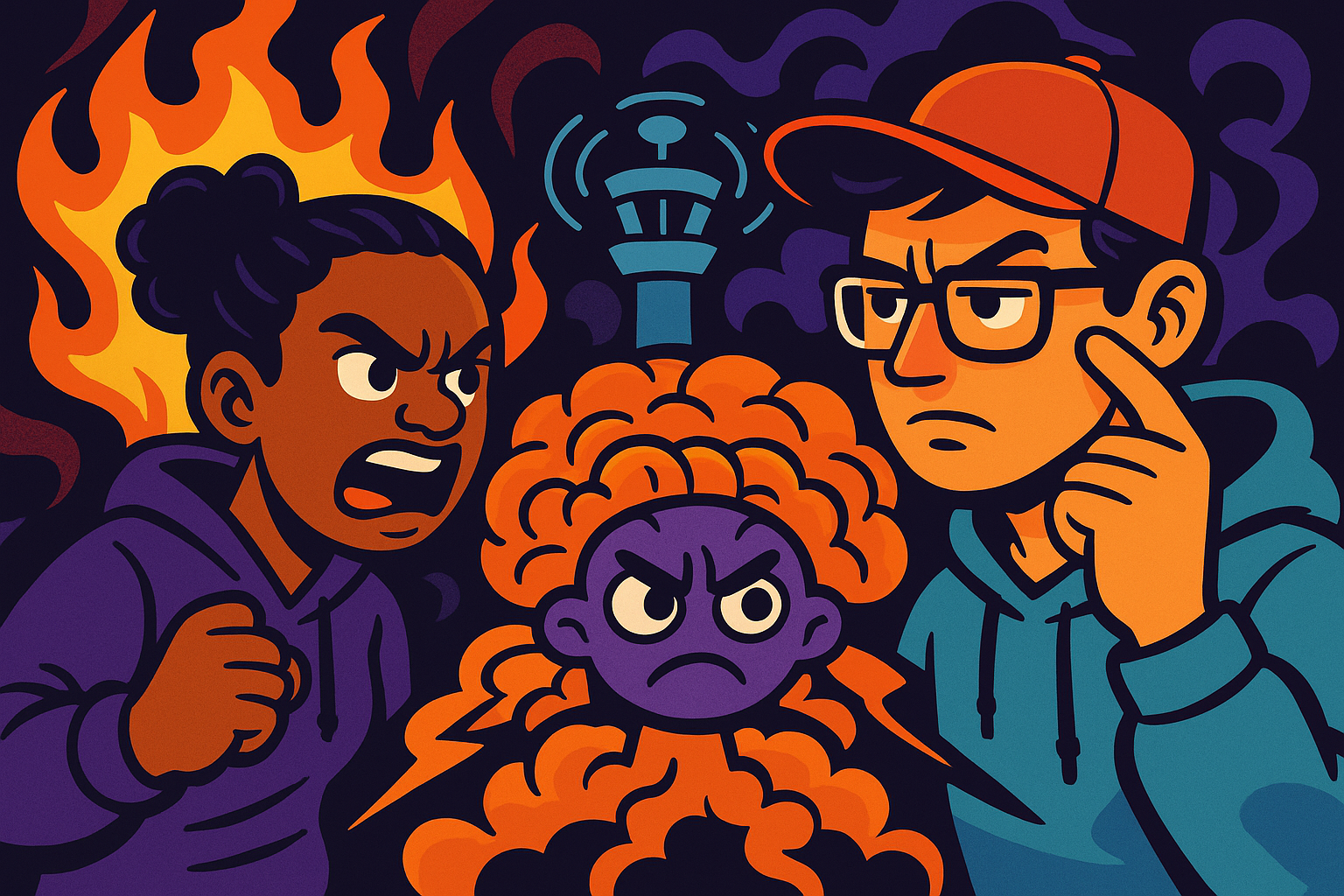
    Before we can manage our emotions, we need to understand where they come from. Think of your brain as having two key players in its emotional command center. First, you have the Amygdala, which I like to call the “Smoke Detector.” It’s a primitive, lightning-fast system deep in your brain that’s constantly scanning for threats. When it senses danger—whether it’s a real physical threat or the perceived threat of your partner’s critical tone—it sounds the alarm, triggering an immediate, instinctive “fight-or-flight” response. Your heart pounds, your muscles tense, and rational thought goes out the window.

    Then, you have the Prefrontal Cortex (PFC), located right behind your forehead. This is the “Air Traffic Controller.” It’s the more evolved, rational part of your brain responsible for planning, impulse control, and assessing situations with logic. The Air Traffic Controller receives the alarm from the Smoke Detector and has the power to evaluate it. It can say, “Okay, I see the alarm, but this isn’t a five-alarm fire. It’s just a disagreement. Let’s calm the system down and respond thoughtfully.”

    Emotional regulation is the conversation between your Smoke Detector and your Air Traffic Controller. It’s not about turning the Smoke Detector off—emotions are vital data!—but about strengthening the Air Traffic Controller’s ability to hear the alarm, assess the situation, and guide your response with wisdom instead of pure instinct.

    When Regulation Fails: The Four Horsemen of Relationship Apocalypse

    When our Air Traffic Controller is offline and the Smoke Detector is running the show, we fall into destructive communication patterns. My work is heavily influenced by the research of Dr. John Gottman, who identified four communication styles so toxic they can predict the end of a relationship. I see these “Four Horsemen” not as character flaws, but as clear, outward signs of internal emotional dysregulation.

    Understanding the Four Horsemen shifts the focus from blaming your partner (“You’re so critical!”) to recognizing a shared challenge (“We’re both getting overwhelmed and falling into this pattern. How can we help each other regulate?”).

    Let’s break them down as failures of emotional regulation:

    The Horseman The Underlying Regulation Failure The Antidote (The Regulated Response)
    1. Criticism
    Attacking your partner’s character (“You’re so lazy,” “You never listen”).
    Unregulated frustration or anger that gets expressed as blame. Gentle Start-Up. Use “I” statements to describe your feelings about a specific situation. “I feel frustrated when the dishes are left in the sink.”
    2. Defensiveness
    Responding to a complaint with a counter-attack or by playing the victim (“It’s not my fault, you’re the one who…”).
    Inability to regulate the impulse for self-protection; failing to soothe the feeling of being attacked. Take Responsibility. Find even a small part of the problem you can own. “You’re right, I could have helped with the dishes.”
    3. Contempt
    Treating your partner with disrespect (mocking, sarcasm, eye-rolling). This is the single greatest predictor of divorce.
    A severe failure where long-simmering negative feelings have gone unregulated and festered into disgust. Build a Culture of Appreciation. Actively scan for things your partner does right and express gratitude. Describe your own feelings and needs instead of attacking.
    4. Stonewalling
    Withdrawing from the conversation, shutting down, or giving the silent treatment.
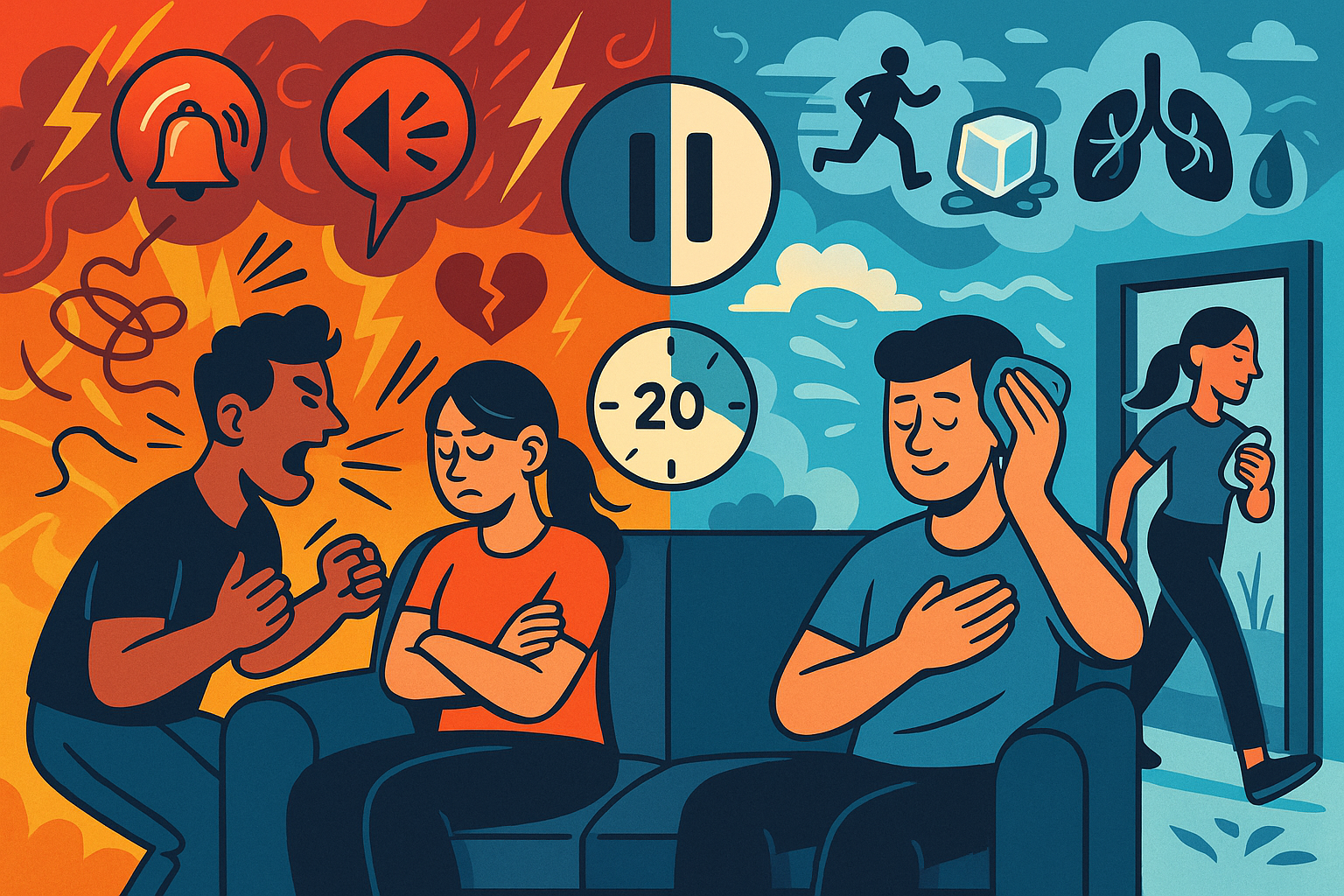
    An extreme form of avoidance caused by physiological “flooding”—an overwhelming fight-or-flight response. Physiological Self-Soothing. Agree to take a 20-minute break to calm down before re-engaging.

    Building Your Emotional Regulation Toolkit

    The good news is that emotional regulation is a skill, not an inborn trait. Like strengthening a muscle, you can train your “Air Traffic Controller” to become more effective. Here are three foundational practices I guide my clients through.

    1. Become an Emotional Scientist: Start an Awareness Journal

    You cannot regulate an emotion you aren’t aware of. The first step is simply to notice. An emotion journal isn’t about judging your feelings, but about gathering data with curiosity. Each day, take five minutes to reflect on these prompts:

    • What was the strongest emotion I felt today?
    • What was the situation or trigger?
    • What story was I telling myself in that moment? (“He doesn’t respect me,” “I’m going to fail.”)
    • Where did I feel it in my body? (e.g., tightness in chest, heat in face)

    This practice builds the crucial link between your mind and body, helping you recognize the early warning signs from your “Smoke Detector” before it escalates into a full-blown alarm.

    2. Reframe Your Reality: The Power of Cognitive Reappraisal

    Cognitive Reappraisal is a powerful technique that involves changing the story you tell yourself about a situation to change its emotional impact. It’s about finding a more balanced, helpful, and realistic interpretation. When you catch a negative automatic thought, walk it through this simple, structured exercise based on Cognitive Behavioral Therapy (CBT):

    1. The Situation: Describe what happened objectively. (e.g., “My partner came home late from work and didn’t call.”)
    2. Initial Feeling & Thought: Name the emotion and the automatic thought. (e.g., “Feeling: Angry, hurt. Thought: ‘They don’t care about me.’”)
    3. Evidence Against the Thought: Challenge your story. Brainstorm other possibilities. (e.g., “They had a huge deadline,” “Their phone might have died,” “They are usually very considerate.”)
    4. Alternative, Balanced Thought: Create a new, more helpful thought. (e.g., “I’m feeling disconnected because they came home late without notice. I’ll assume something important came up and we can talk about it when things are calm.”)
    5. Re-evaluate Your Feeling: Notice how the new thought changes your emotional intensity. Often, the anger and hurt will soften, making space for a more constructive conversation.

    3. Calm the Body to Calm the Mind: Mindful Breathing

    When you’re emotionally flooded, your “Air Traffic Controller” (PFC) goes offline. The fastest way to bring it back is to calm your body’s physiological stress response. Mindful breathing is a simple but profound tool for this.

    A Simple Mindful Breathing Exercise:

    Find a comfortable position. Close your eyes or soften your gaze.

    1. Take a slow, deep breath in through your nose for a count of four, feeling your belly expand.

    2. Hold the breath for a count of four.

    3. Exhale slowly through your mouth for a count of six, letting go of tension.

    4. Repeat for 5-10 cycles.

    Your mind will wander. That’s normal. Each time it does, gently and without judgment, guide your attention back to the sensation of your breath.

    This practice activates your body’s relaxation response, slowing your heart rate and signaling to your “Smoke Detector” that the threat has passed. It creates the mental space needed for your rational brain to come back online.

    The Journey to Emotional Mastery

    Building healthy, lasting love begins with building ourselves. Emotional regulation isn’t about being a robot, devoid of feeling. It’s about becoming the calm, conscious captain of your own emotional ship, able to navigate the inevitable storms of a relationship with skill, grace, and compassion. It’s the work that allows you to stop fighting against each other and start turning towards each other, ready to solve problems as a team.

    The journey starts with one small step. This week, which tool will you try? Will you start an emotion journal, practice reframing one negative thought, or take three mindful breaths during a moment of stress? Share your experience or questions in the comments below—let’s build these skills together.


  • Mastering Emotional Regulation: Understanding the Zones

    Have you ever been there? You and your partner start a conversation about something simple—the overflowing dishwasher, a forgotten errand—and within minutes, you’re in a full-blown battle. Voices rise, tears well up, and suddenly one of you shuts down completely while the other pushes harder. Later, amidst the emotional wreckage, you think, “How did we get here? I didn’t even mean what I said.”

    In my decade of work with couples, I’ve seen this pattern countless times. It’s not a sign of a doomed relationship; it’s a sign of a dysregulated one. We often believe that willpower or better communication scripts are the answer. But the truth is, you can’t talk your way out of a problem when your brain’s emotional circuits are overloaded. What you need isn’t just a new set of words, but a user-friendly map to your inner world. Today, I want to share one of the most transformative tools I use with my clients: a framework called The Zones of Regulation.

    Your Emotional Dashboard: A Quick Guide to the Four Zones

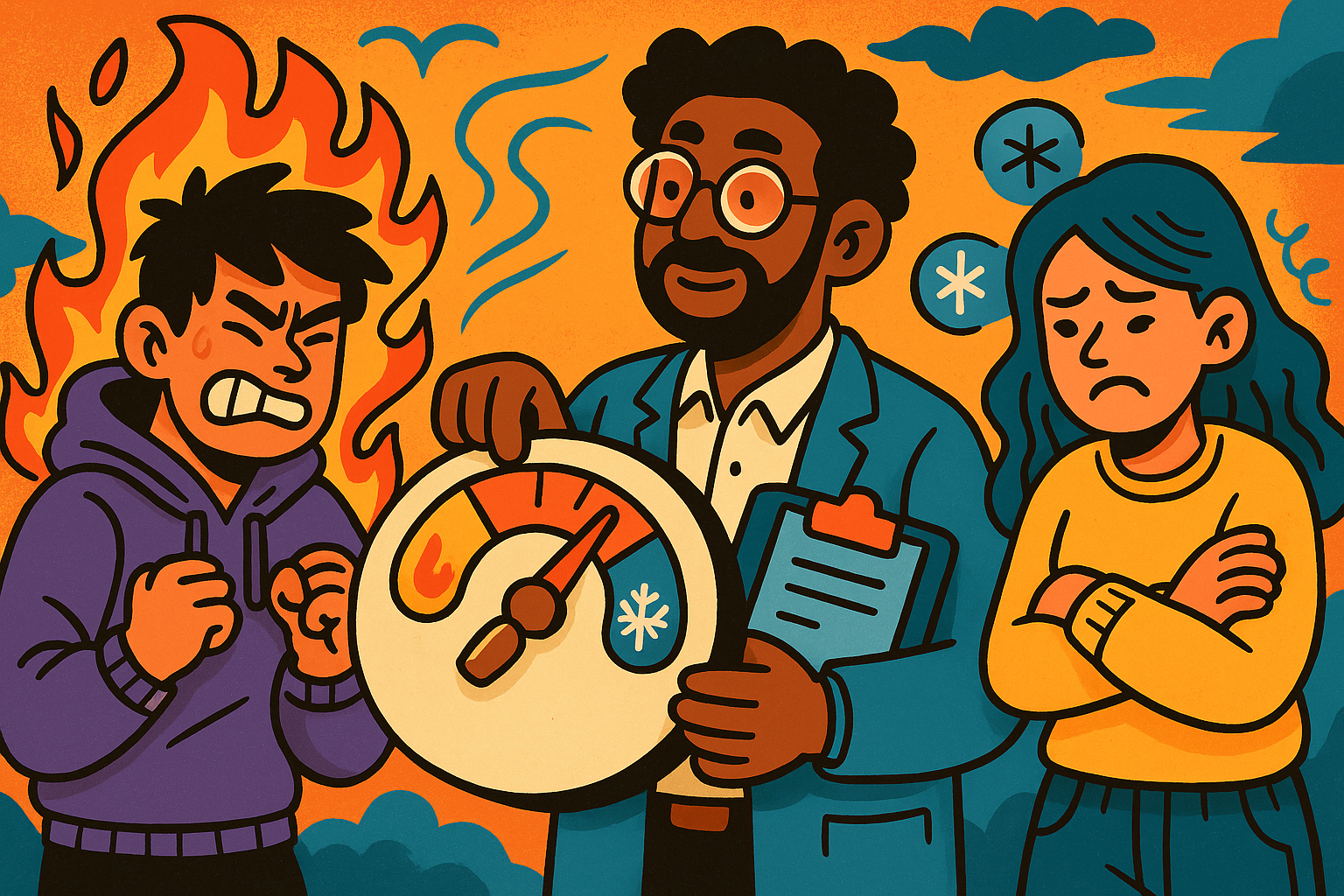
    Imagine your emotional state as a car’s dashboard or a traffic light system.[1] It gives you quick, color-coded information about your internal engine. The Zones framework, created by occupational therapist Leah Kuypers, simplifies our complex inner states into four easy-to-understand colors.[2, 3] This isn’t about judging your feelings; it’s about identifying them. A core principle here is that all Zones are okay.[4, 5] The goal isn’t to live in the Green Zone forever, but to build the awareness to navigate all of them.

    A crucial insight I share with all my clients is this: “Regulated” does not mean “calm”.[6] Regulation is the ability to manage your state according to the situation. Sometimes, excitement (Yellow Zone) at a concert or elation (Red Zone) at a wedding is perfectly regulated. The mastery is in the awareness and the choice, not the suppression of feeling.

    Here’s a simple breakdown of what each Zone feels like:

    Zone (Color) Energy & Alertness Common Feelings
    Blue Zone Low, slow, sluggish [7, 5] Sad, tired, sick, bored, lonely [4, 5]
    Green Zone Calm, alert, focused [7, 5] Happy, peaceful, content, ready to learn [4, 5]
    Yellow Zone Heightened, elevated, “on alert” [7, 5] Stress, frustration, anxiety, excitement, silliness, nervousness [4, 5]
    Red Zone Extremely high, overwhelming, “out of control” [7, 5] Rage, panic, terror, elation, devastation [4, 5]

    The Red Zone and the “Emotional Flood”: Why Your Brain Goes Offline in a Fight

    Now, let’s connect this to those explosive arguments. Renowned relationship researcher Dr. John Gottman identified a state he calls “emotional flooding”—a physiological response where you’re so overwhelmed that your fight-or-flight system takes over.[8] Your heart rate spikes, adrenaline courses through you, and the logical, problem-solving part of your brain (the prefrontal cortex) effectively goes offline.[9, 10]

    In the Zones framework, emotional flooding is the Red Zone.[9, 11] When you’re in the Red Zone, you are neurologically incapable of rational discussion, empathy, or creative problem-solving. This is why you say things you don’t mean, can’t seem to listen, or feel an overwhelming urge to either flee the room or escalate the fight.

    This makes the Yellow Zone the most critical territory in conflict management. It’s the warning light on your emotional dashboard.[7, 12] It’s when you feel your frustration building, your voice getting tight, or your stomach clenching. The Yellow Zone is where you still have some control.[5, 13] It’s the crucial moment where you can choose to hit the brakes before you spin out of control into the Red Zone.

    From “Me vs. You” to “Us vs. the Problem”: The Power of Co-Regulation

    So, what do you do when you notice you or your partner entering the Yellow Zone? This is where we shift from self-regulation (managing your own state) to the relationship superpower of co-regulation.[14] Co-regulation is the beautiful, interactive process where you use your connection to help each other feel safe and return to a state of balance.[15, 16] It’s moving from “I need to calm down” to “Let’s help us calm down”.[17]

    The Zones provide the simple, non-blaming language needed for this. Instead of saying, “You’re overreacting!” you can say, “I’m noticing I’m in the Yellow Zone, and I need to take a break.” This isn’t an accusation; it’s a report on your internal state. It invites collaboration, not defensiveness.

    Here are some practical co-regulation techniques you can practice together:

    • Create a Shared Signal: Agree on a word or phrase like “Yellow Zone” or “Time out” that either of you can use to pause a heated discussion without blame. This is your emergency brake.
    • Practice Shared Breathing: When things get tense, stop talking for one minute. Sit facing each other and try to sync your breathing. Inhale for four counts, hold for four, exhale for six. This simple act can powerfully align your nervous systems.[14]
    • Use Validating Touch: If it feels right for both of you, a simple act like holding hands or placing a hand on your partner’s arm can convey safety and support without words, releasing oxytocin (the “bonding hormone”) and calming the nervous system.[14, 16]
    • Schedule Daily Check-ins: Make it a habit to ask, “What Zone are you in right now?” This normalizes talking about your internal states and helps you stay attuned to each other’s emotional weather.[16]

    Building Your Proactive “Emotional First-Aid Kit”

    The final piece is moving from being reactive to being proactive. This means building your personal and shared “toolbox” of strategies to manage your Zones before a conflict even starts.[5] It also involves setting healthy emotional boundaries, which are the limits you set to protect your well-being and energy.[18] A boundary isn’t a wall; it’s a gate that you control.

    For example, a proactive boundary might be: “I know I get overwhelmed easily after a long day at work. I need 15 minutes to decompress by myself before we talk about household logistics.” This isn’t a rejection; it’s a wise strategy to keep yourself in the Green Zone and prevent an unnecessary slide into Yellow.

    Start a conversation with your partner about what tools work for each of you. Does one of you need movement to get out of the Blue Zone? Does the other need quiet to avoid the Yellow Zone? Knowing this about each other is an act of profound care.

    Your Relationship’s New Operating System

    Mastering emotional regulation isn’t about eliminating conflict. Conflict is a natural and even healthy part of growth. It’s about changing how you navigate that conflict. The Zones of Regulation framework gives you a map, a shared language, and a set of practical tools to stop fighting against each other and start working together.

    By understanding your own emotional dashboard and learning to co-regulate with your partner, you can transform your most challenging moments into opportunities for deeper connection and trust. You can finally stop asking “How did we get here?” and start confidently choosing where you want to go next, together.

    I’d love to hear from you in the comments. What are the first physical or emotional signals that tell you you’re moving into the Yellow Zone?

  • Helping Kids Master Emotional Regulation Skills

    Helping Kids Master Emotional Regulation Skills

    Hello, Dr. Love here. Over my years as a relationship psychologist, I’ve noticed a powerful pattern. The adults who struggle most with trust, conflict, and intimacy in their romantic partnerships often share a common history: as children, they were never taught how to navigate their own emotional worlds. Their feelings were dismissed, punished, or ignored. They were told to “stop crying” or “calm down,” but were never shown how.

    We often see a child’s tantrum in the grocery store as a moment of defiance. But what if we reframed it? What if we saw it not as a behavioral problem, but as a desperate communication from a developing brain that is simply overwhelmed? Teaching our children emotional regulation is not just about managing tantrums. It is the single most important foundation we can build for their future mental health, resilience, and their ability to form the deep, secure, and loving relationships we all want for them.

    Why “Calm Down” is the Last Thing a Child’s Brain Can Do

    To understand why our children have such big, explosive feelings, we need a quick tour of their developing brain. Think of it as having two key players who mature at very different speeds:

    • The Amygdala: Let’s call this the “Guard Dog.” It’s a primitive, lightning-fast part of the brain that’s always on alert for danger. Its only job is to keep your child safe by triggering a “fight, flight, or freeze” response. It doesn’t think or use logic; it just reacts.
    • The Prefrontal Cortex (PFC): This is the “Wise Owl.” It’s the sophisticated, rational part of the brain behind the forehead responsible for planning, problem-solving, and—you guessed it—emotional regulation. It’s the part that can calm the Guard Dog down.

    Here’s the crucial part: in a child, the Guard Dog is fully developed and barks loudly at the slightest perceived threat (like a broken cookie or the wrong color cup). Meanwhile, the Wise Owl is still just a baby bird; its development continues all the way into the mid-twenties. A tantrum is a neurological event: it’s an amygdala hijack. The Guard Dog has taken over, and the Wise Owl has temporarily flown the coop. In that moment, trying to reason with, lecture, or punish your child is like trying to teach logic to a barking dog. It’s biologically impossible.

    The Art of Co-Regulation: How to Be Your Child’s Anchor in Their Emotional Storm

    If a child’s internal “Wise Owl” isn’t developed enough to calm their “Guard Dog,” how do they ever learn? The answer is you. As a parent, you act as their external Wise Owl. This process is called co-regulation: lending your calm nervous system to your child until theirs is strong enough to function on its own. It’s the most critical role you can play in their emotional development.

    When your child is in the middle of an emotional storm, here is your step-by-step manual:

    1. Regulate Yourself First. This is the non-negotiable first step. Take a deep breath. If you are triggered, take a moment to calm yourself down before you engage. Your child’s brain mirrors yours; they cannot find calm in your chaos.
    2. Ensure Safety and Connect Physically. Move your child to a safe space. Get down to their eye level. Use a soft, steady voice. A gentle hand on their back or a hug can signal safety and help their nervous system begin to de-escalate.
    3. Validate the Feeling (Name It to Tame It). Acknowledge the emotion without judgment. This is not about agreeing with the behavior; it’s about seeing the feeling underneath. Simple phrases like, “You are so angry that your tower fell down,” or “It’s really disappointing when we have to leave the park,” tell your child that their feelings are real and accepted.
    4. Ride the Wave. Don’t try to stop the tears or rush the process. Your job is to be a calm, steady anchor while the emotional storm passes. Your presence alone is the intervention.
    5. Engage the Thinking Brain… Later. Only after the storm has passed and your child is calm can their “Wise Owl” come back online. This is the time for problem-solving. You can ask, “Now that you’re feeling calmer, what do you think we can do about this?”

    Dr. Love’s Core Insight: Your calm is the most powerful tool you have. You cannot give your child a calm you do not possess. Self-regulation isn’t selfish; it’s the prerequisite for effective parenting.

    To help you in those high-stress moments, here are some scripts you can use.

    Situation Instead of This (Dismissing) Try This (Validating)
    Toddler melts down because their cookie broke. “Stop crying! It’s just a cookie.” “Your cookie broke, and you are so sad and disappointed. I get it. That’s really frustrating.”
    Child is afraid of thunder. “There’s nothing to be scared of.” “That thunder is really loud, and it can feel scary. I’m right here with you. We’re safe together.”
    Sibling conflict over a toy. “You two, stop it right now or no one gets the toy!” “You feel really angry that your brother took your car. It’s okay to feel angry, but it’s not okay to hit. Let’s talk about what we can do.”

    Building Emotional Literacy: If You Can Name It, You Can Tame It

    Helping a child label their feelings isn’t just a “soft skill”—it’s a direct neurological intervention. When you give a name to a big, chaotic feeling, you engage the “Wise Owl” (PFC) to make sense of the signals coming from the “Guard Dog” (amygdala). This very act of labeling has been shown to reduce activity in the amygdala, literally calming the brain. Here’s how to build your child’s emotional vocabulary:

    • Model Your Own Feelings: Talk about your emotions out loud in a healthy way. “I’m feeling a little frustrated because I can’t find my keys. I’m going to take a deep breath.”
    • Be an “Emotion Commentator”: When you see your child experiencing an emotion, give it a name. “Your face is all scrunched up and you’re stomping your feet. You look very angry.”
    • Use Stories: When reading books or watching shows, pause and ask, “How do you think that character is feeling right now? How can you tell?”
    • Play Emotion Games: Use feeling flashcards or play “emotion charades” where you act out feelings like surprised, proud, frustrated, or lonely.

    Creating a Safe Harbor: The Power of a “Calm-Down Corner”

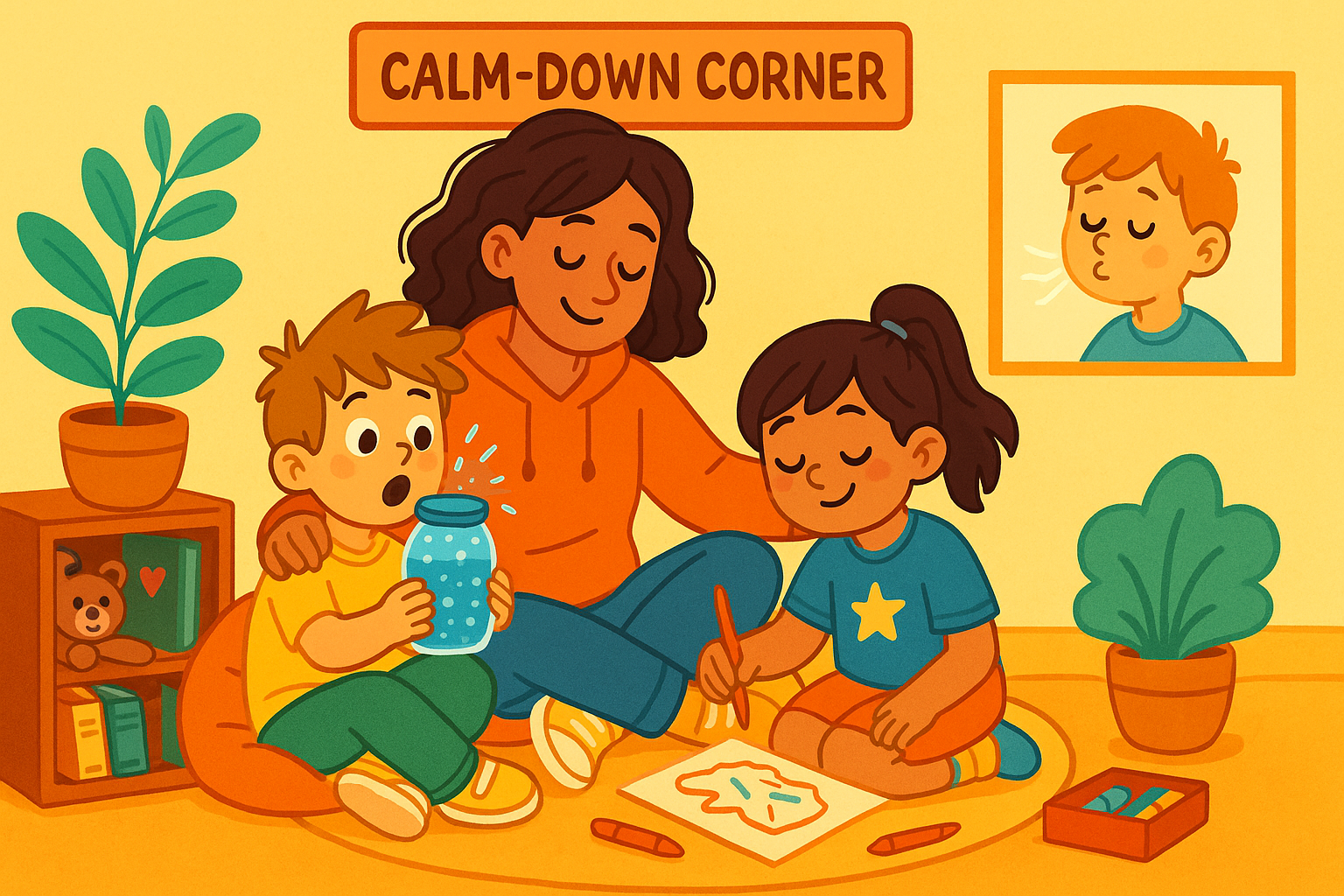
    A “Calm-Down Corner” is a designated safe space where a child can go to reset when they feel overwhelmed. It is fundamentally different from a punitive “time-out.” This is not a place of punishment, but a positive resource for self-soothing that you create together.

    • Co-Design the Space: Let your child help choose a quiet spot and decide what goes in it. This gives them a sense of ownership.
    • Stock It with Soothing Tools: Fill a basket with soft pillows, a cozy blanket, stuffed animals, and sensory items like stress balls, fidget toys, coloring supplies, or a glitter jar.
    • Introduce It During Calm Times: Explain that this is a special place to go when feelings get too big. Practice using the tools together when everyone is happy and regulated.
    • Guide, Don’t Force: When you see your child getting overwhelmed, gently suggest, “It looks like you’re having a hard time. Would you like to go to your cozy corner for a few minutes?”

    The Long Game: Guiding Your Teen from Co-Regulation to Self-Reliance

    As children enter adolescence, your role shifts from a hands-on co-regulator to an emotional coach. Their brain is undergoing another massive reorganization, and while their “Wise Owl” is more developed, it’s still no match for the hormonal and social pressures that keep their “Guard Dog” on high alert. The goal now is to support their growing autonomy while remaining their emotional safety net.

    • Respect Their Need for Space: Offer support without taking over. A great question to ask is, “Do you want my advice, or do you just need me to listen right now?”
    • Promote Healthy Outlets: Encourage them to process their emotions through activities like journaling, exercise, art, or music.
    • Teach Advanced Skills: Introduce them to concepts like mindfulness, challenging negative thought patterns (cognitive restructuring), and stress-management techniques.
    • Keep Communication Open: Create a non-judgmental space where they feel safe sharing their struggles. Regular check-ins and active listening are more important than ever.

    The Ripple Effect: How Childhood Emotional Skills Shape Adult Love

    Why does all this work matter so profoundly for their future relationships? Because the emotional patterns learned in childhood become the blueprint for adult intimacy. A child who learns that their feelings are valid and manageable grows into an adult with a secure attachment style. They can trust others, communicate their needs clearly, and navigate conflict without being overwhelmed.

    Conversely, a child whose emotions are consistently dismissed or punished often develops an insecure attachment style (anxious or avoidant). They may grow into adults who fear abandonment, avoid emotional closeness, or struggle with chronic relationship conflict. By investing in your child’s emotional regulation, you are giving them the greatest gift of all: the internal foundation for a lifetime of healthy, fulfilling, and resilient love.


    Your Legacy as an Emotional Architect

    Helping your child master their emotions is a marathon, not a sprint. It requires patience, consistency, and a deep well of empathy. But it is the most important work you will ever do. You are not just stopping a tantrum; you are building a brain. You are wiring your child for resilience, for connection, and for a future filled with emotional well-being.

    Remember these core principles:

    • Shift your mindset from controlling emotions to coaching them.
    • Your regulated presence is your child’s most powerful anchor.
    • Always connect before you correct or teach.
    • This is a long-term investment in their future happiness and relational health.

    I’d love to hear from you. What’s one small step you can take this week to become more of an “emotional coach” for your child? Share your thoughts and experiences in the comments below.

  • Effective Emotional Regulation Strategies for Daily Life

    Effective Emotional Regulation Strategies for Daily Life

    Effective Emotional Regulation Strategies for Daily Life

    I often hear from clients at lovestblog—both single individuals navigating the dating world and long-term partners facing recurring conflicts—a common thread of distress: “Dr. Love, I know what I should do, but when the stress hits, I just snap.”

    This “snapping point”—that moment when rationality evaporates and primal reactivity takes over—is perhaps the single greatest threat to healthy intimate relationships. It turns minor misunderstandings into explosive arguments and leads to behaviors like stonewalling, critical attacks, or self-sabotage.

    My decade of work in relationship psychology has led me to a simple, fundamental truth: Self-regulation is the prerequisite for relationship health. You cannot effectively co-regulate with a partner if you haven’t mastered your own internal emotional environment. This is why our mission here at lovestblog starts with the self.

    The Illusion of Emotional Control: Why Suppression Fails

    When most people think of managing strong emotions like anger or anxiety, they default to one of two unhelpful strategies: either explosion (lashing out) or suppression (stuffing it down). Both are disastrous for the long term.

    Suppression, in particular, is often mistaken for regulation. I explain this to my clients using the “pressure cooker” analogy. Your emotions are like steam building up in a pressure cooker. If you clamp the lid down completely (suppression), the pressure doesn’t disappear; it just builds until the inevitable, often destructive, eruption. Healthy regulation, on the other hand, is about adjusting the heat and gently releasing the valve so the energy can be dissipated safely and intentionally.

    What we are aiming for is not the elimination of emotion, but the ability to influence the *timing* and *intensity* of our emotional responses—what psychologists define as Emotional Regulation.

    Understanding the Internal Circuit Breaker: Where We Intervene

    The key to effective regulation lies in identifying the moment between the stimulus (what happens) and the response (how we react). We need to install a “circuit breaker” in this gap.

    Think of your emotional processing like a fast-moving train. The tracks are laid down by old habits, attachment patterns, and automatic thought processes. When a stimulus (e.g., your partner is late, or a deadline looms) hits, the train starts moving toward the reaction station—often without your conscious permission. The most powerful intervention is the Pause.

    Dr. Love’s Principle: We are responsible for the management of our thoughts and feelings, not their immediate existence. The moment we pause, we transition from being the passenger on the emotional train to being the conductor.

    Effective emotional regulation strategies work by creating friction in this automatic process, giving the rational, reflective part of your brain (the prefrontal cortex) time to engage before the reactive part (the amygdala) takes over.

    Three Pillars of Daily Emotional Regulation Practice

    Based on my clinical experience and research drawing heavily from Cognitive Behavioral Therapy (CBT) and Dialectical Behavior Therapy (DBT), I guide clients through three essential pillars. These aren’t abstract theories; they are daily habits that reshape your internal wiring.

    1. The Awareness Anchor: Name It to Tame It (Mindfulness)
    2. The first step is always recognition. We cannot regulate what we do not acknowledge. I teach a simple, accessible adaptation of the RAIN practice:

      • Recognize the emotion (e.g., “I feel anger”).
      • Accept the feeling (without judgment, e.g., “It’s okay to feel frustration”).
      • Investigate the physical sensation (e.g., “My chest is tight; my jaw is clenched”).
      • Non-identification (Remember: “I have anger; I am not anger itself”).
    3. The Thought Filter: Practicing Cognitive Reappraisal
    4. Often, it is not the event itself that causes distress, but our interpretation of it. This is where Cognitive Reappraisal becomes your superpower. It means actively challenging the initial, often catastrophic, story your mind tells you.

      For example, if your partner forgets to call, your automatic thought might be: “They don’t care about me (Catastrophic Interpretation).” Reappraisal asks: “What is the most generous, non-pathological explanation for this behavior? (Alternative View)” Perhaps they were genuinely swamped or their phone died.

    5. The Behavioral Shift: Creating Safety Distance
    6. Sometimes, we are simply too flooded to use cognitive strategies. When the pressure cooker is screaming, you must step away. I strongly advocate for the “20-Minute Safe Time-Out,” a concept refined from Gottman’s research on physiological flooding. This isn’t stonewalling; it’s a mutual agreement to temporarily suspend difficult conversation until both parties are calm enough to listen.

      During the time-out, engage in Distress Tolerance activities—anything that drops your heart rate: listening to music, splashing cold water on your face, or a brisk walk. The goal is physiological reset, not rumination.

    Regulated vs. Reactive: A Daily Comparison

    To make this actionable, here is how regulated self-talk contrasts with reactive responses when facing a common daily trigger:

    Scenario/Trigger Reactive Response (Unregulated) Regulated Response (Pillar Application)
    A colleague sends a sharp email criticizing your work. Immediate reply defending yourself aggressively; rumination for hours (“I’m useless”). Pillar 1 (Awareness): Note the flush of shame/anger. Pillar 3 (Behavioral): Close the laptop, walk away for 10 minutes, and return to draft a neutral, factual reply.
    Your partner forgets an important household task for the third time. Shouting, personal attacks (“You never listen,” “You’re always careless”). Pillar 2 (Reappraisal): Challenge the ‘always’ narrative. Take a deep breath. Use an I-statement later: “I feel frustrated when X happens, because I interpret it as Y. Can we discuss a system change?”

    It’s important to remember that these skills take repetition. My early projects with regulation training showed that consistency, not intensity, is the driver of neural change. Treat your emotional life like a muscle: small, daily workouts are better than occasional extreme efforts.

    The use of technical language like Cognitive Reappraisal or Distress Tolerance may sound cold, but the outcome is profound warmth—the ability to face life’s inherent stress without sacrificing your peace or your most cherished relationships.

    Final Thoughts from Dr. Love

    To summarize, the journey toward effective emotional regulation is the foundation of self-mastery and, consequently, relationship success. It requires moving past the harmful extremes of explosion and suppression and embracing the intentional Pause.

    We anchor ourselves through Mindfulness (naming the feeling), challenge our destructive stories through Cognitive Reappraisal, and, when overwhelmed, create safety through structured Behavioral Shifts like time-outs.

    This is not a quest for perpetual calmness, but for conscious choice. I want to hear your thoughts:

    What is the single most challenging emotional trigger you face in your daily life, and which of these three pillars do you feel would be hardest—or most effective—to implement?

  • Effective Emotional Regulation Activities for Daily Life

    Effective Emotional Regulation Activities for Daily Life

    Effective Emotional Regulation Activities for Daily Life

    Hi everyone, Dr. Love here. In my years of working with couples and individuals, I’ve noticed a common, painful pattern. It often starts with a small spark—a forgotten phone call, a critical tone of voice, a moment of feeling unheard. Before you know it, that spark has erupted into a wildfire of anger, anxiety, or despair. You say things you don’t mean. You shut down completely. You feel overwhelmed, hijacked by your own emotions, and the connection you cherish feels miles away. If this sounds familiar, you’re not alone. The missing piece of the puzzle isn’t about avoiding conflict or pretending you don’t have feelings. It’s about learning the single most critical skill for a healthy inner life and thriving relationships: Emotional Regulation.

    Many people hear “regulation” and think it means “control” or “suppression”—stuffing your feelings down until they go away. This is one of the biggest myths I have to bust in my practice. True emotional regulation isn’t about building a dam to stop the river of your feelings; it’s about learning to navigate the currents without capsizing your boat. It’s the ability to acknowledge your emotions, understand their message, and then choose how you respond, rather than letting them drive you impulsively.

    Your Brain in an Emotional Hijacking: The Pilot vs. The Alarm System

    To understand how to regulate our emotions, we first need to understand what’s happening inside our heads. Think of your brain as having two key players: the rational, thoughtful pilot (your prefrontal cortex) and the hyper-vigilant, fast-acting alarm system (your amygdala).

    The amygdala’s job is to scan for threats and sound the alarm, triggering a fight-or-flight response. It’s incredibly fast and designed for survival. The prefrontal cortex, on the other hand, is the center for planning, reasoning, and self-control. It’s the part of you that can say, “Okay, deep breath. Let’s think this through.”

    When you experience a strong emotional trigger—what Dr. John Gottman calls “flooding”—your amygdala hijacks the controls. Your heart races, your muscles tense, and your rational pilot gets locked out of the cockpit. In this state, it’s nearly impossible to think clearly or communicate constructively. The goal of emotional regulation is to learn how to calm the alarm system so your pilot can get back in control. This isn’t about ignoring the alarm; it’s about acknowledging it and then skillfully deactivating it before it causes a crash.

    The Three Departments of Your Emotional Toolkit

    Over the years, I’ve helped my clients build what I call an “Emotional Toolkit.” It’s not a one-size-fits-all solution, but a collection of skills organized into three “departments”: Cognitive (mind-based), Behavioral (action-based), and Somatic (body-based). When one department is overwhelmed, you can call on another for support.

    1. The Cognitive Department: Reshape Your Thoughts, Reshape Your Reality

    Our feelings are rarely a direct response to an event, but rather to the story we tell ourselves about that event. This department is all about becoming a better storyteller.

    • Cognitive Reappraisal: Change the Narrative. This is the art of re-interpreting a situation to change its emotional impact. Let’s say your partner comes home late from work and is quiet. Your automatic thought might be, “They’re angry with me” or “They don’t want to see me,” leading to anxiety and defensiveness. Cognitive Reappraisal is consciously choosing a different story. For example: “They look exhausted. It must have been a stressful day for them.” Notice how this new story immediately changes your emotional trajectory from anxiety to empathy. It opens the door for connection (“Tough day?”) instead of conflict (“Why are you ignoring me?”).
    • Become a Thought Detective. We all have Negative Automatic Thoughts (NATs)—those unhelpful, critical thoughts that pop into our heads. The key is to treat them not as facts, but as hypotheses to be investigated. When you catch a NAT like, “I always mess things up,” put on your detective hat and ask:
      1. What’s the evidence? What facts support this thought? What facts contradict it? (You’ll likely find more evidence against it than for it).
      2. Is there another way to see this? What would I tell a friend in this exact situation? (We’re often kinder to others than to ourselves).
      3. Is this thought helpful? What is the effect of believing this thought? Does it help me solve the problem or just make me feel worse?

    2. The Behavioral Department: Action Before Motivation

    Sometimes, you can’t think your way out of a bad mood. When you’re feeling low, unmotivated, or withdrawn, the fastest way to change how you feel is to change what you do. This is the core principle of Behavioral Activation.

    The golden rule of Behavioral Activation is: Action precedes motivation. You don’t wait until you feel like doing something. You do it, and the feeling follows. Engaging in rewarding activities breaks the vicious cycle of “I feel bad -> I do nothing -> I feel worse.”

    Start by scheduling small, manageable activities into your day, even if you have zero desire to do them. Aim for a mix from these categories:

    • Mastery Activities: Things that give you a sense of accomplishment (e.g., organizing one drawer, completing a small work task, cooking a simple meal, reading one chapter of a book).
    • Pleasure Activities: Things done purely for enjoyment (e.g., listening to your favorite album, watching a funny video, sitting in the sun for 10 minutes, savoring a cup of tea).
    • Social Activities: Things that foster connection (e.g., sending a text to a friend, calling a family member, having a short chat with a neighbor).

    3. The Somatic Department: Regulate from the Body Up

    When your alarm system (amygdala) is blaring, cognitive strategies can feel impossible. This is when you need to bypass the brain and go straight to the body. Calming your physiology is the fastest way to get your rational pilot back online.

    • Box Breathing (The 4-4-4-4 Method): This technique is used by Navy SEALs to stay calm under pressure, and it works by directly activating your body’s relaxation response (the parasympathetic nervous system). It’s simple and can be done anywhere.
      1. Sit upright with your feet on the floor. Slowly exhale all the air from your lungs.
      2. Inhale through your nose for a slow count of 4.
      3. Hold your breath for a count of 4.
      4. Exhale slowly through your mouth for a count of 4.
      5. Hold at the bottom of the exhale for a count of 4.
      6. Repeat the cycle 3-5 times, or until you feel your body calm down.
    • The 5-4-3-2-1 Grounding Technique: When your mind is racing with anxiety about the past or future, this exercise pulls you back to the safety of the present moment by engaging all five senses.
      1. Pause and take one deep breath.
      2. SEE: Name 5 things you can see around you. (e.g., “I see my blue coffee mug, the green plant, the wood grain on my desk…”)
      3. FEEL: Name 4 things you can feel. (e.g., “I feel the soft fabric of my sweater, the smooth surface of the table, my feet flat on the floor…”)
      4. HEAR: Name 3 things you can hear. (e.g., “I hear the hum of the computer, a bird outside, the sound of my own breathing…”)
      5. SMELL: Name 2 things you can smell. (e.g., “I can smell my coffee, the scent of the soap on my hands…”)
      6. TASTE: Name 1 thing you can taste. (e.g., “I can taste the mint from my toothpaste.”)

    Build Your Personalized Emotional First-Aid Kit

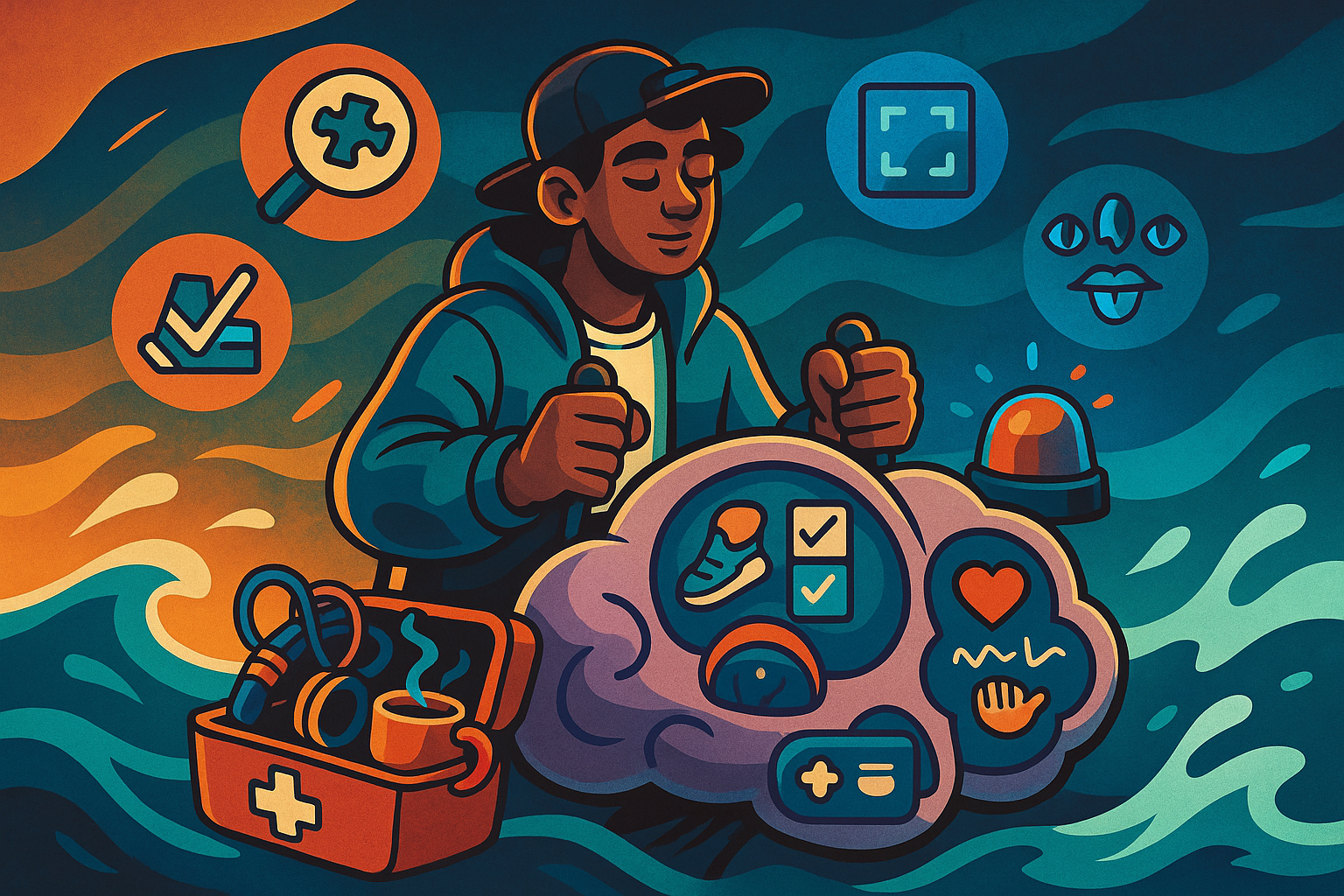
    The key to mastering emotional regulation is not just knowing these techniques, but having them ready when you need them most. I encourage all my clients to create an “Emotional First-Aid Kit”—a go-to list of strategies that work for them. Your kit can be a note on your phone, a page in your journal, or even a physical box of items.

    Here is a quick-reference table to help you stock your kit. Pick one or two tools from each category that resonate with you and start practicing them when you’re calm, so they become second nature during times of stress.

    Toolkit Department Technique Best For…
    Cognitive (Mind) Cognitive Reappraisal Challenging initial negative interpretations and reducing frustration or disappointment.
    Behavioral (Action) Behavioral Activation Fighting feelings of depression, apathy, and avoidance by creating positive momentum.
    Somatic (Body) Box Breathing Instantly calming high anxiety, panic, or anger by regulating your nervous system.
    Somatic (Body) 5-4-3-2-1 Grounding Interrupting an anxiety spiral or dissociative feelings by anchoring you in the present.

    Your Journey to Emotional Mastery

    Building healthy relationships starts with building a healthy relationship with yourself—and that means learning to honor and manage your emotional world. Emotional regulation is not a destination; it’s a lifelong practice. There will still be storms, but you will become a more skilled and confident sailor, capable of navigating them with grace and returning to a place of calm and connection.

    So, I invite you to start today. Pick one tool from this guide and try it out. Be patient and compassionate with yourself as you learn. Every small step you take is an investment in your well-being and the health of your relationships.

    Now, I’d love to hear from you. Which of these techniques resonates with you the most? What’s one small action you can take this week to start building your emotional toolkit? Share your thoughts in the comments below.

  • Mastering Emotional Regulation: A Teen’s Guide

    Mastering Emotional Regulation: A Teen’s Guide

    Mastering Emotional Regulation: A Teen’s Guide

    Hey everyone, Dr. Love here.

    Have you ever found yourself in a full-blown rage over a misplaced phone charger? Or felt a wave of anxiety so intense about walking into a party that you just… didn’t go? If you’ve nodded yes, I want you to know two things: first, you are not alone. And second, you are not broken. In my decade of working with individuals on building stronger selves and relationships, I’ve seen this pattern countless times, especially during the teenage years. It’s a period of intense feelings, and it often feels like our emotions are in the driver’s seat, taking us on a wild, unpredictable ride.

    But what if I told you that this emotional intensity isn’t a flaw? What if it’s actually a feature of a brain that’s undergoing one of the most incredible upgrades of its life? Let’s get under the hood and understand what’s really going on, and then I’ll share some of the most effective tools from my practice to help you grab the steering wheel.

    Why Does Everything Feel So Intense? Your Brain on ‘Upgrade Mode’

    I often use a car analogy with my clients to explain the teenage brain. Imagine your brain is a high-performance race car. During your teen years, the emotional engine—a powerful, fast-reacting part of the brain called the amygdala—is fully turbocharged. It’s responsible for those gut reactions, big emotions, and the powerful drive for social connection and reward. It’s your gas pedal, and right now, it’s incredibly sensitive.

    Meanwhile, the sophisticated braking system—the prefrontal cortex, located right behind your forehead—is still being installed. This is the part of your brain that handles logic, planning for the future, understanding consequences, and controlling impulses. It’s a complex system that won’t be fully calibrated and online until you’re in your mid-20s.

    This “developmental mismatch”—a powerful gas pedal and still-developing brakes—is the core reason why everything feels so intense. It’s why the sting of being left out by friends can feel catastrophic, why the thrill of a new crush is all-consuming, and why it’s so hard to resist the impulse to send that angry text. Your brain is temporarily wired to prioritize immediate emotional and social feedback over long-term consequences. But here’s the empowering part: this isn’t a bug in the system. Your brain is in “super-learning mode,” optimized to explore, adapt, and learn from your social world. You’re not out of control; you’re under construction.

    Your Emotional First-Aid Kit: A Quick Guide to What to Do When

    When you’re in the middle of an emotional storm, it’s hard to remember what to do. That’s why I created this simple “First-Aid” chart for my clients. It connects a feeling to a specific, actionable skill. Think of it as your emergency cheat sheet.

    When you feel… Your Go-To Skill Try This Immediately
    Overwhelmed, on the verge of panic DBT Distress Tolerance Skills The TIPP Skill
    Stuck in a loop of negative thoughts CBT Cognitive Restructuring A Thought Record
    Furious, about to explode DBT Crisis Survival Skills The STOP Skill
    Feeling “off” but can’t name why Mindfulness & Grounding The 5-4-3-2-1 Method

    Skill #1: Hit the Brakes with the STOP Skill

    Imagine you’re about to say something you’ll regret in an argument, or fire off that angry text. Your emotions are screaming GO! This is the moment to slam on the brakes. The STOP Skill, from a powerful therapy called Dialectical Behavior Therapy (DBT), is your behavioral emergency brake.

    1. S – Stop. Literally, freeze. Don’t move a muscle. Don’t speak. This physical pause creates a crucial gap between your emotional impulse and your action.
    2. T – Take a step back. Take a deep breath. If you can, physically take a step back from the situation or put your phone down. Give yourself a moment of space.
    3. O – Observe. What is actually happening, both inside and outside of you? What are you feeling in your body? What did the other person actually say? Gather the facts like a neutral reporter, without judgment.
    4. P – Proceed Mindfully. Now, ask yourself: What is my ultimate goal here? What action will make this situation better, not worse? Based on that goal, choose your next move deliberately, instead of letting the emotion choose for you.

    Skill #2: Reboot Your System with TIPP

    Sometimes, you’re past the point of thinking. You’re in a 10/10 emotional crisis—a panic attack, a fit of rage, overwhelming despair. In these moments, trying to reason with your brain is like trying to type on a computer that’s frozen. You need a hard reboot. The TIPP Skill is designed to do just that by rapidly changing your body’s chemistry.

    • T – Temperature. Splash your face with cold water, or hold an ice pack on your cheeks and eyes for 30 seconds while holding your breath. This triggers a natural calming response in your body called the “mammalian dive reflex,” which quickly slows your heart rate. (Note: If you have any heart or medical conditions, please consult a doctor before trying this).
    • I – Intense Exercise. Got a huge surge of angry or anxious energy? Burn it off. Do jumping jacks, run up and down the stairs, or sprint down the block for a few minutes. Match the intensity of your emotion with intense physical effort.
    • P – Paced Breathing. Slow your breathing way down. The key is to make your exhale longer than your inhale. Try breathing in for a count of 4 and out for a count of 6. This activates your body’s relaxation system.
    • P – Paired Muscle Relaxation. Tense a group of muscles (like your fists) as hard as you can while you breathe in, and then completely relax them as you breathe out. Notice the feeling of tension melting away. Work your way through different muscle groups in your body.

    Skill #3: Become a Thought Detective with CBT

    Once the emotional storm has calmed from a red-alert crisis to a more manageable yellow-alert, you can start using your thinking brain again. This is where we can become “thought detectives.” A cornerstone of my practice is Cognitive Behavioral Therapy (CBT), which is based on one profound idea: it’s not events themselves that cause our feelings, but our thoughts about those events.

    Often, our minds fall into unhelpful thinking traps called “cognitive distortions.” Here are a couple of common ones:

    • Catastrophizing: Your mind jumps to the absolute worst-case scenario. “I failed this test, so I’ll fail the class, I’ll never get into college, and my life is ruined.”
    • All-or-Nothing Thinking: You see things in black-and-white terms. “If I’m not the best player on the team, I’m a total failure.”

    The key is to catch these thoughts and challenge them. A simple Thought Record can help.

    Your Mini Thought Record

    1. The Situation: What actually happened? (e.g., “My friend didn’t reply to my text for three hours.”)
    2. My Automatic Thought: What was the first thing that popped into my head? (e.g., “They’re mad at me. I did something wrong.”)
    3. My Feeling: What emotion did that thought create? (e.g., Anxiety, sadness.)
    4. Challenge It: What is the evidence *against* this thought? Are there other possible explanations? (e.g., “They said they were busy today. Their phone could be off. They’ve done this before and it was nothing.”)
    5. Create a Balanced Thought: Write a new, more realistic thought. (e.g., “It’s possible they’re just busy. I can’t know for sure why they haven’t replied, and jumping to conclusions is just making me anxious.”)

    From Surviving to Thriving: Regulation as a Social Superpower

    Here’s the real magic, and the core of what we do here at LovestbLog: mastering your inner world fundamentally transforms your outer world. Emotional Regulation isn’t just about feeling less bad; it’s about *connecting* better. When you can pause before reacting, you stop yourself from saying hurtful things in arguments with your parents or your partner. When you can manage your own anxiety, you can show up for a friend who needs you without getting overwhelmed yourself. You learn to express your needs clearly instead of exploding with frustration.

    These skills are the foundation of healthy, resilient, and deeply fulfilling relationships. By practicing them now, you are not just getting through your teen years—you are actively building the emotional architecture for a lifetime of strong connections.

    Your Turn to Build

    Remember, your brain is not your enemy; it’s a powerful work in progress. These tools aren’t about getting rid of emotions—they’re about learning to navigate them skillfully. Like any skill, it takes practice. You won’t be perfect, and that’s okay. The goal is progress, not perfection.

    So, I’ll leave you with a question to start your journey. What’s one emotional trigger you regularly face, and which tool from this kit are you most curious to try next time it shows up? Share your thoughts in the comments below. Let’s build this skill together.

    With warmth and encouragement,
    Dr. Love

  • How an Emotional Regulation Therapist Can Aid Your Journey

    How an Emotional Regulation Therapist Can Aid Your Journey

    How an Emotional Regulation Therapist Can Aid Your Journey

    Hi everyone, Dr. Love here. Have you ever felt like you and your partner are stuck in a loop, having the same fight on repeat? Or perhaps you’re single, and that familiar wave of anxiety seems to crash over you right before every first date, whispering doubts that sabotage your confidence. If you’ve ever thought, “Why does this keep happening?” I want you to know you’re not alone. And more importantly, the problem often isn’t a lack of love or a fatal flaw in your personality. The problem is a faulty emotional thermostat.

    Why Your Emotional Thermostat Dictates Your Relationship’s Climate

    Think of your capacity for Emotional Regulation as your home’s thermostat. A well-calibrated thermostat keeps the temperature comfortable. It responds to changes—a cold draft, a sunny afternoon—and makes subtle adjustments to maintain equilibrium. It doesn’t eliminate heat or cold; it manages them. Similarly, healthy emotional regulation isn’t about suppressing feelings. It’s the skill of managing their intensity and duration, allowing you to feel your emotions without letting them flood the house.

    But when that thermostat is broken, you get extremes. You’re either boiling over in anger during a minor disagreement (a state of hyper-regulation) or you’ve shut down completely, leaving the room emotionally frigid (hypo-regulation). In this state, genuine communication is impossible. You can’t resolve conflict, build intimacy, or feel safe when you’re constantly fighting the climate in the room. This is what we call Emotional Dysregulation, and it’s at the heart of so many relationship struggles.

    The Ghost in the Machine: How Our Past Wires Our Present Reactions

    So, where do these thermostat settings come from? In my years of practice, I’ve seen time and again that the answer lies in our past. Attachment Theory teaches us that our earliest relationships create a kind of “emotional blueprint” for our adult connections. As infants, we learn from our caregivers how to get our needs met. This blueprint, formed before we could even speak, dictates the default settings on our emotional thermostat.

    • If you had inconsistent care, you might have learned to turn the heat way up—becoming an “emotional amplifier”—to make sure you were noticed. This is the root of what we call an Anxious Attachment style.
    • Conversely, if expressing needs led to rejection or punishment, you might have learned to turn the thermostat off entirely, becoming an expert at using the “emotional mute button.” This is the foundation of an Avoidant Attachment style.

    These aren’t character flaws; they were brilliant survival strategies in childhood. But in our adult relationships, these outdated settings cause recurring short-circuits, leaving us and our partners feeling confused and hurt.

    More Than a Listener: Your Therapist as an Emotional Electrician

    This is where an emotional regulation therapist comes in. I often tell my clients to think of me not just as a listener, but as a skilled “emotional electrician.” My job is to help you find the fuse box, understand the faulty wiring from your past, and teach you how to install a new, more responsive system. The process is collaborative, structured, and empowering.

    It typically involves two key phases:

    1. Mapping the Wires (Assessment): First, we become detectives of your inner world. We identify your unique emotional triggers—the specific situations, words, or even physical sensations that cause a surge of emotion. We use tools like journaling or guided reflection (like the SIFT method, where we explore Sensations, Images, Feelings, and Thoughts) to uncover the patterns that have been running your life on autopilot.
    2. Learning the Toolkits (Skill-Building): Next, we equip you with evidence-based toolkits designed to manage these surges. The two most powerful toolkits I use are Cognitive Behavioral Therapy (CBT) and Dialectical Behavior Therapy (DBT). They sound complex, but they offer incredibly practical, life-changing skills.

    A therapist’s role is to be a co-regulator—a steady, safe presence that guides you back to balance while teaching you the skills to eventually do it for yourself. It’s a process of moving from dependence to independence.

    Here’s a simple breakdown of how these two powerful therapies differ:

    Dimension Cognitive Behavioral Therapy (CBT) Dialectical Behavior Therapy (DBT)
    Core Analogy The “Thought Re-framer.” It helps you rewrite the automatic negative stories that fuel your emotions. The “Emotional First-Aid Kit.” It gives you crisis-survival skills for when you’re completely overwhelmed.
    Primary Focus Changing the relationship between your thoughts and your feelings. Balancing acceptance of your current reality with the skills needed to change it.
    Key Skill Example Cognitive Restructuring: Identifying a thought like “This date is a disaster” and challenging it with evidence to find a more balanced perspective. Distress Tolerance (TIPP Skill): Using Temperature (cold water on your face), Intense exercise, Paced breathing, and Progressive muscle relaxation to quickly calm a panicked nervous system.

    From Self-Regulation to Co-Regulation: Rewiring Your Relationship

    While individual work is foundational, relationships have their own electrical grid. For this, I turn to the work of Drs. John and Julie Gottman, whose method is the ultimate “couples’ playbook” for what we call co-regulation—the ability to help each other stay calm and connected, even during conflict.

    The Gottmans identified a state called Flooding, which is exactly what it sounds like: a complete physiological and emotional overwhelm where your heart rate spikes, adrenaline courses through you, and the logical part of your brain goes offline. In this state, productive conversation is biologically impossible.

    The antidote is deceptively simple: take a break. A real, 20-minute-minimum break to let your nervous system calm down. This isn’t avoidance; it’s a strategic pause to prevent further damage from the Four Horsemen of the Apocalypse: Criticism, Contempt, Defensiveness, and Stonewalling. These four communication patterns are the most reliable predictors of relationship failure, and learning to spot and replace them is a cornerstone of couples work.

    Building Your Personal Toolkit: Simple Exercises to Start Today

    The journey to emotional mastery begins with small, intentional steps. Here are a few exercises you can try this week to begin recalibrating your thermostat.

    For Individuals (Managing Dating & Social Anxiety)

    • The 5-4-3-2-1 Grounding Technique: When you feel anxiety rising, pause and name: 5 things you can see, 4 things you can feel (the chair beneath you, your feet on the floor), 3 things you can hear, 2 things you can smell, and 1 thing you can taste. This pulls your attention out of the anxious spiral and back into the present moment.
    • Notice and Name: Instead of getting swept away by a feeling, practice observing it with curiosity. Silently say to yourself, “This is anxiety. I feel it as a tightness in my chest.” Naming it creates a small space between you and the emotion, giving you a moment to choose your response rather than simply reacting.

    For Couples (Building Intimacy & Connection)

    • The “Hug ‘Til Relaxed”: This is more than a quick peck. Set a timer for 2-5 minutes and hold each other without talking. Focus on your breathing, then tune into your partner’s. This simple act releases oxytocin, the “bonding hormone,” and can co-regulate your nervous systems after a stressful day or a minor conflict.
    • The Daily Appreciation Ritual: Before bed, share one specific thing you appreciated about your partner that day. For example, “I really appreciated that you made me coffee this morning” or “I loved how you listened when I was talking about my stressful day.” This practice actively builds a culture of fondness and admiration, which is the antidote to contempt.

    Your Journey to Emotional Mastery

    Learning to regulate your emotions is one of the most profound investments you can make in yourself and your relationships. It’s not about achieving a state of permanent calm, but about building the resilience to navigate life’s inevitable storms with grace and intention. An emotional regulation therapist is a guide on this journey, providing the map, the tools, and the supportive presence you need to rewire old patterns and build a life that feels more authentic and connected.

    Remember the LovestbLog philosophy: healthy relationships are not found, they are built—and the foundation is always you.

    So, I’ll leave you with a question: What’s one small step you can take this week to become more aware of your emotional thermostat? Share your thoughts in the comments below!

  • Effective Emotional Regulation Worksheets for Adults

    Effective Emotional Regulation Worksheets for Adults

    Hi everyone, Dr. Love here. Over my decade as a relationship psychologist, I’ve sat with hundreds of couples and individuals. And if there’s one pattern I’ve seen derail more promising connections than any other, it’s this: you have a disagreement, and within minutes, it escalates. Voices rise, defenses go up, and suddenly you’re not talking about the dishes in the sink anymore. You’re re-litigating a fight from six months ago. One partner shuts down completely, while the other gets louder, trying to break through the wall. In the end, nothing is resolved, and both of you are left feeling hurt, misunderstood, and exhausted.

    If this sounds familiar, you’re not alone. The problem isn’t that you’re “bad communicators” or that you don’t love each other enough. The problem is that you’re getting emotionally hijacked. Today, we’re going to move beyond the useless advice to “just calm down” and dive into the science of what’s happening in your brain and body during these moments. More importantly, I’m going to give you a set of practical, evidence-based tools—worksheets you can actually use—to start regulating these intense emotions and building a relationship that feels safe, connected, and resilient.

    Why “Just Calm Down” Is the Worst Advice: Understanding Emotional Flooding

    Have you ever been in a conflict where your heart starts pounding, your breathing gets shallow, and you can’t think straight? You might feel an overwhelming urge to either lash out or run away. This physiological and psychological state has a name: Emotional Flooding. Coined by world-renowned relationship researcher Dr. John Gottman, it describes what happens when your nervous system gets overwhelmed by a perceived threat—often an emotional one, like criticism or contempt from your partner.

    Think of your brain’s prefrontal cortex—the part responsible for rational thought, problem-solving, and empathy—as your company’s CEO. When things are calm, the CEO is in charge, making thoughtful decisions. But during emotional flooding, your body is flooded with stress hormones like cortisol and adrenaline. Your heart rate can shoot above 100 beats per minute. This triggers your brain’s “fight-or-flight” response, and your amygdala—the brain’s smoke detector—hijacks the system. The CEO is kicked out of the office, and the security guard is now running the company. In this state, it’s physiologically impossible to listen, empathize, or problem-solve effectively. All you can do is react: attack (fight) or withdraw (flight).

    Recognizing emotional flooding isn’t a sign of failure; it’s a crucial act of self-awareness. It’s your body’s signal that you need to pause and self-soothe, not push through a conversation that has become unproductive.

    This is why trying to resolve a conflict when one or both of you are flooded is like trying to perform delicate surgery during an earthquake. It only makes things worse. The first and most critical skill is learning to recognize the signs of flooding in yourself and your partner and agreeing to take a break.

    Your Emotional Blueprint: How Your Past Shapes Your Present Reactions

    So why do some people get flooded more easily than others? The answer often lies in our past. According to Attachment Theory, our earliest relationships with caregivers create an “internal working model” or a blueprint for how we navigate relationships and regulate emotions throughout our lives. This blueprint is formed before we can even speak; it’s an emotional language we learn in infancy.

    • Secure Attachment: If your caregivers were consistently warm, responsive, and available, you likely developed a secure attachment. You learned that emotions are manageable, that it’s safe to express your needs, and that connection is a reliable source of comfort. As an adult, you’re more likely to have a balanced approach to emotional regulation.
    • Anxious Attachment: If your caregivers were inconsistent—sometimes available, sometimes not—you may have developed an anxious attachment. You learned to amplify your emotional signals (a strategy called hyper-regulation) to get your needs met. As an adult, you might be highly sensitive to perceived threats of abandonment and feel your emotions very intensely.
    • Avoidant Attachment: If your caregivers were distant, rejecting, or discouraged emotional expression, you may have developed an avoidant attachment. You learned that showing emotion leads to punishment or withdrawal of love, so you learned to suppress your feelings (a strategy called hypo-regulation). As an adult, you might pride yourself on being independent and self-sufficient, but you may shut down or withdraw during conflict to avoid feeling vulnerable.

    Understanding your attachment style isn’t about blaming your parents. It’s about understanding your own programming with compassion. It helps explain why you react the way you do, and it’s the first step toward consciously choosing new, more effective responses.

    From Reactive to Responsive: A Practical Toolkit for Emotional Regulation

    Emotional regulation is a skill, not a personality trait. Like any skill, it can be learned with practice. In my work, I draw from powerful, evidence-based therapies like Dialectical Behavior Therapy (DBT) and Cognitive Behavioral Therapy (CBT) to build a multi-layered toolkit. Think of it as an emotional first-aid kit, with different tools for different levels of distress.

    Level 1: Daily Maintenance (Building Your Emotional Immune System)

    The best way to handle a crisis is to prevent it. These skills reduce your baseline vulnerability to emotional overwhelm. I teach all my clients the DBT skill of PLEASE:

    • PL – Treat Physical Illness: Chronic pain or illness drains your emotional resources. See a doctor when you need to.
    • E – Eat Balanced Meals: Blood sugar spikes and crashes directly impact your mood.
    • A – Avoid Mood-Altering Drugs: Use alcohol and other substances in moderation, if at all.
    • S – Sleep Adequately: Sleep deprivation is a major driver of emotional dysregulation.
    • E – Exercise: Physical activity is one of the most powerful mood regulators available.

    This might seem basic, but I can’t tell you how many relationship conflicts are fueled by one partner being hangry or exhausted. Tending to your physical well-being is non-negotiable for emotional health.

    Level 2: Managing the Rising Tide (When You Feel It Coming)

    You feel your frustration growing, but you’re not flooded yet. This is the golden window to intervene before the hijack happens. Here are two powerful skills:

    1. The STOP Skill: This is a crucial mindfulness practice to create a pause between an emotional trigger and your reaction.
      • SStop! Just freeze for a moment. Don’t do or say anything.
      • TTake a step back. Take a deep breath. Create some mental space.
      • OObserve. What are you feeling in your body? What thoughts are running through your mind? What is the other person saying?
      • PProceed mindfully. What is your goal here? What action will make the situation better, not worse? Choose your response intentionally.
    2. Check the Facts: Our emotions are often triggered not by an event itself, but by our interpretation of the event. Ask yourself:
      • What is the event that triggered my emotion? (e.g., “My partner came home late.”)
      • What are my interpretations and thoughts about this event? (e.g., “They don’t care about me. They’re being selfish.”)
      • Am I confusing thoughts with facts? Is there another, more generous interpretation? (e.g., “Maybe they got stuck in traffic or had a long day at work.”)
      • Does the intensity of my emotion match the actual facts?

    Level 3: Crisis Survival (When You’re Already Flooded)

    If you’ve missed the window and you’re already flooded, cognitive skills won’t work. Your CEO is offline. At this point, the goal is not to solve the problem, but to tolerate the distress without making things worse. This is where you need physiological “reset” buttons. The DBT skill TIPP is brilliant for this:

    • TTemperature: The fastest way to calm your nervous system is to trigger the “dive reflex.” Hold your breath and splash your face with cold water, or hold an ice pack on your cheeks and eyes for 30 seconds. This immediately slows your heart rate.
    • IIntense Exercise: Do 60 seconds of intense cardio, like jumping jacks or running in place. This helps your body expend the “fight-or-flight” energy.
    • PPaced Breathing: Slow your breathing way down. Breathe in for a count of 5 and out for a count of 7. The long exhale signals safety to your nervous system.
    • PPaired Muscle Relaxation: Tense a muscle group as you inhale, then relax it completely as you exhale. Work your way through your body, from your toes to your face.

    Remember, when you’re flooded, you must take a break of at least 20 minutes to allow the stress hormones to leave your bloodstream. Use that time to do a TIPP skill, go for a walk, or listen to calming music—anything that is distracting and soothing.

    Putting It All Together: Your First Emotional Regulation Worksheet

    Knowledge is great, but practice is what creates change. I’ve designed a simple worksheet based on these principles to help you start building your skills. The next time you feel a strong, difficult emotion, take a few minutes to walk through these steps. Don’t do it in the middle of a fight—practice with small, everyday frustrations first.

    Step Guiding Question & Action
    1. Identify the Emotion What am I feeling right now? Be specific (e.g., not just “bad,” but “disappointed,” “ashamed,” “frustrated”).
    Rate its intensity (1-10): ______
    2. Identify the Trigger What just happened (externally or internally) that prompted this feeling? Write down the facts of the situation.
    3. Check Your Thoughts What stories or interpretations am I telling myself about this trigger? Are these thoughts facts or opinions? Is there another way to see this?
    4. Choose a Skill Based on my intensity level, what skill do I need right now?
    Low Intensity (Maintenance): Did I follow my PLEASE skills today?
    Medium Intensity (Rising Tide): Can I use the STOP skill or Check the Facts?
    High Intensity (Flooded): I need to take a 20-minute break and use a TIPP skill.
    5. After-Action Check-In After using the skill, what is my new intensity level (1-10)? ______
    What did I learn from this experience?

    Conclusion: Building a Relationship That Can Weather Any Storm

    Learning to regulate your emotions is one of the most profound gifts you can give yourself and your relationship. It’s not about suppressing feelings or avoiding conflict. It’s about creating enough internal space to respond to life’s challenges with wisdom, intention, and compassion, rather than reacting from a place of fear or pain.

    This journey starts with a single step: awareness. Start noticing your emotional patterns without judgment. Use the worksheet to get curious about your inner world. Be patient with yourself and your partner. You are unlearning patterns that have been in place for decades. But with consistent practice, you can move from being controlled by your emotions to being the conscious, loving architect of your life and your relationships.

    I’d love to hear from you. What’s one small step you can take this week to practice emotional regulation? Share your thoughts and experiences in the comments below.

  • Fun Emotional Regulation Activities for Kids

    Fun Emotional Regulation Activities for Kids

    Fun Emotional Regulation Activities for Kids

    Hi, I’m Dr. Love, founder of LovestbLog. I’ve spent over a decade helping individuals and couples build stronger, healthier relationships, and one of the most profound truths I’ve learned is this: our ability to connect with others is forged in the crucible of how we first learned to connect with ourselves. And that education begins in childhood, often during the most chaotic moments—like a full-blown, on-the-floor, kicking-and-screaming tantrum over a broken cookie.

    We’ve all been there. Your child’s emotional dial is cranked to eleven, and your first instinct is to say, “Calm down!” or “Stop crying!” It feels logical. But in my experience, telling a dysregulated child to “calm down” is like telling a person caught in a rainstorm to “get dry.” It’s not only ineffective; it completely misses the point of what’s happening inside their developing brain.

    Why “Calm Down” Is the Worst Thing to Say to a Child in a Meltdown

    Imagine your child’s brain has two key parts: a highly sensitive “smoke detector” (the amygdala, or emotional brain) and a thoughtful “fire chief” (the prefrontal cortex, or thinking brain). When a big emotion like anger or frustration hits, the smoke detector goes off—loudly. In that moment, the fire chief is completely offline. There’s no logic, no reasoning, no impulse control. There’s only a five-alarm fire of feeling.

    When we command them to “calm down,” we’re trying to reason with a fire chief who has already left the building. This is why the concept of emotional regulation is so misunderstood. It’s not about suppressing or “controlling” emotions.[1, 2] It’s about giving our children the tools to notice the smoke, hear the alarm, and eventually, learn how to call the fire chief back to the station. It’s a skill, built over time, not an instruction to be followed in the heat of the moment.

    The goal isn’t to stop the emotional fire; it’s to become the calm, steady firefighter who shows up to help, teaching them how to handle the heat until they can do it themselves.

    The Secret Weapon You Already Have: Becoming an Emotion Coach

    So, if you can’t talk them out of a tantrum, what can you do? You use the most powerful tool in your parenting arsenal: yourself. This is a process called co-regulation. Think of yourself as your child’s external nervous system.[3] When their internal world is a chaotic storm, your calm, steady presence acts as a safe harbor, helping them ride the waves until they subside.[3, 4]

    This isn’t just a nice idea; it’s rooted in interpersonal neurobiology.[3] Through thousands of these moments, you are literally wiring your child’s brain for resilience and secure attachment.[3] You are the training wheels for their self-regulation.

    The most effective framework for this comes from the brilliant work of Dr. John Gottman, who identified a parenting style he calls the “Emotion Coach.” An Emotion Coach sees a child’s negative feelings not as a problem to be fixed, but as a golden opportunity for connection and teaching.[5]

    Here’s a quick look at the different parenting styles Gottman identified:

    Parenting Style Core Belief Impact on Child
    The Dismissing Parent Negative emotions are trivial and should disappear quickly. Learns their feelings are wrong or invalid; has difficulty regulating emotions.[5]
    The Disapproving Parent Negative emotions are a sign of weakness and must be controlled. Same as dismissing, but with added feelings of shame.[5, 6]
    The Laissez-Faire Parent Accepts all emotions but offers no guidance or limits on behavior. Doesn’t learn to regulate emotions; struggles with impulse control and friendships.[5, 7]
    The Emotion Coach Negative emotions are an opportunity for connection and teaching. Learns to trust their feelings, regulate emotions, and solve problems; has higher self-esteem.[5, 8]

    Becoming an Emotion Coach involves five key steps [6, 9]:

    1. Be aware of your child’s emotion. Notice the subtle cues before the storm hits.
    2. Recognize the emotion as an opportunity for intimacy and teaching.
    3. Listen with empathy and validate their feelings. This is the magic step. “It sounds like you’re so angry that your tower fell.”
    4. Help your child label their emotions with words. Giving a feeling a name tames it.
    5. Set limits while helping them problem-solve. “I know you’re mad, but hitting is not okay. What’s a better way to show your brother you’re upset?”

    Your “Emotional First-Aid Kit”: Differentiating Brain-Down vs. Body-Up Strategies

    Now for the practical magic. To be an effective Emotion Coach, you need the right tools at the right time. The most critical distinction I teach parents is the difference between “brain-down” (top-down) and “body-up” (bottom-up) strategies.

    • Brain-Down Strategies are cognitive. They involve talking, reasoning, and problem-solving. They engage the “fire chief” (the thinking brain).
    • Body-Up Strategies are sensory. They involve movement, breathing, and physical sensations. They calm the “smoke detector” (the emotional brain) directly.

    Here’s the rule: You cannot use a brain-down strategy when a child is in a body-up crisis. When the smoke alarm is blaring, you must first calm the nervous system. Only then can the fire chief come back online to talk about what happened.

    The Fun Part: Your Go-To List of Regulation Activities

    Think of these activities as your emotional first-aid kit. When your child is dysregulated, reach for a Body-Up tool. When they are calm and connected, practice the Brain-Down skills.

    Body-Up Activities (For Calming a Nervous System in Overdrive)

    These activities provide sensory input that is naturally organizing and calming to the brain.

    • Heavy Work (Proprioceptive Input): These activities involve pushing, pulling, and deep pressure, which sends calming signals to the nervous system. Think of it as a weighted blanket for the brain.[10, 11]
      • Animal Walks: Have them stomp like an elephant, crawl like a bear, or walk like a crab.[12, 13] This provides powerful input to the muscles and joints.
      • Pillow Pile Crash: Let them safely crash into a big pile of pillows or cushions.[13] It’s a fantastic way to release physical tension.
      • Pushing Games: Have them push a laundry basket full of toys across the room or play a gentle game of tug-of-war.[13]
    • Breathing and Grounding: Slow, deep breaths are the fastest way to manually switch the nervous system from “fight or flight” to “rest and digest.”
      • Dragon Breathing: Breathe in through your nose, then open your mouth and roar the “fire” (your breath) out.[14] This is perfect for releasing anger.
      • Calm-Down Glitter Jar: Shake up a bottle filled with water, glue, and glitter. As you watch the glitter slowly settle, it provides a visual metaphor for a busy mind calming down.[14, 15]
      • The 5-4-3-2-1 Grounding Game: When anxiety is high, pause and name: 5 things you can see, 4 things you can feel, 3 things you can hear, 2 things you can smell, and 1 thing you can taste.[16, 17] This pulls their attention out of the internal storm and into the present moment.

    Brain-Down Activities (For Building Skills When Calm)

    Practice these when your child is regulated and receptive. This is where the learning and skill-building happen.

    • Creative Expression: Art provides a safe, non-verbal outlet for feelings that are too big for words.
      • Painting to Music: Play different kinds of music (fast, slow, loud, soft) and have them paint what the music makes them feel.[14, 18]
      • Scribble and Tear Art: Give them a piece of paper to scribble all their angry feelings onto. Then, let them rip it into tiny pieces and use the pieces to create a new collage.[19] This transforms destructive energy into something creative.
    • Movement and Play: Play is the language of childhood, and it’s a fantastic way to practice essential regulation skills.
      • Freeze Dance: Dance wildly when the music is on and freeze instantly when it stops.[12, 13] This game is a super fun workout for their impulse-control muscles.
      • Emotion Charades: Take turns acting out an emotion (happy, sad, frustrated, silly) and have the other person guess.[20, 17] This builds their emotional vocabulary and ability to read non-verbal cues.

    Weaving Regulation into Your Daily Life: The Calm-Down Corner

    The most effective way to teach these skills is proactively, not reactively. Don’t wait for a meltdown to introduce these tools. Instead, create a dedicated space in your home for emotional regulation—a Calm-Down Corner.[17, 21]

    This is NOT a time-out spot. It’s a cozy, safe space your child can go to when they feel overwhelmed, and it should be created *with* them.[22, 23] Call it the “Cozy Corner,” “Reset Space,” or “Peace Place.” The goal is to frame it as a supportive tool, not a punishment.[22]

    Stock it with a few of your child’s favorite regulation tools:

    • Comforting Items: A soft blanket, a beanbag chair, a favorite stuffed animal.[24, 25]
    • Sensory Tools: A calm-down glitter jar, stress balls to squeeze, play-doh, or a weighted lap pad.[24, 26]
    • Mindful Activities: Books about feelings, coloring pages, or cards showing different breathing exercises.[27, 26]

    Model using the space yourself. Say, “I’m feeling a little frustrated right now, so I’m going to sit in our Cozy Corner for a few minutes and take some deep breaths”.[23] This normalizes the process and shows them that everyone needs help managing their feelings sometimes.

    Your Journey as an Emotional Architect

    Building emotional regulation skills in your child is one of the most profound gifts you can give them. It’s a long-term project, not a quick fix. There will still be tantrums and tough days. But by shifting your perspective from being an “emotional firefighter” to an “emotional architect,” you change the entire dynamic.

    You’re not just stopping bad behavior; you’re building a foundation of emotional intelligence, resilience, and deep, trusting connection that will last a lifetime. You’re teaching them that all their feelings are welcome, that they are not alone in their struggles, and that they have the power to navigate their own inner world.

    Now, I’d love to hear from you. What are some of your family’s favorite ways to calm down and connect? Share your go-to activities in the comments below!

  • Mastering Emotional Regulation: Key Techniques and Synonyms

    Mastering Emotional Regulation: Key Techniques and Synonyms

    Why a “Simple” Disagreement About the Dishes Can End in a Week of Silence

    Hi everyone, Dr. Love here. Let’s talk about a scene I’ve witnessed countless times in my practice. It starts with something trivial—a sink full of dishes, a forgotten errand, a casual comment taken the wrong way. Within minutes, the emotional temperature in the room skyrockets. Voices are raised, accusations fly, and what began as a minor issue spirals into a major conflict, often ending in slammed doors and a painful, lingering silence. Does this sound familiar?

    If you’ve ever found yourself wondering, “How did we get here?” you’ve come to the right place. The answer often lies not in the dishes or the errand, but in a crucial, learnable skill: Emotional Regulation. For years, I’ve guided individuals and couples through this territory, and I can tell you with certainty that mastering this skill is the single most powerful investment you can make in your personal well-being and the health of your relationships.

    But here’s the catch: most people misunderstand what emotional regulation truly is. It’s not about becoming a robot, suppressing your feelings, or “controlling” your anger until it disappears. That’s a recipe for disaster. True emotional regulation is far more nuanced and empowering.

    The Art of Emotional Navigation: What Regulation Really Means

    Think of your emotions as the weather on the ocean. Some days are calm and sunny, others are stormy and turbulent. A novice sailor gets tossed around by every wave, reacting with panic. A master sailor, however, doesn’t try to stop the storm. Instead, they use their skill to adjust the sails, steer the rudder, and navigate through the waves, using the wind’s power to move forward. Emotional Regulation is the art of becoming that master sailor of your inner world.

    It’s the process of influencing which emotions you have, when you have them, and how you experience and express them to achieve your goals. Notice the key word is “influence,” not “suppress.” It’s about working *with* your emotions, not against them.

    To build a solid foundation, it’s crucial to distinguish this skill from other terms that are often used interchangeably but mean very different things. This isn’t just academic nitpicking; getting the concepts right is the first step to applying them correctly.

    Term Core Idea How It’s Different from Emotional Regulation
    Emotional Regulation Influencing the entire emotional process to meet a goal. This is the core, overarching skill we are focused on.
    Coping Mechanism Actions taken to manage external stressors. Broader. It includes non-emotional actions like problem-solving (e.g., fixing the leaky faucet that’s causing you stress).
    Distress Tolerance The ability to sit with and endure negative feelings without acting impulsively. A subset of regulation. It’s about *surviving* the storm, not necessarily *navigating* it. Essential, but not the whole picture.
    Emotional Intelligence (EI) The broad ability to perceive, understand, and manage emotions. The entire “operating system.” Emotional regulation is the key “app” within that system for managing emotions.

    The Strategist’s Playbook: Working Upstream, Not Downstream

    So, how do we learn to navigate? The most brilliant framework I’ve encountered in my work comes from Stanford psychologist James Gross. His model shows that an emotion isn’t a single event but a process that unfolds in a sequence. This is a game-changer because it gives us multiple points to intervene.

    Imagine you get a text from your partner that says, “We need to talk tonight.”

    1. Situation: You receive the text.
    2. Attention: Your mind immediately focuses on the ominous “we need to talk” phrase, ignoring the rest of your day.
    3. Appraisal: You interpret this as, “Something is wrong. I’m in trouble.”
    4. Response: Your heart starts racing, your stomach churns with anxiety, and you spend the rest of the day imagining the worst.

    Gross’s model shows us we can intervene at any stage, but he makes a crucial distinction between two types of strategies:

    • Antecedent-Focused Strategies (Upstream): These are proactive moves you make *before* the emotion is in full swing (Steps 1-3). This is like building dams and redirecting water flow far upstream from a village.
    • Response-Focused Strategies (Downstream): These are reactive moves you make *after* the emotion has already arrived (Step 4). This is like frantically stacking sandbags as the floodwaters are already rising around the village.

    As you can guess, the most effective, least exhausting work happens upstream. While downstream “emergency” skills are necessary, a true master of emotional regulation spends most of their energy on proactive, upstream strategies.

    Your Proactive Toolkit: Shaping Emotions Before They Take Over

    Let’s look at the most powerful upstream techniques. These are the skills that, with practice, will fundamentally change your relationship with your emotions and, by extension, your partner.

    1. Cognitive Reappraisal: Rewriting Your Story

    This is perhaps the most powerful tool in the entire kit. It’s about changing your interpretation (appraisal) of a situation to alter its emotional impact. It’s not about lying to yourself; it’s about finding a different, equally true story.

    In our “we need to talk” example, the automatic story is a negative one. A reappraisal might sound like:

    • “Maybe they want to discuss something exciting, like a vacation.”
    • “Perhaps they had a tough day and just need to connect with me.”
    • “Even if it’s a difficult conversation, it’s an opportunity for us to grow closer by tackling a problem together.”

    See the shift? The situation hasn’t changed, but by consciously choosing a different narrative, you can shift your emotional response from anxiety to curiosity or even calm resolve.

    2. Acceptance: Dropping the Rope in a Tug-of-War

    This one often feels counterintuitive. Acceptance means allowing your feelings to be there without judging them or trying to fight them. So much of our suffering comes not from the initial emotion (e.g., sadness) but from the secondary emotion we pile on top (e.g., shame for feeling sad: “I shouldn’t be so weak!”).

    Fighting your feelings is like a tug-of-war with a monster. The harder you pull, the harder it pulls back, and you’re stuck. Acceptance is simply dropping the rope. The monster is still there, but you’re no longer locked in a draining battle with it. You’re free to put your energy elsewhere. When you feel a surge of jealousy, instead of berating yourself, you can simply acknowledge, “Ah, there’s jealousy. I’ll let it be here for a moment,” without letting it dictate your actions.

    3. Mindfulness: Directing Your Mental Spotlight

    Mindfulness is a form of attention deployment. It’s the practice of paying attention to the present moment on purpose, without judgment. When an emotion like anger arises, instead of being consumed by it, you can observe it with curiosity: “Wow, my chest feels tight. My thoughts are racing. This is what anger feels like in my body.” This act of observing creates a crucial space between the feeling and your reaction, giving you the power to choose your response instead of being driven by impulse.

    The “Emergency Brakes”: Managing Emotions in the Heat of the Moment

    Sometimes, despite our best upstream efforts, the floodwaters rise. That’s when we need our downstream, response-focused tools.

    The High Cost of Suppression: The most common downstream tactic is Expressive Suppression—bottling it all up. While it might seem useful for avoiding a fight in the short term, my clinical experience and extensive research show this is a terrible long-term strategy. It actually increases your physiological stress, impairs your thinking, and creates emotional distance in your relationship. Your partner may not know what you’re feeling, but they will feel the wall you’ve put up.

    A Better Way: Body-Based Brakes: Instead of suppressing, turn to your body. Your physiology and emotions are a two-way street. Calming your body can directly calm your mind.

    • Deep Belly Breathing: When you’re stressed, your breathing becomes shallow. Taking slow, deep breaths from your diaphragm activates the body’s relaxation response (the parasympathetic nervous system). It’s like hitting a physiological reset button.
    • Grounding (The 5-4-3-2-1 Method): When your mind is spinning out, pull it back to the present by engaging your senses. Name: 5 things you can see, 4 things you can feel, 3 things you can hear, 2 things you can smell, and 1 thing you can taste. This simple exercise breaks the feedback loop of anxious thoughts and anchors you in reality.

    From Knowledge to Mastery: The Path to Emotional Flexibility

    The ultimate goal isn’t to just use one of these techniques, but to develop Emotional Flexibility—the wisdom to choose the right tool for the right job. Sometimes you need reappraisal, sometimes acceptance, and sometimes you just need to take a deep breath.

    Here’s a simple roadmap to get you started:

    1. Build Your Emotional Vocabulary: You can’t regulate what you can’t identify. Move beyond “good” and “bad.” Are you feeling disappointed, frustrated, lonely, or ashamed? Get specific.
    2. Identify Your Default Pattern: What’s your go-to move when you’re stressed? Do you lash out? Shut down? Numb out with Netflix? Acknowledging your automatic pilot is the first step to changing course.
    3. Practice in Low-Stakes Situations: Don’t wait for a huge fight to try these skills. Practice reappraising your annoyance when you’re stuck in traffic. Practice deep breathing when you get a stressful work email. Build the muscle when the weight is light.
    4. Insert a Pause: The space between feeling and reacting is where your power lies. Your only goal at first is to create a tiny pause before you act. In that pause, you can ask: “What’s my goal here? What response will serve me and my relationship best?”

    Your Relationship is a Reflection of Your Inner World

    Mastering emotional regulation is a journey, not a destination. It requires patience and self-compassion. But every step you take on this path not only enhances your own peace of mind but also profoundly transforms the quality of your connections. You stop being a passive reactor to life’s storms and become the calm, confident captain of your own ship, capable of navigating any weather with grace and intention.

    This is the foundation of our work here at LovestbLog—because building a healthy, lasting relationship always begins with the work we do within ourselves.

    Now, I’d love to hear from you. Which of these techniques resonates most with you? And what is your biggest challenge when it comes to managing emotions in your relationships? Share your thoughts in the comments below—let’s learn from each other.