Understanding Emotional Regulation: Key Concepts Explained
Ever found yourself in the same argument with your partner, a frustrating loop where voices get louder, words get sharper, and the original point is lost in a storm of hurt feelings? You both walk away feeling misunderstood and more disconnected than before. As a relationship psychologist for over a decade, I’ve seen this pattern countless times. Couples often come to me focused on the topic of their fights—money, chores, the in-laws—believing that’s the problem. But more often than not, the real issue isn’t what they’re fighting about, but how they’re managing the emotions that flare up during the fight. This core skill, the ability to navigate our inner emotional world, is called emotional regulation, and it is the single most important ingredient for building a resilient, connected, and deeply satisfying relationship.
Your Brain’s Emotional Command Center: A Tale of Two Systems
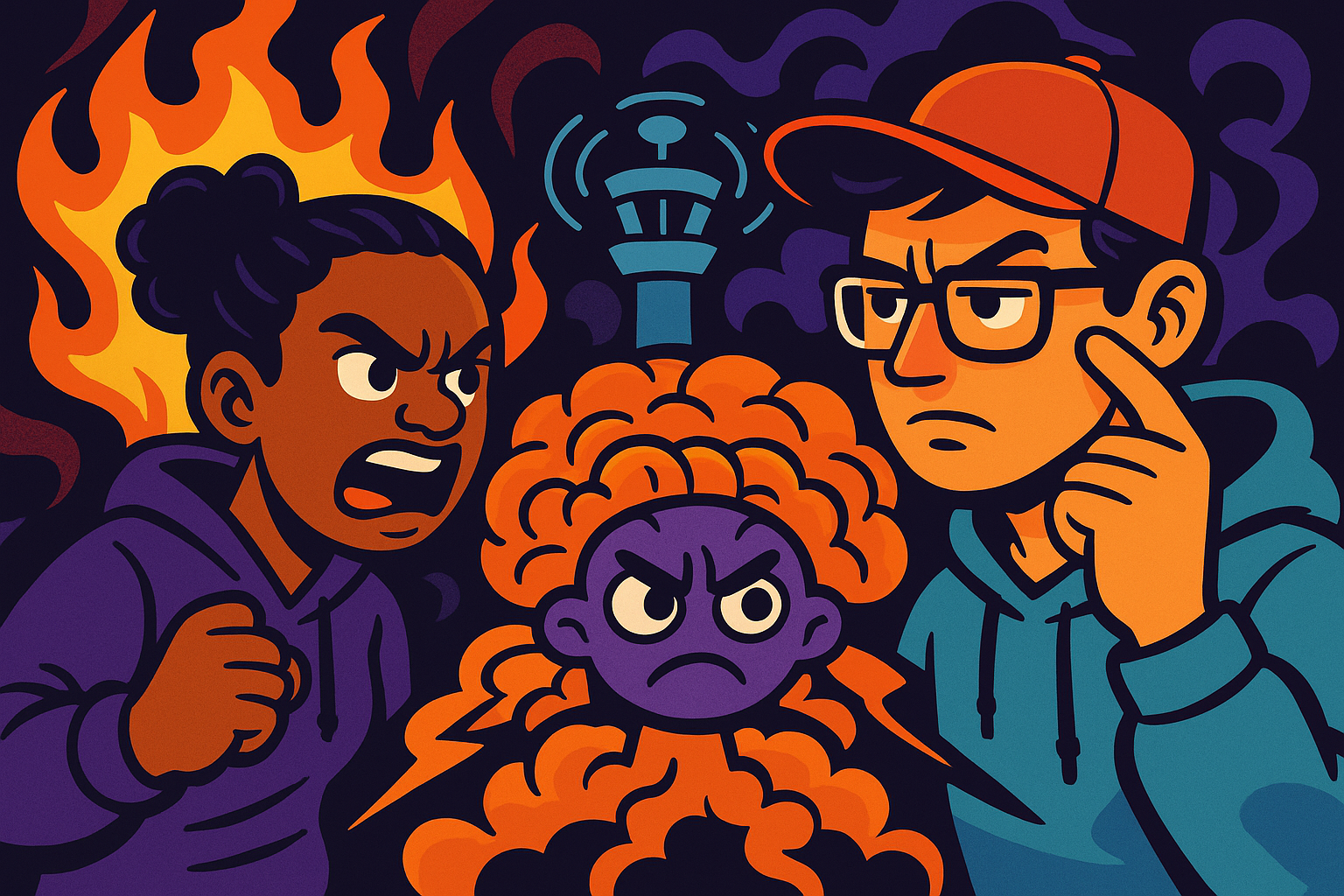
Before we can manage our emotions, we need to understand where they come from. Think of your brain as having two key players in its emotional command center. First, you have the Amygdala, which I like to call the “Smoke Detector.” It’s a primitive, lightning-fast system deep in your brain that’s constantly scanning for threats. When it senses danger—whether it’s a real physical threat or the perceived threat of your partner’s critical tone—it sounds the alarm, triggering an immediate, instinctive “fight-or-flight” response. Your heart pounds, your muscles tense, and rational thought goes out the window.
Then, you have the Prefrontal Cortex (PFC), located right behind your forehead. This is the “Air Traffic Controller.” It’s the more evolved, rational part of your brain responsible for planning, impulse control, and assessing situations with logic. The Air Traffic Controller receives the alarm from the Smoke Detector and has the power to evaluate it. It can say, “Okay, I see the alarm, but this isn’t a five-alarm fire. It’s just a disagreement. Let’s calm the system down and respond thoughtfully.”
Emotional regulation is the conversation between your Smoke Detector and your Air Traffic Controller. It’s not about turning the Smoke Detector off—emotions are vital data!—but about strengthening the Air Traffic Controller’s ability to hear the alarm, assess the situation, and guide your response with wisdom instead of pure instinct.
When Regulation Fails: The Four Horsemen of Relationship Apocalypse
When our Air Traffic Controller is offline and the Smoke Detector is running the show, we fall into destructive communication patterns. My work is heavily influenced by the research of Dr. John Gottman, who identified four communication styles so toxic they can predict the end of a relationship. I see these “Four Horsemen” not as character flaws, but as clear, outward signs of internal emotional dysregulation.
Understanding the Four Horsemen shifts the focus from blaming your partner (“You’re so critical!”) to recognizing a shared challenge (“We’re both getting overwhelmed and falling into this pattern. How can we help each other regulate?”).
Let’s break them down as failures of emotional regulation:
| The Horseman | The Underlying Regulation Failure | The Antidote (The Regulated Response) |
|---|---|---|
| 1. Criticism Attacking your partner’s character (“You’re so lazy,” “You never listen”). |
Unregulated frustration or anger that gets expressed as blame. | Gentle Start-Up. Use “I” statements to describe your feelings about a specific situation. “I feel frustrated when the dishes are left in the sink.” |
| 2. Defensiveness Responding to a complaint with a counter-attack or by playing the victim (“It’s not my fault, you’re the one who…”). |
Inability to regulate the impulse for self-protection; failing to soothe the feeling of being attacked. | Take Responsibility. Find even a small part of the problem you can own. “You’re right, I could have helped with the dishes.” |
| 3. Contempt Treating your partner with disrespect (mocking, sarcasm, eye-rolling). This is the single greatest predictor of divorce. |
A severe failure where long-simmering negative feelings have gone unregulated and festered into disgust. | Build a Culture of Appreciation. Actively scan for things your partner does right and express gratitude. Describe your own feelings and needs instead of attacking. |
| 4. Stonewalling Withdrawing from the conversation, shutting down, or giving the silent treatment. |
An extreme form of avoidance caused by physiological “flooding”—an overwhelming fight-or-flight response. | Physiological Self-Soothing. Agree to take a 20-minute break to calm down before re-engaging. |
Building Your Emotional Regulation Toolkit
The good news is that emotional regulation is a skill, not an inborn trait. Like strengthening a muscle, you can train your “Air Traffic Controller” to become more effective. Here are three foundational practices I guide my clients through.
1. Become an Emotional Scientist: Start an Awareness Journal
You cannot regulate an emotion you aren’t aware of. The first step is simply to notice. An emotion journal isn’t about judging your feelings, but about gathering data with curiosity. Each day, take five minutes to reflect on these prompts:
- What was the strongest emotion I felt today?
- What was the situation or trigger?
- What story was I telling myself in that moment? (“He doesn’t respect me,” “I’m going to fail.”)
- Where did I feel it in my body? (e.g., tightness in chest, heat in face)
This practice builds the crucial link between your mind and body, helping you recognize the early warning signs from your “Smoke Detector” before it escalates into a full-blown alarm.
2. Reframe Your Reality: The Power of Cognitive Reappraisal
Cognitive Reappraisal is a powerful technique that involves changing the story you tell yourself about a situation to change its emotional impact. It’s about finding a more balanced, helpful, and realistic interpretation. When you catch a negative automatic thought, walk it through this simple, structured exercise based on Cognitive Behavioral Therapy (CBT):
- The Situation: Describe what happened objectively. (e.g., “My partner came home late from work and didn’t call.”)
- Initial Feeling & Thought: Name the emotion and the automatic thought. (e.g., “Feeling: Angry, hurt. Thought: ‘They don’t care about me.’”)
- Evidence Against the Thought: Challenge your story. Brainstorm other possibilities. (e.g., “They had a huge deadline,” “Their phone might have died,” “They are usually very considerate.”)
- Alternative, Balanced Thought: Create a new, more helpful thought. (e.g., “I’m feeling disconnected because they came home late without notice. I’ll assume something important came up and we can talk about it when things are calm.”)
- Re-evaluate Your Feeling: Notice how the new thought changes your emotional intensity. Often, the anger and hurt will soften, making space for a more constructive conversation.
3. Calm the Body to Calm the Mind: Mindful Breathing
When you’re emotionally flooded, your “Air Traffic Controller” (PFC) goes offline. The fastest way to bring it back is to calm your body’s physiological stress response. Mindful breathing is a simple but profound tool for this.
A Simple Mindful Breathing Exercise:
Find a comfortable position. Close your eyes or soften your gaze.
1. Take a slow, deep breath in through your nose for a count of four, feeling your belly expand.
2. Hold the breath for a count of four.
3. Exhale slowly through your mouth for a count of six, letting go of tension.
4. Repeat for 5-10 cycles.
Your mind will wander. That’s normal. Each time it does, gently and without judgment, guide your attention back to the sensation of your breath.
This practice activates your body’s relaxation response, slowing your heart rate and signaling to your “Smoke Detector” that the threat has passed. It creates the mental space needed for your rational brain to come back online.
The Journey to Emotional Mastery
Building healthy, lasting love begins with building ourselves. Emotional regulation isn’t about being a robot, devoid of feeling. It’s about becoming the calm, conscious captain of your own emotional ship, able to navigate the inevitable storms of a relationship with skill, grace, and compassion. It’s the work that allows you to stop fighting against each other and start turning towards each other, ready to solve problems as a team.
The journey starts with one small step. This week, which tool will you try? Will you start an emotion journal, practice reframing one negative thought, or take three mindful breaths during a moment of stress? Share your experience or questions in the comments below—let’s build these skills together.